- Google introduces a unified Gemini agent that accepts goals and executes complete tasks.
- The system integrates with Workspace, Microsoft 365, Slack, Jira, Git, and data platforms.
- Gemini will have its own Workspace account, audit history, and automatic model selector, including Claude.
- The company starts with businesses and clients such as Orange Spain or BNP Paribas, with multi-platform availability.
Google has made it clear that it doesn't want Gemini to remain merely a question-answering assistant. During an event focused on Google Cloud, the company unveiled a unified agent capable of receiving objectives and executing them using the tools a company already employs. The idea is that the user doesn't have to issue step-by-step instructions, but rather delegates a goal, and the system takes care of organizing the process. It's a fundamental shift: from conversation to action.
This move cannot be understood without considering the competitive pressure. OpenAI, Anthropic, and Meta are making moves in the personal and enterprise agent markets, and Google wants to leverage an advantage it already has: a massive user base and corporate customer base. According to Sundar Pichai, Gemini has over 1.000 billion monthly active users , and nearly 90% of Fortune 100 companies use Gemini Enterprise solutions. The company is starting with enterprises because that's where the most demanding security, scalability, and performance challenges lie.

From answering questions to completing tasks
The main difference lies in how the task is requested. Traditional assistants expect closed instructions: write an email, summarize a document, look up some data. Gemini's new agent, on the other hand, accepts complete objectives and decides what steps it needs to take to achieve them. Thomas Kurian, CEO of Google Cloud, summed it up very clearly: the system receives objectives, not just instructions.
This means it can plan operations, use custom skills, connect to internal systems, and maintain context as it progresses. Instead of requesting a single action, a company can define the end result and let AI orchestrate the process. Value is no longer solely in the quality of a response , but in the ability to chain actions together without constant supervision.
Integrations: Workspace, Microsoft 365, Slack, and more
The agent isn't designed as a standalone application, but rather as a layer that integrates seamlessly into daily workflows. Google has confirmed compatibility with Google Workspace, Microsoft 365, Slack, Jira, Confluence, and Git , as well as data platforms like BigQuery, Databricks, Postgres, and Snowflake. The intention is for Gemini to work directly with the tools where the company's data already resides.

You can also connect to MCP servers inside or outside the corporate network. This opens the door to integrating internal software or third-party services without having to rebuild each integration from scratch. For a company, this reduces fragmentation: a single operation can access documentation, review messages, update logs, and coordinate teams from a single conversational experience.
A self-employed agent with an audit trail
One of the most striking features is that Gemini will have its own Workspace account, complete with email address, context, and identity within the organization. In practice, it behaves like any other coworker , with its own permissions and history. This allows the agent to understand the company structure, know who approves what, and what time zone each person is in.
When it acts, its actions will be recorded in an audit log attributed to the agent, not the employee who invoked it. This is a key point for traceability: companies will be able to differentiate which decisions were made by a person and which were executed by the AI . Google has also prepared a task inbox to track progress, the sub-agents involved, and the tools used.

Models from different providers and spending control
Google doesn't want to tie the agent to a single model. The system will be able to automatically choose the most appropriate option for each task, and if necessary, the user can force a different one. Among the models available from the start will be Claude, from Anthropic , an unusual decision for a proprietary platform. The company plans to add open-source and proprietary models later.
This multi-model orchestration also aims to control costs. Not all tasks require the most powerful system, so the agent can use a more efficient option when the problem is simple and reserve larger models for complex processes. Google has announced real-time spending limits and intelligent routing to help businesses maintain control over their bills.
Availability, initial testing, and customers
Access will not be limited to the web. Gemini will be available from iOS, Android, Windows, Mac, command-line interface, Workspace, Microsoft 365, ServiceNow, and Slack . The idea is for the agent to accompany the worker across different environments, without requiring them to manually move data between applications.

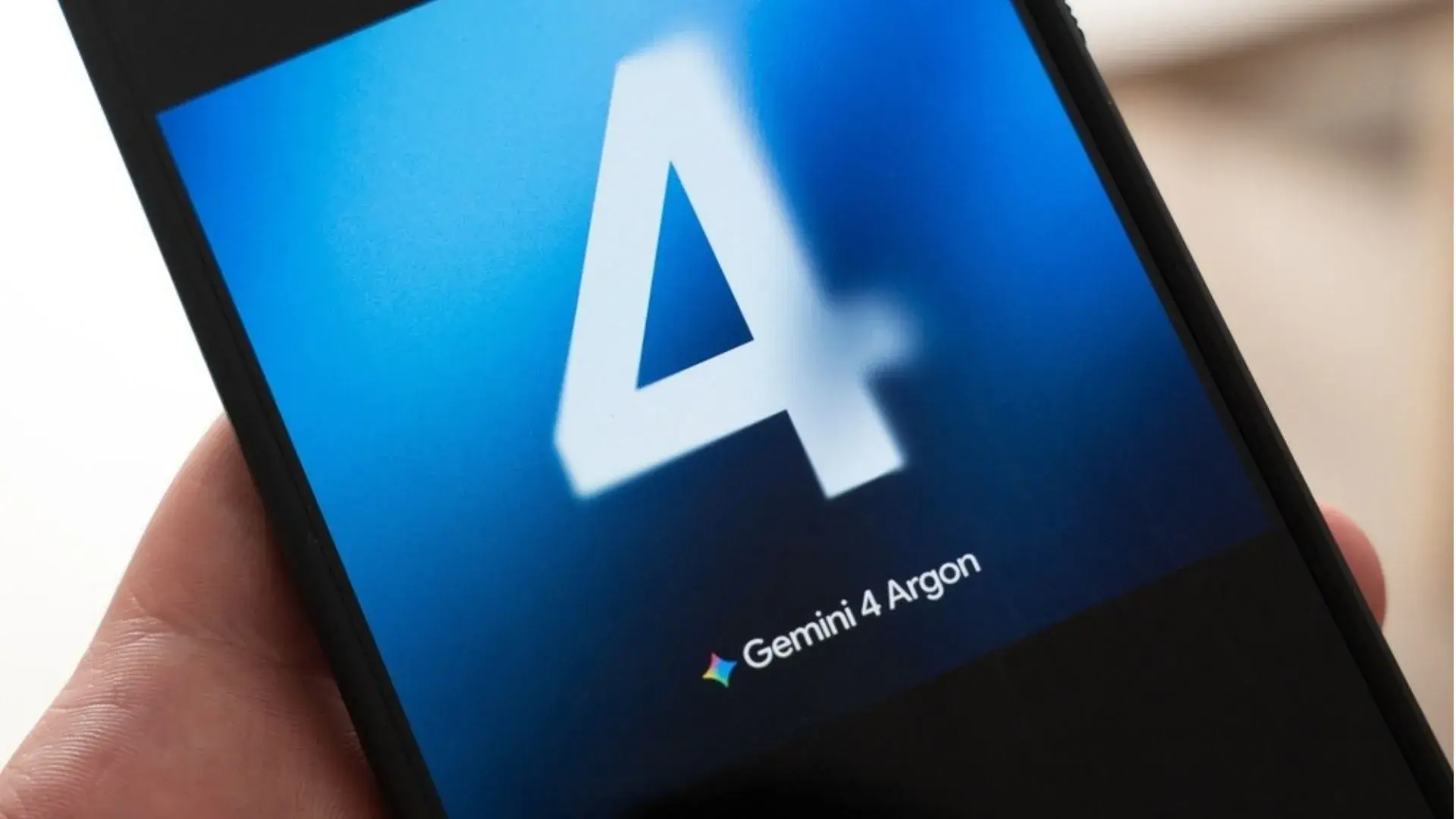
Among the first testers are On, Shopify, and PayPal. Gemini Enterprise's client list includes companies such as BNP Paribas, Bradesco, Merck, Orange Spain, Santee Cooper, SOMPO, Ulta Beauty, and Wesfarmers. For Spain and Europe, the presence of Orange Spain and BNP Paribas is significant , as it indicates that these types of companies will begin to appear in corporate projects and tenders across the continent. Meanwhile, Google has unveiled Gemini 4 Argon, a next-generation model that the company has placed at the heart of its technical expansion, although its final integration into the application is not yet complete.
What does this mean for the competition?
The announcement comes amid a race for agent development. OpenAI has unveiled Dots, Meta has pushed Muse , and Anthropic has strengthened its models with Sonnet 5.5. Each is targeting a different area: Google has enterprise distribution, OpenAI is aiming for the most advanced model, Anthropic is focusing on price and performance, and Meta is targeting the mass consumer . The battle is no longer just for the best model, but for the platform on which tasks are executed.
Google has a head start in integration because it already controls services like Gmail, Calendar, Chrome, and its search engine. However, the challenge will be demonstrating that the agent works reliably in complex environments with legacy systems, sensitive data, and strict access policies. Autonomy also introduces risks : an informational error doesn't have the same consequences as an incorrect action on an enterprise system.
Google's move with Gemini fits into a broader trend: artificial intelligence is moving beyond simply responding to a screen and is beginning to behave like a digital worker assigned tasks. The company has introduced objectives instead of instructions, deep integrations, a unique identity for the agent, and cost control . Even so, its success will depend on the security, traceability, and trust it manages to generate. For Spanish and European companies, the key will be seeing how these tools fit with their systems, regulatory obligations, and teams. It's not just about having the most powerful model, but about knowing which decisions are worth delegating to a machine.