- Muse is Meta's AI agent for searching for products and preparing purchases, always with user review and approval.
- Its initial rollout in the US and Canada reached five million downloads in 22 days, driven by advertising on Facebook, Instagram and WhatsApp.
- Meta has closed deals with retailers such as Walmart, Sephora, Best Buy, Expedia, and Instacart, while Amazon has blocked its access and Shopify is committed to integrating it.
- Privacy, the use of data to train models, and personalized pricing are the main concerns surrounding its expansion.
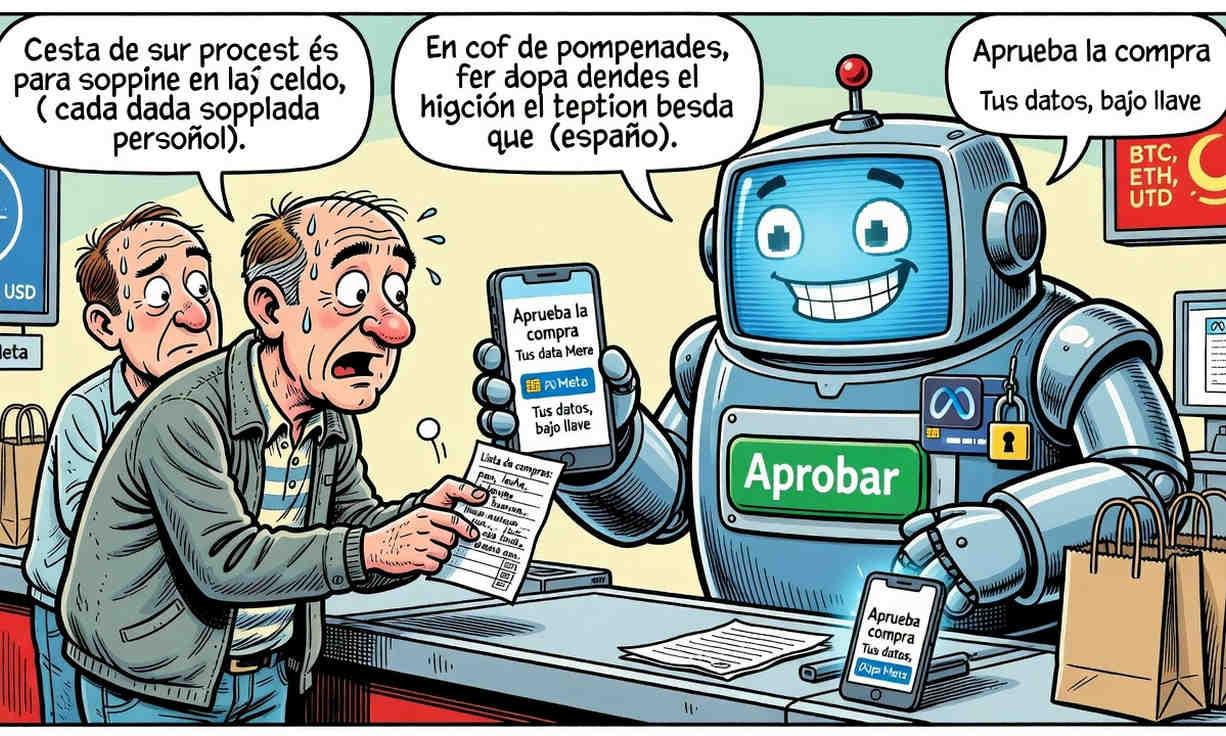
Meta Muse has become one of Meta's most visible ventures in the field of artificial intelligence. The assistant doesn't just answer questions: it also searches catalogs, compares options, and prepares the purchase , although the final step still depends on the user. This approach comes at a time when major tech companies are competing to control the gateway to online shopping.
The product launched in the United States and Canada, and since then it has generated headlines for its growth, its agreements with retailers, and its clashes with platforms like Amazon. The key lies not only in the technology , but also in who retains control of the data, the customer relationship, and the payment process. In Spain and the rest of Europe, the initial rollout does not yet include these markets.

An agent who searches, compares, and prepares the payment.

The system works by making a simple request. The user indicates the brand, budget, or availability, and Muse searches various retail sites to return alternatives that match those criteria. The results can appear within the platform itself or redirect to the retailer's website, promising to save steps in the search.
The purchase doesn't close automatically. If the user chooses to pay with Muse, the agent prepares the order and displays the details for review before approval. Meta maintains that it will always request this authorization and that, when information is missing, it may request access to the email, full name, or address.
The system runs on the Muse Spark family of models and relies on a virtual machine that allows it to continue some operations in the background even after the application is closed. Beyond shopping, the company presents Muse as an assistant for everyday tasks: booking appointments, creating lists, restocking products, comparing prices, managing returns, and monitoring price drops. Human intervention is still present , but the level of permission granted makes all the difference.

In terms of payments, Muse can be linked to Stripe's Link service or Shopify's Shop Pay. Stripe confirmed the Link integration, which generates a one-time-use card to avoid exposing real data. PayPal was also mentioned as a possible provider, although it wasn't listed in the published information. Mark Zuckerberg indicated that Meta will charge a small fee for transactions, without specifying the amount.
Alliances, Amazon and the dispute over the channel
Meta announced partnerships with Walmart, Gap, Sephora, Expedia, Wayfair, Best Buy, Ticketmaster, Instacart, and other companies, and stated that it was preparing more agreements. The list includes merchants from very different sectors, although not all the connectors were active when the information was released. Ticketmaster, for example, keeps the final payment within its own marketplace.
The most striking move came from Amazon, which blocked Muse's access to its platform. According to reports, the company determined that the agent was accessing the system without authorization, bypassing personalization features, and capturing credentials or account data. The decision draws a clear line: not all businesses want a third-party intermediary to complete purchases for them.
Shopify, on the other hand, has opted to integrate with Muse to enable agent-managed checkouts in its stores. Meta also launched Muse for Small Business, with connections to Slack, Stripe, Canva, Dropbox, Notion, and QuickBooks, and left the door open for future integrations with its smart glasses. The ecosystem is beginning to take shape among enthusiastic partners and hesitant platforms.

For retailers, intermediation can open up an additional customer base, but it also places them within a meta-controlled experience. The fundamental question is who retains the business relationship: the retailer, the AI platform, or the user.
Downloads, distribution and stock market reaction

Muse launched on September 8th and, according to Sensor Tower estimates, surpassed five million downloads in the United States in just 22 days. Comparisons with other assistants are inevitable: ChatGPT took 56 days to reach that milestone, Grok 103, and Claude 492. Its speed in the consumer AI category is what has garnered attention.
Behind this data lies Meta's distribution machine. Between mid- and late September, Muse captured up to half of all ad impressions on Facebook, Instagram, and WhatsApp. On September 16, when the company increased its spending, daily downloads jumped 73% overnight, and the product became one of the brands with the most impressions in the United States.
Usage data released by The Information indicates that over three million people use Muse at least once a week, over one million daily, and more than four million interact with it in some way each week. Retention figures, however, remain unpublished , and that will be the most demanding test once the initial hype subsides.

The market reacted as well. Meta's stock rose around 11% after the launch, and firms like Wells Fargo raised their price targets. Some analysts see Muse as a piece that could bring the company closer to a $2 trillion market capitalization and strengthen its position against Google in the voice assistant arena.
Privacy, permissions, and personalized pricing
During setup, Muse may request access to Gmail, calendar, and, on Mac, the entire hard drive. Meta uses interactions to train its AI models by default, though this option can be disabled in the settings. The user retains control over the training , but must actively choose to limit it.
A Surfshark analysis places Muse among the apps that declare the most data categories: 31, compared to an average of 13 in the group being compared. Meta AI appears with 33, Gemini with 24, ChatGPT with 17, and DeepSeek with 14. Counting categories doesn't, by itself, measure the sensitivity of each data point, but it does help to see the breadth of the privacy settings.
Precise location is displayed in Muse, Gemini, Meta AI, and Perplexity, while ChatGPT, DeepSeek, Claude, and Copilot report approximate location. The sensitive information category is also listed in Gemini and both Meta tools. This doesn't mean that all of this data is collected every time, but it does require reviewing the permissions and purposes for which it is collected.

On a technical level, security expert Patrick Wardle identified a critical vulnerability shortly after launch. Meta patched it immediately and stated that it had delayed the release to conduct additional privacy and security testing. The speed of the response does not eliminate concerns about the access required by an agent of this type.
A complaint has also circulated from journalist Jason Aten, who claimed that Muse had read Apple's private messages and transferred more than 187.000 chat logs to its servers. Meta executive David Singleton responded that the Messages integration is optional and requires activating a connector and full access to the macOS hard drive. The incident has reignited the debate about the extent to which users understand what they are sharing.
The European context adds pressure. The Bank of England has warned that a growing number of retail and e-commerce companies are using AI to gather data and apply dynamic or personalized pricing. In the United States, a Morning Consult poll found that 59% of adults viewed price gouging as a major problem. Against this backdrop, McDonald's has expanded its use of AI for pricing, and Instacart halted similar trials following criticism; Walmart's CEO even published an open letter denying that the company uses personal data for this purpose. Muse hasn't been singled out for personalized pricing , but its arrival coincides with this growing distrust.

Muse's expansion will depend on users agreeing to share their data, trusting recommendations, and retaining the ability to review each decision before paying. The convenience is obvious , but so is the battle for control of digital commerce. Meta has demonstrated its ability to get a product onto millions of screens in a matter of weeks; now it will have to prove that those users will stay once advertising stops pushing so hard.