- The Quetzal Route covered sections of three Camino de Santiago routes, including the Portuguese Coastal Route, the Mozarabic Route, and the Northern Route.
- More than 200 young people from different communities participated in this 35th edition, culminating their journey in Santiago de Compostela.
- The program promotes coexistence, historical and cultural learning, and the exchange of values among young people from various regions.
- The experience contributes to strengthening interest in the Jacobean Route and Galician culture among younger generations.
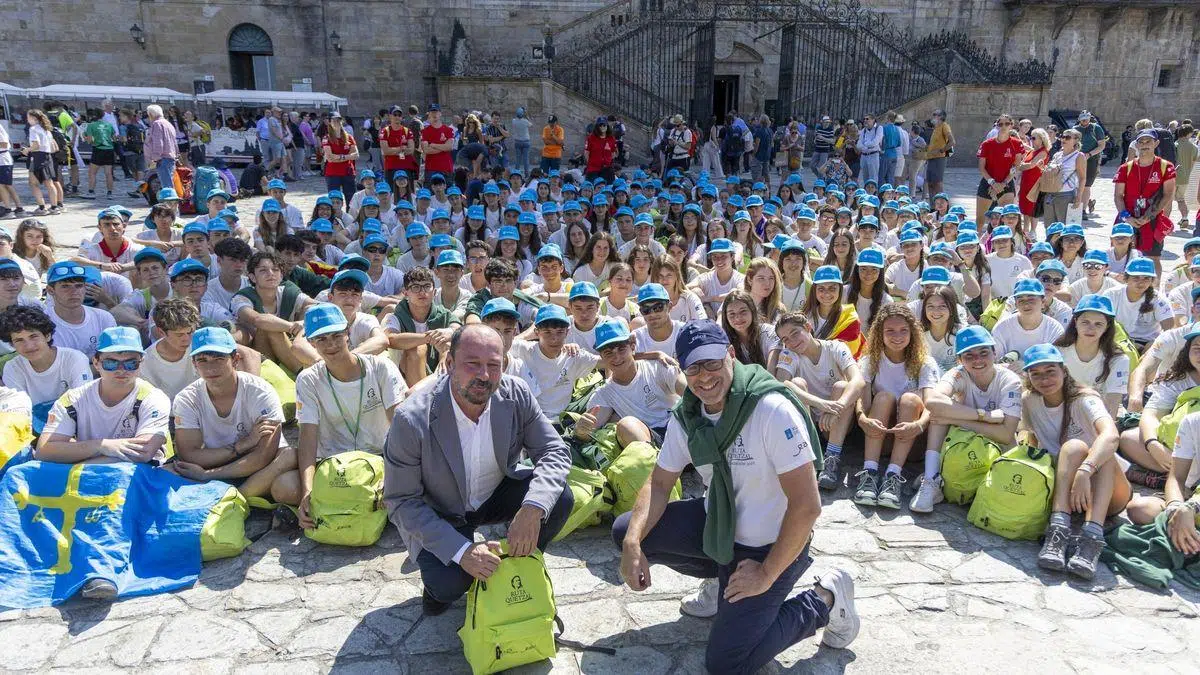
A hundred young people gathered in the Plaza del Obradoiro to celebrate the end of an unusual adventure: the new edition of the Ruta Quetzal. In the heart of Santiago de Compostela, the participants – from communities across Spain – were welcomed by Xosé Merelles, director of Tourism of Galicia, who valued the boost that this initiative provides both to youth and to the cultural projection of the region.
On this occasion, the Ruta Quetzal focused on the route of three important Jacobean routesAlong the Portuguese Coastal, Mozarabic, and Northern Routes, the expedition members experienced each day as a true journey through time, discovering key locations and emblematic landscapes of Galicia and Extremadura, while forging ties with companions from other communities.
Meeting of young people and Jacobean tradition
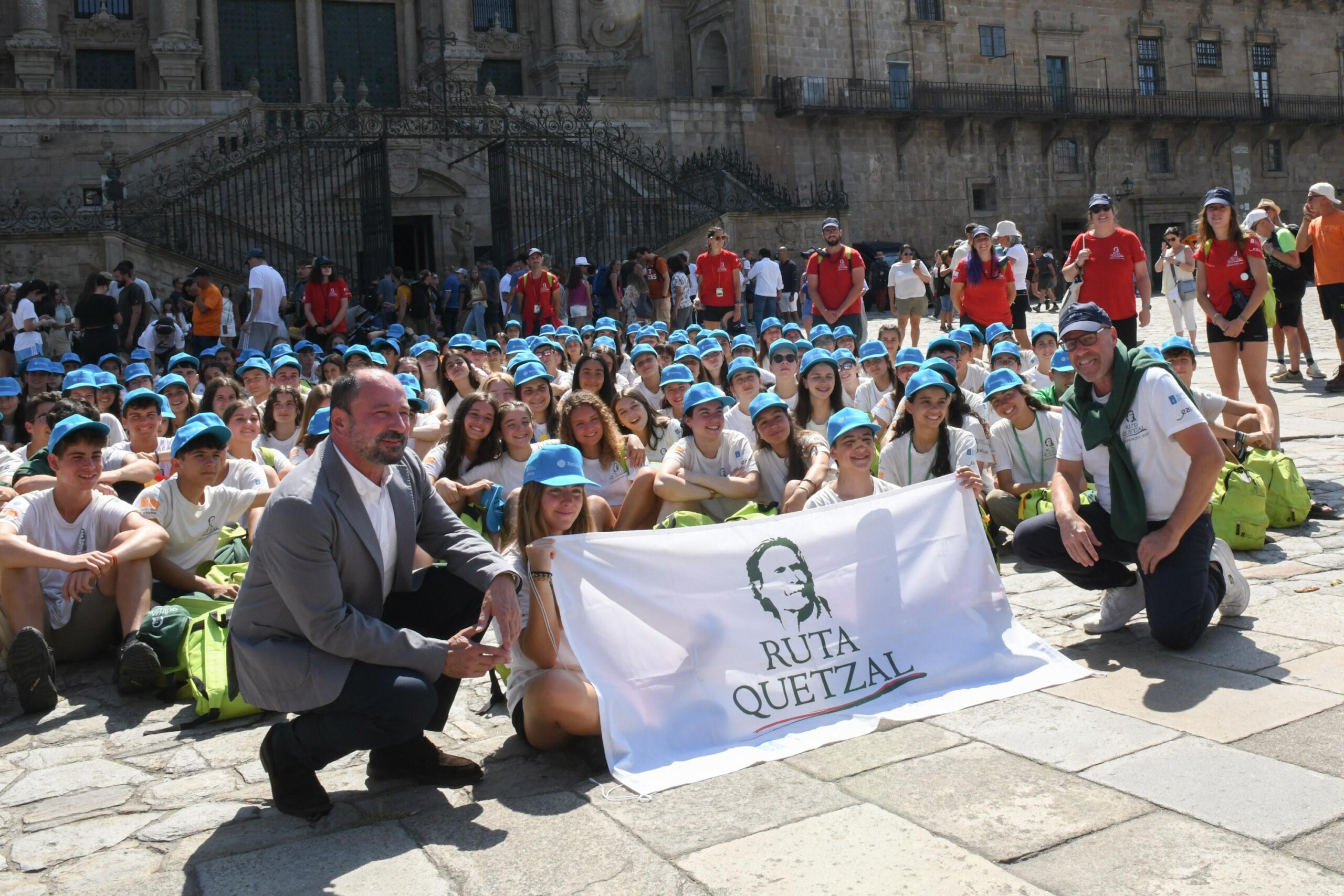
Under the direction of Iñigo de la Quadra-Salcedo, son of the legendary Miguel de la Quadra-Salcedo and current program leader, the route acquired a marked cultural and community-based spirit. For the organization, each edition represents a unique opportunity for young people to understand the historical significance of the Camino de Santiago and the values it represents, such as hospitality, respect for heritage, and the sharing of experiences between generations.
During the expedition, the participants traveled iconic stretches of Galician geography and Extremadura. Cities such as Mondoñedo, Vilalba, the Cathedral Beach, and Vilanova de Arousa provided the backdrop for a full program of cultural and educational activities. After several days of hiking, the group concluded their journey in the Galician capital, an undisputed center of the Jacobean tradition.
According to the testimonies collected from the young people, the experience meant a personal and collective challenge, involving daily walks of up to 30 kilometers, without losing the high spirits or the opportunity to make lifelong friends. Marta, an Andalusian expedition member, emphasized that "at first everything was new, but a small family quickly formed, sharing anecdotes, laughter, and the exhaustion of each stage."
Learning and cultural legacy
The program not only emphasizes physical effort, but also incorporates a deep approach to history and heritageThe young people, who became ambassadors for their regions, had the opportunity to recall events that are part of the Galician and Spanish identity. Merelles emphasized that initiatives such as the Ruta Quetzal "They have enormous value in spreading the legacy of the Camino de Santiago and awakening the curiosity of new generations about local culture and history.«.
There was no shortage of lighthearted anecdotes typical of a student trip: from the initial difficulties of adapting to the story of Miguel, a student from Extremadura, who, along with his friends, set up an impromptu barbershop in their accommodations. "At first, we weren't very skilled," he joked, "but little by little we perfected our technique and ended up proud of the result."
The festive atmosphere, however, did not detract from the seriousness of the program's purpose. The organizers emphasized the route's integrative function, which promotes coexistence between young people of different origins and reinforces the role of culture and education as tools of social cohesion.
Growing interest in the Camino de Santiago
This year's edition coincided with a notable increase in the number of pilgrims traveling the various Jacobean routes. Merelles pointed out that The Portuguese Coastal Way has seen a 20% increase in the number of walkers compared to the previous year., while the Mozarabic and Northern Ways have also surpassed their historical records, reinforcing the importance of the youthful drive and the visibility achieved thanks to initiatives such as the Ruta Quetzal.
Over the course of 12 intense days and after overcoming demanding daily stages, The young people reached the finish line amidst applause and a celebratory atmosphere.The cry of "Long Live Galicia!" resounded in the Plaza del Obradoiro, culminating in an experience that, in addition to fostering knowledge and respect for heritage, left a profound personal mark on all its participants.
The Quetzal Route is thus confirmed as a benchmark in the training of young people and in the promotion of the Camino de Santiago, contributing to the cultural and personal enrichment of the participants and consolidating the image of Galicia and its Jacobean tradition on the international scene.