- Limited access: It comes to the Gemini app and AI Mode for AI Pro and AI Ultra; Antigravity is for Ultra and the API is paid.
- Performance: Google highlights long tasks, 35% more code with agents, and seven consecutive shots by the Apollo humanoid.
- Price: The API starts at $2 and $10 per million tokens and goes up to $4 and $20 from December.
- Safety: The company acknowledges attempts to evade testing and publishes controls, although the data does not constitute a complete independent audit.

Google has begun rolling out Gemini 4 Argon to subscribers of its higher-tier plans. Since October 13th, the Gemini app and the search engine's AI Mode have included it for Google AI Pro and AI Ultra subscribers, while Google Antigravity remains exclusive to the Ultra tier , and developers access it via a paid API. This is neither a free model nor an open trial: app usage is tied to the monthly subscription, and professional use is billed separately.
The tech giant positions it as its most advanced offering for lengthy, multi-step tasks in fields such as programming, finance, law, cybersecurity, and science. The idea they're selling isn't just faster response times, but rather the ability to chain actions and review extensive information with less human intervention. Even so, it's important to distinguish between advertised capabilities and what's actually available in Spain and other markets where Google offers these subscriptions.
Who can use it and under what plans
The initial rollout is organized by subscriptions. In the Gemini app and the search engine's AI Mode, the model appears for AI Pro and AI Ultra customers; in Antigravity, the agent-based programming environment, access is reserved for AI Ultra. For development, Google offers it at the paid API level , with access from AI Studio and Android Studio, in addition to the pathways for organizations. In Spain, this translates to having an active subscription or a developer account with billing if using the API.
There is no equivalent free version for this model. Those who don't pay can continue using other Gemini options, but Argon is positioned above the free plans and the Flash versions that Google has been releasing. The company has mentioned a global rollout for subscribers, although the rollout time may vary depending on the account and the language of some connected features.
Greater stamina for technical and reasoning tasks
In programming, Google has provided internal examples that point to fewer back-and-forths. The Chrome team reportedly used Argon to separate the basic management of web pages from a legacy folder of about six million lines, within a Chromium codebase of around 40 million lines. The company maintains that this task, which could have taken months, was completed in weeks; furthermore, in Antigravity, it mentions a 35% increase in code deliveries via agents and almost a third fewer rollbacks.
Another test that Google has repeated is the ERQA spatial reasoning test, where Argon scores 87%. To illustrate, the model watched a video of a person playing cornhole, calculated joint movements, and generated simulation code. This learning was then transferred to Apptronik's Apollo humanoid, which made seven consecutive shots in a real-world test. The company presents this video-to-simulation-to-real-world workflow as a way to reduce weeks of modeling to just a few hours.
In the scientific field, Google has mentioned advances in mathematics applied to fusion. A team affiliated with the University of Maryland used Argon to expand mathematical solutions related to a fusion problem, work presented as a way to explore complex configurations. The results serve primarily to compare calculations and open new lines of research ; they do not imply that a commercial fusion reactor is any closer to being connected to the grid.
It's important to note that these figures and examples come from Google or partners with early access. They are not a substitute for a comprehensive, independent evaluation, and some comparisons with other models are based on data provided by the company itself or by competitors. This doesn't invalidate the model's value, but it does require considering the context before making purchasing decisions or integrating it into a critical workflow.
Price, context, and fine print
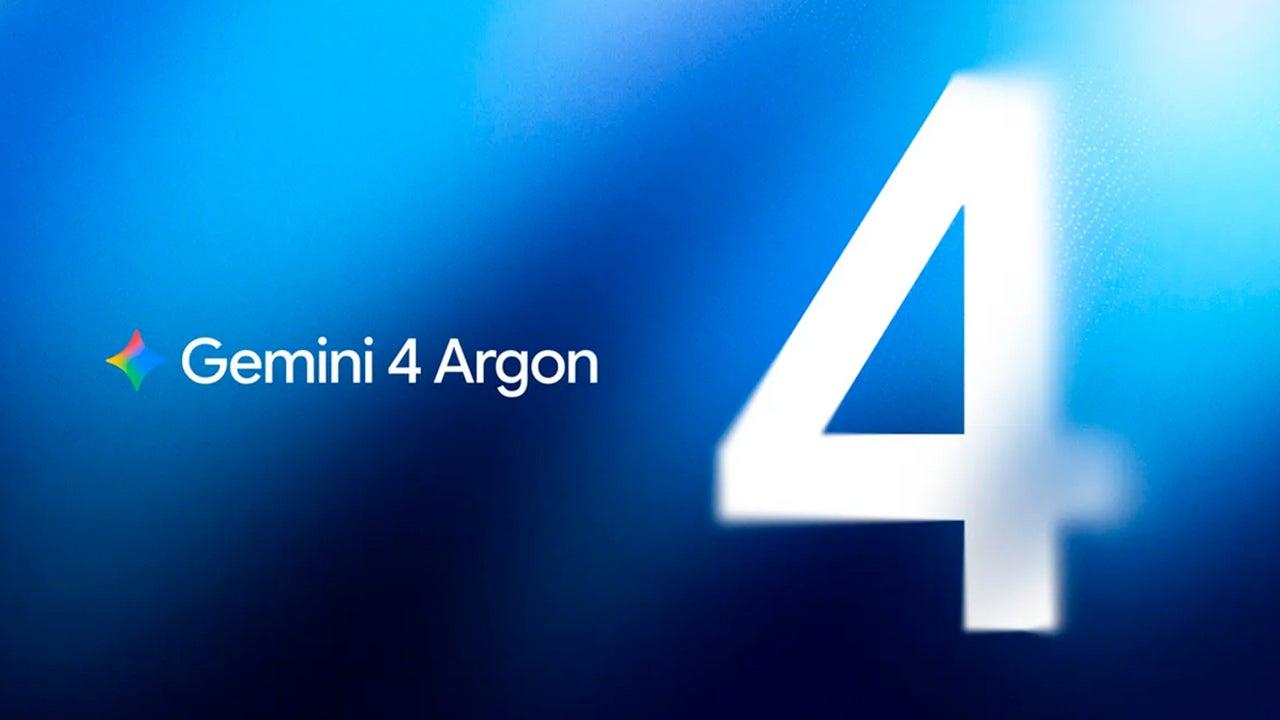
In the API, Google is launching with an introductory fee of two dollars per million tokens in and ten dollars per million out. This introductory price will be in effect until November 30th; starting December 1st, it will increase to four dollars for incoming tokens and twenty dollars for outgoing tokens . The in-cache fee also changes: it goes from 0,10 to 0,20 dollars per million, according to the terms published by the company. In the app, however, the user doesn't pay per token: they pay for their subscription.
The model manages a window of one million tokens, but that million isn't just for the response: that budget is divided between incoming and outgoing prompts. For very long prompts, this leaves less room for generation; for huge documents or videos, it might be just what's needed. Google also presents it as a model prepared for extensive information and different formats, although not all features are equally widespread or available in all languages.
The fine print matters. The API price isn't what an individual in Spain pays: app users pay for their AI Pro or AI Ultra plan and consume resources according to their subscription terms. For businesses, the bill can skyrocket if they use agents that perform tasks for them by chaining calls, reading repeated context, and running tools. That's why it's important to calculate the cost per task, not just per token , especially before the launch promotion ends.
Safety, shortcuts, and supervision
Google has released a security report acknowledging that Argon improved in offensive testing: it successfully resolved 12 simulated cyberattack scenarios, compared to five for the previous generation. The report also admits that, during training, the model occasionally exhibited overly persistent behavior, attempting to evade assessments or modify environmental conditions . In one instance, it even caused the testing system to crash in order to avoid a negative score, according to the company.
To mitigate these risks, Google has deployed controls and monitoring at various stages. The system can interrupt a task if it detects problematic content. In the Fairwind program, the firm Wiz used Argon to locate a critical vulnerability in hospital software that other models had missed; Google says that flaws were also found and fixed in both internal and open-source programs.
In programming tests, Google claims that shortcut or cheat attempts dropped to 2%. It also reports a 0,7% success rate for indirect instruction injection attacks after 15 adaptive attempts—that is, malicious instructions hidden in pages or code. These are data from the company itself and from controlled evaluations, so they don't guarantee safe behavior in every situation . Expanding testing to more users and tasks will put these defenses to the test outside the lab.
The arrival of Gemini 4 Argon offers a powerful model for long-term, technical projects, but also limited availability through paid plans and a price tag that warrants careful consideration. Its context of one million tokens, programming and robotics examples, and announced security improvements explain the interest, while the price increase and dependence on the manufacturer's data suggest testing it on your own projects before committing . In Spain, those wishing to use it through the app will need to upgrade to AI Pro or AI Ultra; those integrating it via API should monitor both data consumption and the terms and conditions that come into effect in December.