- Electronic waste is growing at a record rate and contains heavy metals and toxic substances that damage ecosystems and health.
- Proper recycling allows for the recovery of valuable metals and rare earth elements, reducing pressure on mining and emissions.
- Children and pregnant women are the groups most vulnerable to exposure from informal recycling.
- Laws, international agreements, and civic responsibility are key to safe management and a more circular economy.
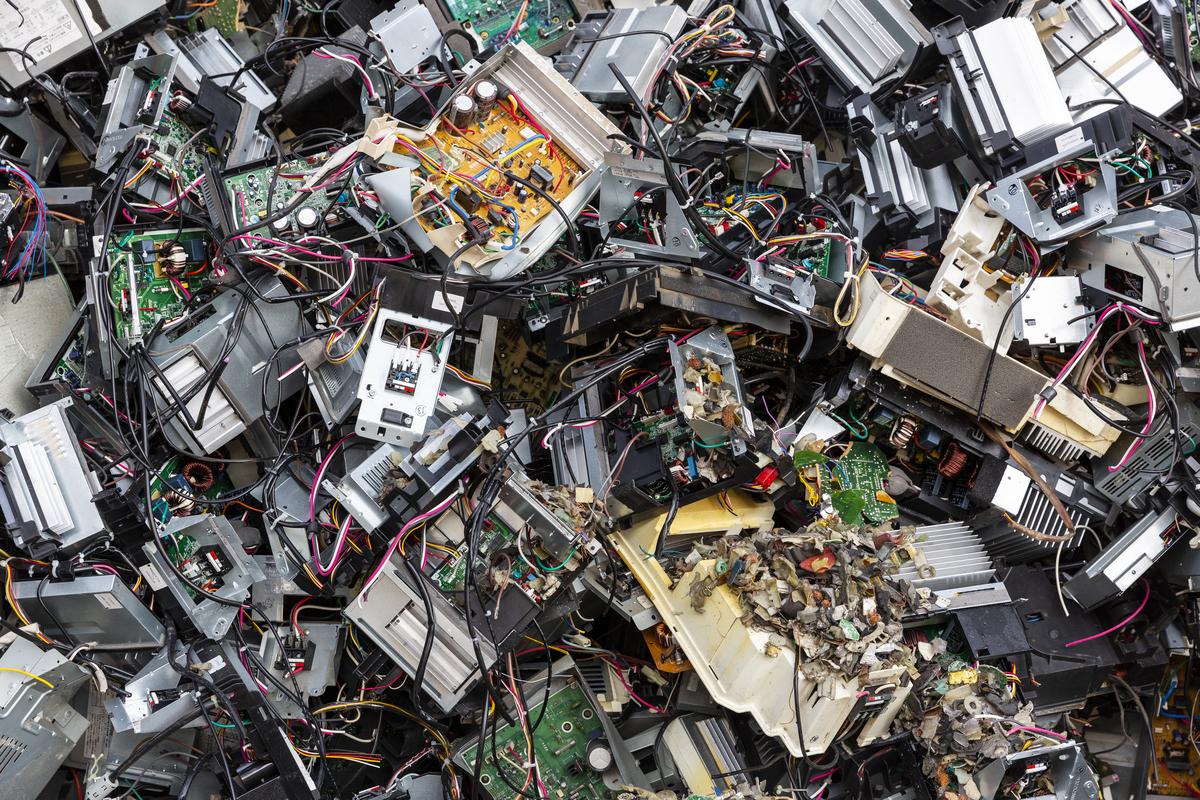
The Electronic waste has become one of the biggest environmental headaches In our time, we generate millions of tons of mobile phones, computers, televisions, and household appliances every year, which become obsolete or break down and end up, all too often, where they shouldn't. All this happens in a context where we change devices almost without thinking, prices are falling, and technology is advancing so rapidly that the idea of "fixing before throwing away" seems like a thing of the past.
Although it may seem like just a problem of space in landfills, the reality is that Electronic waste contains a very delicate mixture of plastics, heavy metals, and chemicals. If not managed properly, these wastes damage the air, water, soil, and, consequently, our health. At the same time, these same wastes contain valuable materials such as copper, gold, silver, and rare earth elements that could be reused instead of continuing to extract them from mines with devastating environmental impacts.
What exactly is electronic waste?
When we talk about electronic waste (also called WEEE: waste electrical and electronic equipment), we are referring to any device that needs electricity or batteries to function and is no longer in use because it's broken, outdated, or has simply been replaced with a new one. Everything from a huge refrigerator to a small electric toy falls into this category.
This bag includes computers, laptops, mobile phones, tablets, televisions, monitors, printers, video game consoles, microwaves, toasters, blenders, air conditioning units, washing machines, light bulbs, lamps, and all types of batteries.Many medical devices and professional equipment that, once out of service, continue to contain hazardous components are also considered electronic waste.
In countries like Spain, it is estimated that More than one million tons of electronic waste are generated annuallyOf which hundreds of thousands of tons would be recyclable if managed properly. However, only a relatively small portion is channeled through formal collection and treatment systems, representing a breach of regulations and a huge waste of resources.
On a global scale, the picture is even more worrying: In 2019, approximately 53,6 million tons of electronic waste were produced, and only 17,4% was recorded as recycled. under controlled conditions. That mountain of discarded devices makes it the fastest-growing fraction of solid waste, with rates far exceeding population growth.
Why electronic waste is such a serious problem
The main reason why these wastes are so problematic is that They combine a very high concentration of hazardous substances with unstoppable growth in volume.Every device, no matter how small, can hide heavy metals and toxic compounds that, if mismanaged, end up in the environment and in our bodies.
We find many devices lead, cadmium, mercury, beryllium, barium, phosphorus, brominated compounds and dioxinsIn addition to polycyclic aromatic hydrocarbons generated in improper combustion processes, lead and mercury are among the substances of greatest public health concern, especially due to their effects on the developing nervous system of children.
To get an idea of the potential impact, it is often recalled that A poorly recycled refrigerator can release greenhouse gases into the atmosphere equivalent to those of a car traveling about 15.000 kilometers.Something similar happens with the phosphors in old screens: the phosphor from a single television can contaminate tens of thousands of liters of water if it is dispersed uncontrollably.
The problem doesn't end there. Plastics found in casings, cables, or insulation can fragment and reach rivers and seas in the form of microplastics.also carrying toxic additives. In landfills or informal recycling areas, the open burning of cables and components to "extract the copper" generates fumes laden with dioxins and other pollutants that accumulate in the air, soil, and food.
What's more, Failure to properly recycle these devices increases pressure on the mining industry.Each discarded mobile phone without recovering its metals forces the extraction of a little more gold, silver, copper or palladium from the Earth's crust, with the consequent environmental cost in the form of deforestation, erosion, water consumption and pollution associated with extraction and transport.
Impact on health and especially vulnerable groups
The effects of poor electronic waste management are not limited to the environment: They have very direct consequences on human health, especially in contexts where recycling is carried out in a precarious manner, without protective equipment or basic controls.
The World Health Organization and the International Labour Organization have warned that Millions of people work in the informal recycling economyincluding numerous children and pregnant women. In many low- and middle-income countries, entire families make a living by scavenging for appliances in landfills, dismantling them by hand, burning plastics, or immersing parts in acid baths to extract metals.
These practices expose the population to high levels of heavy metals, persistent organic compounds and toxic fumes, with an increasingly well-documented list of health impacts: neurodevelopmental problems, decreased cognitive performance, behavioral disorders, increased risk of asthma and respiratory problems, complications in pregnancy or a higher incidence of adverse neonatal outcomes (such as premature births or a higher stillbirth rate).
Children are, by far, the most vulnerable group to the pollutants released during the informal recycling of electronic wasteTheir bodies are still developing (especially the nervous, immune, and respiratory systems), they breathe and eat more per kilogram of weight than adults, and they tend to put their hands and objects in their mouths, which facilitates exposure to contaminated dust and dirty floors.
Furthermore, many of the substances present in these wastes, such as lead and mercury, They can cross the placenta and reach the fetus or accumulate in breast milkSo even babies who aren't directly at the landfills can be affected. The ILO considers scrap metal and waste recovery work among the worst forms of child labor precisely because of this level of risk.
Most common types of electronic waste
With the current pace of technological renewal, different types of electronic waste are accumulating in virtually every home and every business. Knowing the most frequent categories helps to identify and manage them better when the time comes to part with them.
A first category would consist of the small electronic devicesMobile phones and their mobile phone chargersSmartphones, tablets, cameras, smartwatches, headphones, electronic toys, small medical devices, and various gadgets. They usually fit in the palm of your hand, take up little space, but contain precious metals and batteries that shouldn't end up in the regular trash.
At the other extreme are the large household appliances and air conditioning unitsAppliances such as refrigerators, freezers, washing machines, dishwashers, ovens, dryers, and air conditioners contain large quantities of metal and plastic, as well as refrigerants and other components that require specific handling.
This list should also include the desktop computers, laptops and all their accessoriesKeyboards, mice, monitors, printers, scanners, routers, and external hard drives are examples. Their printed circuit boards contain a significant portion of the metals of interest, while screens (especially older cathode ray tube displays) can contain high levels of lead.
Another important group consists of televisions and monitorsThis applies to both older CRTs and modern flat screens. Older technologies require extreme care due to the lead content in the glass, while newer screens may incorporate rare metals and substances that should also not be mixed with ordinary trash. Furthermore, proper screen maintenance and cleaning—for example, learning how to Clean Smart TV QLED— helps to prolong its useful life.
Let's not forget small kitchen appliances and other everyday household appliances such as toasters, microwaves, blenders, coffee makers or vacuum cleaners, nor the Lighting systems (LED bulbs, fluorescent bulbs, compact lamps), which contain electronic components and, sometimes, hazardous substances.
Finally, a separate chapter is deserved by the batteries of all typesFrom button batteries to rechargeable nickel-cadmium, nickel-metal hydride, or lithium-ion batteries, these are a highly concentrated source of heavy metals and corrosive substances, requiring specific collection systems and should never be disposed of in the regular trash.
Challenges of electronic waste recycling
Although at first glance it may seem that simply "taking the appliances to the recycling center" is enough, the reality is that Recycling electronic waste is a much more complex process than it seems.The enormous diversity of products and materials greatly complicates their handling.
Each type of device combines plastics, metals, glass, electronic components, batteries and, in many cases, hazardous substancesSeparating all of this safely and efficiently presents a significant technical and economic challenge, especially when dealing with millions of different units.
In many places, moreover, Formal collection systems do not cover all devices or are not accessible to the entire populationSome municipalities only accept certain types of WEEE at their recycling centers or through specific campaigns, while other items (such as some large appliances) are collected through special services or one-off events.
An additional problem is that Much of this waste ends up traveling to developing countrieswhere labor is cheaper and regulations less stringent. There, waste accumulates in open dumps or informal facilities where plastics are burned, appliances are broken without protection, and acid baths are used to separate metals, all with serious consequences for health and the environment.
The warnings from international organizations are clear: if we do not drastically change the way we produce, consume, and manage these devices, We could end up generating around 120 million tons of electronic waste annually by mid-centuryWithout adequate infrastructure and regulation, this would imply an excessive increase in associated pollution.
How electronic waste is recycled: from collection point to raw material
When done properly, electronic waste recycling follows a series of relatively standardized steps that allow to make the most of the materials and minimize the environmental impactAlthough the process varies depending on the type of device, it usually includes the following steps.
It all starts with the collection and initial separationOld appliances can be taken to municipal recycling centers, specific campaigns, stores (which are required to take the old appliance when selling you a new one), or programs organized by specialized entities. It is crucial that batteries and some delicate components are placed in separate containers.
Once collected, the waste is transferred to treatment facilities, where it is processed. secure storage and preliminary classificationSome equipment, such as older televisions and monitors, requires specific areas to prevent breakage and the release of lead or other hazardous compounds.
Then it begins disassembly and separation of componentsCombining manual and mechanical work, the operators remove components requiring special handling (batteries, fluorescent tubes, capacitors, cartridges, etc.) and set aside reusable or high-value parts. The remaining components are then fed into shredding systems that reduce them to small fragments.
With the material already crushed, it is moved on to the mechanical separation of the different fractionsLarge magnets extract ferrous metals (steel, iron), while eddy currents separate non-ferrous metals such as aluminum and copper. Plastics and glass are sorted using screens, air, and, in some cases, water flotation processes that take advantage of density differences.
The last link in the chain is the recovery and conditioning of materialsCleaned metals are sent to foundries to manufacture new products, plastics can be reprocessed into granules suitable for various uses, and glass, once free of contaminants, can be reused in new industrial applications. Meanwhile, electronic components that still have a useful life can be refurbished and returned to the secondhand market.
Materials extracted from electronic waste
One of the main arguments in favor of WEEE recycling is that These wastes are veritable “urban mines” of valuable and increasingly scarce materials.Managing them well is key to moving towards a more circular economy that is less dependent on new extractions.
Metals are probably the most interesting fraction. They are recovered from motherboards, connectors, and internal components. gold, silver, palladium, platinum and, of course, large quantities of copper and aluminumThe energy needed to recover recycled copper, for example, can be around 10% less than that required to obtain it from virgin minerals, also drastically reducing the generation of waste rock and other mining residues.
Along with these more well-known metals, many modern devices contain rare earth elements such as neodymium or dysprosiumThese components are essential for manufacturing powerful magnets, electric vehicle motors, wind turbines, and high-quality speakers. They are difficult to extract, with geographically concentrated supply chains, making their recovery from electronic waste strategic.
As for plastics, a good portion of the casings, keyboards, controllers, and other external elements can to be reprocessed to become raw material for new productsThe challenge here is the diversity of polymers and the presence of additives (such as brominated flame retardants) that complicate obtaining clean and safe fractions.
Glass, especially that from screens and cathode ray tubes, can also be reused, although In the case of older CRTs, extreme care must be taken due to their high lead content.Since the demand for this particular type of glass has decreased significantly, it is sometimes stored safely until suitable outlets are found.
Specific processes: batteries, CRTs, computers and mobile phones
Beyond the general scheme, some types of electronic waste require very specific recycling processes due to their composition and the risks involved.
Batteries and cells, for example, are classified by chemistry (lead-acid, nickel-cadmium, nickel-metal hydride, lithium-ion, among others) and undergo different treatments. Plastic casings can be incinerated under controlled conditions.capturing gases and particles through purification systems, while the metallic fractions are crushed and melted to separate the different metals by density or melting point.
In the case of cathode ray tubes (CRTs) from old televisions and monitorsThe challenge lies in the high lead content of the glass, which can reach several kilograms per unit. This glass cannot be mixed with conventional glass and requires specific and costly recycling processes, which has led to storage and management problems in many countries.
The computers and laptops They follow a similar process to the rest of WEEE, but with greater emphasis on classifying components that can be reused (memory modules, power supplies, cards, etc.). A critical aspect is the secure data destructionHard drives and storage units are erased using certified digital methods or physically destroyed (e.g., by shredding) to prevent leaks of sensitive information.
As for the mobile phones and tabletsRecycling typically involves disassembly to separate screens, lithium-ion batteries, circuit boards, and casings. Batteries are processed on specialized lines to recover metals such as cobalt, nickel, or lithium, while circuit boards are crushed to extract precious metals. Plastic or metal casings are melted down and reintegrated as raw materials into other industrial chains.
Regulations and international frameworks for controlling electronic waste
Given the magnitude of the problem, in recent decades several new initiatives have emerged laws and international agreements intended to regulate the production, trade and management of electronic wastewith the aim of minimizing its impact and promoting more responsible practices.
In the European Union, the Directive on Waste Electrical and Electronic Equipment (WEEE) It requires manufacturers to take responsibility for the collection and recycling of their products at the end of their useful life. This approach, known as extended producer responsibility, incentivizes the design of devices with disassembly, reuse, and recycling in mind.
In other countries, such as the United States, regulation is more fragmented: Each state defines its own rules on electronic waste managementStates such as California or New York have passed strict laws that prohibit throwing certain devices in the regular trash and require the existence of certified collection and recycling programs.
At a global level, the Basel Convention It regulates the transboundary movement of hazardous waste, including a large portion of electronic waste. Its aim is to prevent hazardous waste from ending up en masse in countries with less capacity to manage it safely. In 2019, an amendment came into force that strengthens restrictions on the export of hazardous waste from the most industrialized countries to other states.
There are also regional agreements such as the Bamako Convention, focused on Africa, or the Waigani Convention for the South Pacific, which complement and strengthen some of the Basel provisions in their respective geographical areas, further limiting the import of hazardous waste.
To ensure that recyclers meet adequate standards, several measures have emerged. certification programs such as e-Stewards or R2 (Responsible Recycling)These standards establish strict criteria regarding the environment, occupational health, and traceability. For companies and public administrations, working only with accredited recyclers is a way to reduce legal and reputational risks.
Prevention, responsible management and the role of citizens
For electronic waste management to be truly sustainable, recycling alone is not enough: The key lies in the entire product lifecycleFrom its design to how we use and dispose of it, prevention and reduction at the source remain the best strategies.
From a regulatory standpoint, countries are called upon to develop and implement specific national legislation on WEEE that include health protection measures, monitoring of landfills and recycling areas, elimination of child labor in these activities and support for more formal and safe business models, for example, recycling cooperatives.
Health organizations, for their part, are working on Train healthcare personnel on the impacts of exposure to electronic waste during childhood and pregnancyto improve the monitoring of these exposures and promote awareness campaigns. The WHO has developed specific training modules and pilot projects in several countries to create frameworks that can be replicated.
At the citizen level, each person can contribute in several ways: extending the lifespan of your devicesChoosing to repair instead of replacing, buying second-hand or refurbished equipment when it makes sense, and above all, always taking end-of-life devices to recycling centers or authorized collection programs are all ways to reduce waste. Donating still-functioning devices to social organizations is also a direct way to reduce waste.
In the business world, many companies are incorporating electronic waste management strategies within their sustainability policiesThis involves using specialized managers who guarantee safe recycling and certified data destruction. Furthermore, the development of applications and digital platforms facilitates scheduling collections, tracking waste flows, and measuring results in terms of landfill diversion and material recovery.
Looking to the future, the challenge is enormous, but so is the potential: If we combine more circular product design, demanding regulations, adequate infrastructure, and a more conscious citizenry, the growing mountain of electronic waste can become a stable source of materials and decent employment., instead of remaining a silent threat to the environment and, especially, to the health of millions of children and vulnerable communities around the world.