- It was the first celestial body to break the tradition of mythological names by being named after the city of Marseille.
- It is the main body of the Massalia family, standing out for being a solid and unfractured object.
- History has recently been made by detecting water molecules on its surface.
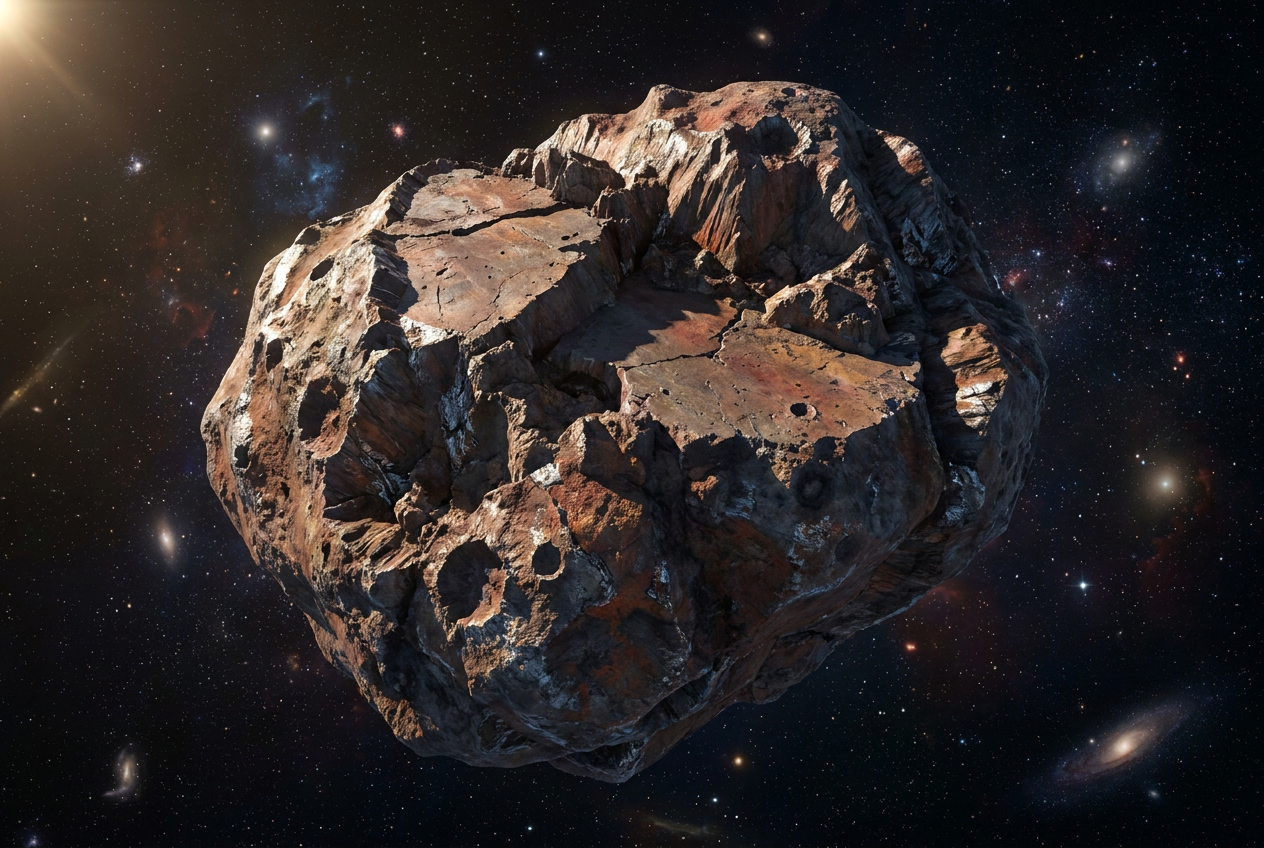
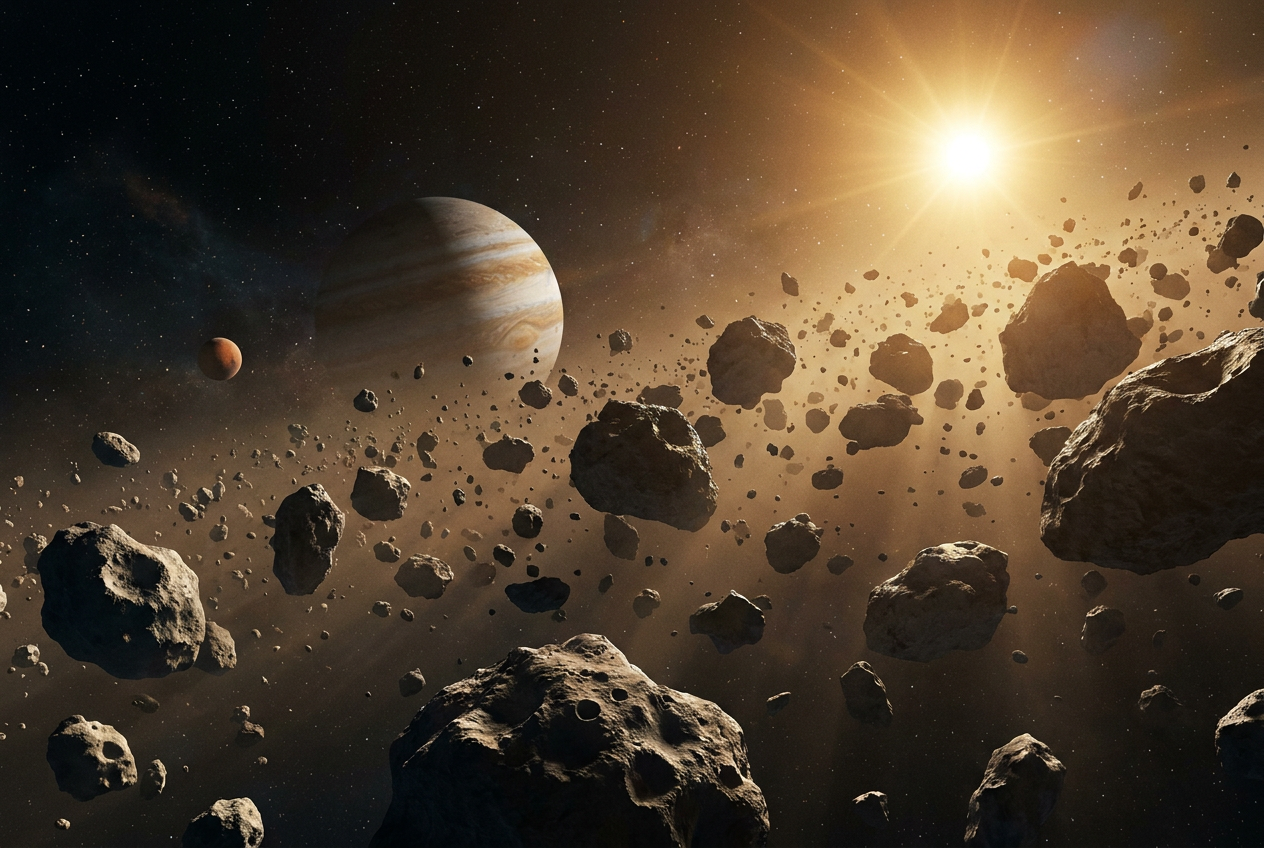
If you're into astronomy, you'll surely be intrigued by asteroid 20 Massalia. It's not just any old rock floating around; it's a true veteran of the main asteroid belt , located in that busy area between Mars and Jupiter. Since it was first observed over a century and a half ago, it has been a key piece in better understanding the debris left behind after the formation of our solar system.
What makes Massalia a curious case is that it was the first to break the mold in terms of naming conventions. While until then all asteroids bore the names of Greek or Roman gods, this one decided to defy the norm , marking a turning point in how we name space objects. Let's delve into the details of this fascinating object and the story of those who first tracked it.
The discovery and the story behind its name
It all began on September 19, 1852. The Italian astronomer Annibale de Gasparis located it from the Capodimonte Astronomical Observatory in Naples. But he wasn't alone in this discovery; the Frenchman Jean Chacornac detected it independently just one night later from Marseille. In fact, it was Chacornac's report that first reached the scientific community.
The story behind the name is quite something. De Gasparis, following William Herschel's advice, wanted to name it "Themis." However, the astronomer Benjamin Valz suggested Massalia , the ancient Greek name for the city of Marseille. In the end, De Gasparis relented and accepted the proposal. Thus was born the first asteroid with a non-mythological name, replacing the iconic symbols previously used with a simple circled number 20.
Anatomy and composition of a space rock
Speaking of its appearance, Massalia is a true behemoth compared to most space rocks, with an average diameter of 145,5 kilometers . It is not a perfect sphere, but rather has an irregular shape with flat and non-convex areas, according to models based on its light curve. Its mass is estimated at around 5,2 exagrams (although some sources mention up to 5,67 x 10^18 kg), making it an imposing body.
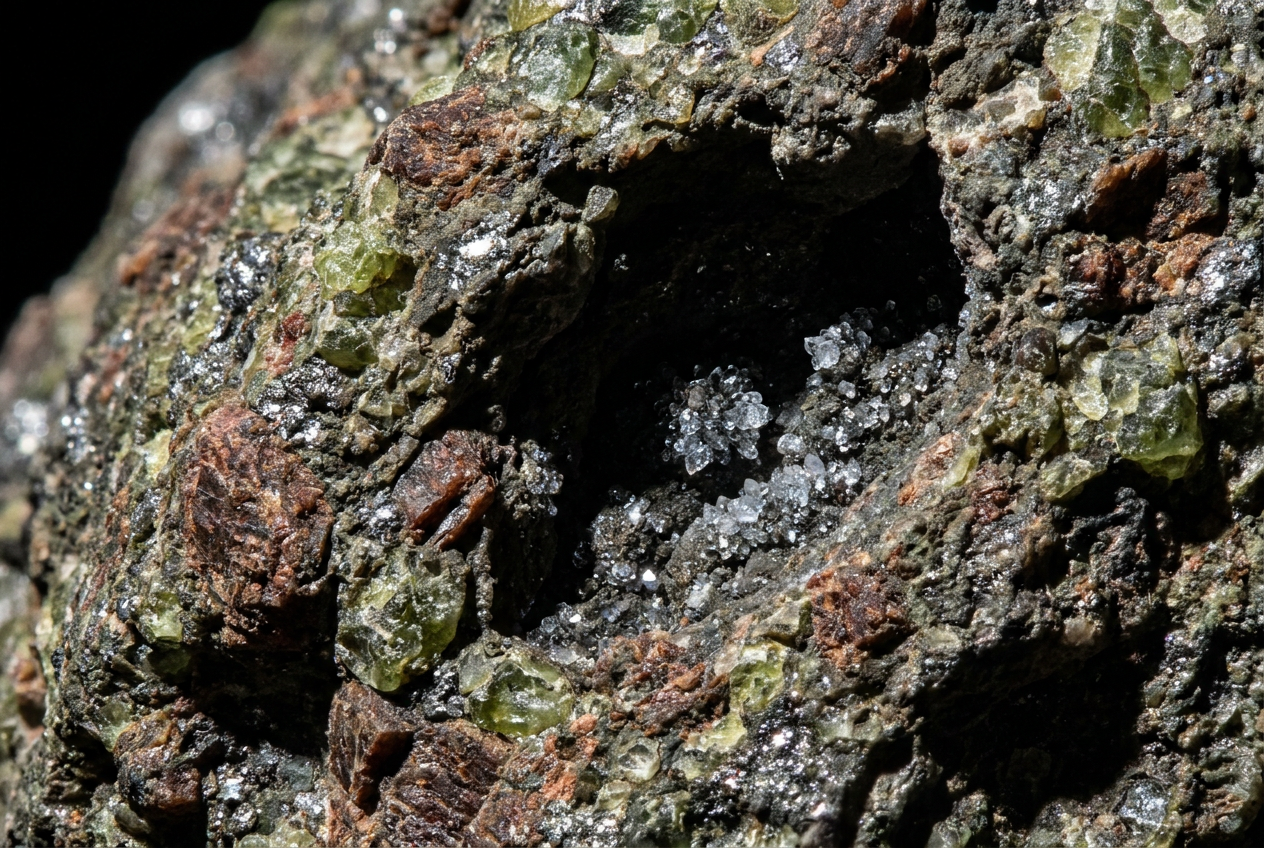
As for its composition, it belongs to spectral type S , meaning it's a rocky asteroid made primarily of silicates and metals. A particularly striking detail is its above-average density for asteroids of its type, similar to that of terrestrial silicate rocks. This suggests it's a solid, unfractured body , a rare characteristic for objects of this size, as most are simply "heaps of rubble."
Orbital dynamics: Its dance around the Sun
Massalia's journey is not a perfect circle, but an elliptical orbit. It travels at an average distance of 2,409 astronomical units (AU) . Its path has its ups and downs: it can approach as close as 2,065 AU at perihelion and move as far away as 2,753 AU at aphelion. To complete one full orbit around the Sun, it takes exactly 1366 days (about 3 years and 9 months).
To get technical, its orbital inclination is 0,7083° and it has an eccentricity of 0,1429. Furthermore, it rotates on its own axis with a rotation period of 8,098 hours . Interestingly, its axis of rotation is tilted at approximately 45° with respect to the ecliptic.
Secrets, families, and recent discoveries
Massalia is not alone; it is the parent body of the Massalia family , a large group of rocky asteroids in the inner asteroid belt. Essentially, the other members of the family are fragments that were blasted away after a massive impact on Massalia's surface eons ago.
- Water detection: In February 2024, a bombshell announcement was made: water molecules were discovered on its surface, making it one of the first asteroids in which this element has been detected.
- Visual observations: For telescope enthusiasts, it has been seen passing through the constellation of Scorpio, reaching a apparent magnitude of 9,6.
- Failed searches: In 1988, attempts were made to search for satellites or dust clouds around it using the UH88 telescope on Mauna Kea, but nothing was found.
The legacy of Annibale de Gasparis
We cannot overlook the man who found it. Annibale de Gasparis was such a brilliant scientist that the International Astronomical Union decided to name a 30-km lunar crater and a system of tectonic channels (Rimae de Gasparis) after him. His contribution was so significant that he received the Gold Medal of the Royal Astronomical Society and the Lalande Prize, and there is even another asteroid, 4279 De Gasparis , named in his honor.
This rocky giant, with its metallic composition and disruptive history, remains an essential reference point for astronomers. From its shattering of classical mythology to the recent and surprising discovery of water , 20 Massalia continues to teach us that the asteroid belt is far more complex and fascinating than it first appears.