- A petition on Change.org is calling on Microsoft to release a new Windows Phone based on Windows 11 with integrated Copilot.
- The history of Windows Phone shows a system ahead of its time but hampered by a lack of applications and a late arrival to the market.
- Microsoft would have to invest enormous resources to rebuild a competitive mobile ecosystem against iOS and Android.
- The company's current focus is on artificial intelligence and the cloud, making a return to the smartphone market highly unlikely.
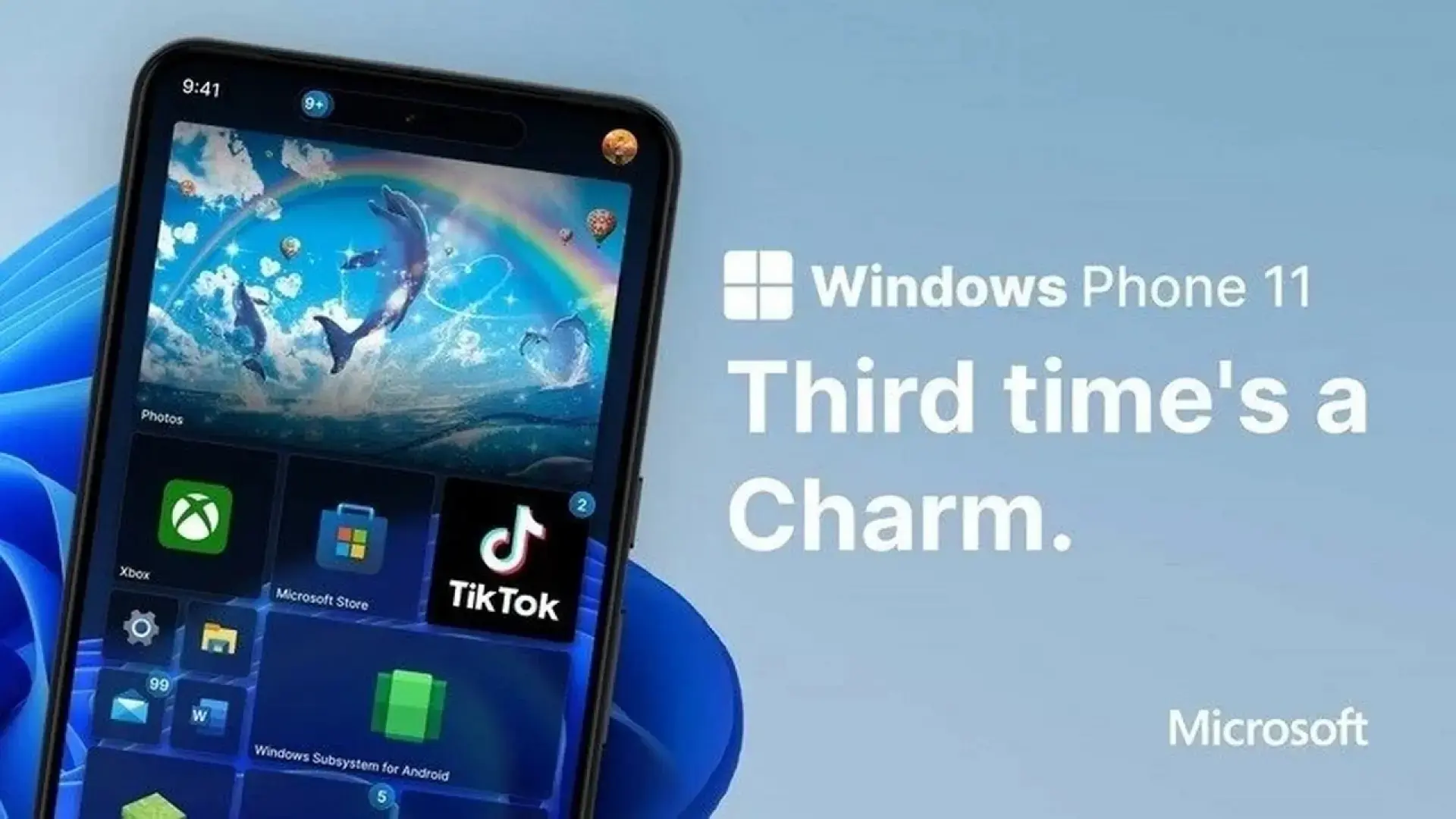
Tech nostalgia is making a comeback this holiday season with an unexpected protagonist: Windows Phone could be making a comeback thanks to a citizen initiative. A petition on Change.org is trying to convince Microsoft to revive its mobile operating system, this time based on Windows 11 and with deep integration of Copilot and even Microsoft 365.
This proposal has reignited old debates between those who fondly remember the dynamic tile interface of Windows Phone and those who experienced the system as a cumbersome platform, limited in apps and with product decisions difficult to understand. While a small group of users dreams of a hypothetical "Windows Phone 11," others see the project as a nightmare, hardly viable in the current market dominated by Android and iOS.
The petition that wants to bring back Windows Phone
The starting point for all this commotion is a Change.org campaign titled "Bring Back Windows Phone ," launched by a Greek user who goes by the name Σπύρος Κ. Its aim is to pressure Microsoft to release a new generation of mobile phones with an operating system inspired by Windows Phone, but updated on the technological foundation of Windows 11.
The petition argues that Windows Phone was a platform ahead of its time , offering a fast, fluid experience very different from what iOS and Android offered. The creator highlights features such as Live Tiles, tight integration with Microsoft services, and a bold, minimalist design heavily focused on productivity.
The proposal doesn't call for a mere nostalgic revival, but rather a completely updated system: a reinvented Windows Phone, built on current technology , with modern support for recent hardware and an interface adapted to current standards. The core element of this vision would be the deep integration of Microsoft 365 and the AI-powered assistant Copilot, which would become a key component of daily mobile use.
Despite the striking nature of the proposal, the response so far has been rather modest: the petition has barely garnered five hundred signatures . Even so, the initiative has been enough to reignite the debate on social media and tech forums about whether it makes sense, in 2025, to consider another attempt by Microsoft to enter the smartphone market.
Among those who criticize the idea, an apparent contradiction is highlighted: the promise of a light and clean experience clashes with the current reality of Windows 11 , perceived by many users as a heavier system, crammed with added features, notifications, and aggressive integration of services like Copilot. For these critics, imagining a "Windows Phone 11" with all that bloat on a mobile device is unappealing.
From illusion to abandonment: what was Windows Phone
To understand why a group of users continues to demand its return, it's worth remembering that Windows Phone was launched in late 2010 as the direct successor to Windows Mobile. Microsoft was trying to respond to the rise of Android and the impact of the iPhone, which had rendered its previous mobile platform obsolete.
The company's big bet was the so-called "Metro" design: a home screen made up of live tiles with real-time information , instead of the classic grid of static icons. The interface was very clean, with large typography, simple gestures, and a sense of fluidity that many users praised above the competition at the time.
Windows Phone 7 offered a polished and distinctive experience, but it arrived significantly late to the game . By the time the first devices with this operating system went on sale, iOS was already well established and Android was growing rapidly across all price segments. This early disadvantage was compounded by a very limited app catalog compared to the Apple and Google app stores.
Microsoft's most ambitious moment came with Windows Phone 8, released two years later . This version made the leap to a kernel based on Windows NT, added support for multi-core processors, enabled higher-resolution displays, and improved integration with desktop Windows. On the hardware front, the company sought to strengthen its position with a very close alliance with Nokia.
The once-great Finnish company, already in decline and still tied to the veteran Symbian operating system, decided to gamble everything on the Nokia Lumia family with Windows Phone . These phones offered competitive hardware for their time, well-regarded cameras, and a generally positive user experience, also endorsed by a large portion of the specialized press.
Paradoxically, the peak of Nokia Lumia's popularity came shortly before its decline . In 2013, the brand gained some traction thanks to well-received models, but a year later Microsoft acquired Nokia's Devices & Services division . This purchase, intended to strengthen the ecosystem, ended up undermining the confidence of other manufacturers.
A different system, but without the key apps
Despite these strengths, the platform's Achilles' heel was never resolved: the lack of key applications in the store . Many developers were unmoved by a system with a small market share and more limited APIs than iOS and Android, resulting in a significantly inferior software offering.
For years, Windows Phone lacked basic apps like Instagram at launch , which didn't arrive until 2013. WhatsApp appeared in 2012 , but in a stripped-down version with very inconsistent performance, which further damaged the system's image among the general public.
Added to this was the absence of essential Google ecosystem services : there was never an official YouTube, Google Maps, or Gmail app for the platform. Users ended up resorting to alternative solutions or web versions, which lagged far behind in convenience and functionality compared to what Android phones or iPhones offered.
Paradoxically, the peak of Nokia Lumia's popularity came shortly before its decline . In 2013, the brand gained some traction thanks to well-received models, but a year later Microsoft acquired Nokia's Devices & Services division. This purchase, intended to strengthen the ecosystem, ended up undermining the confidence of other manufacturers.
With Nokia becoming virtually the only relevant partner, the other manufacturers distanced themselves from the Windows Phone project . Android and iOS had already gained an almost insurmountable lead in market share, app stores, and user loyalty, leaving Microsoft in a very difficult position to continue competing.
Windows 10 Mobile and the end of the adventure
The last major attempt came in 2015 with Windows 10 Mobile , the version that sought to unify the experience between PC and phone. Microsoft then opted for Universal Windows Platform (UWP) apps, designed to work on computers, mobile phones, and other devices running Windows 10.
One of the most striking ideas from that period was Continuum, which allowed users to continue on their mobile phone what they were doing on their PC , or even connect their phone to a large screen to use it as a kind of mini-computer. On paper, the proposal seemed very advanced and fit well with the company's productivity message.
However, it all arrived too late in a market already divided between Android and iOS. The user base was small, developer interest remained low, and many manufacturers had lost faith in the project's viability. Even efforts to unify platforms and experiences failed to reverse the decline.
In 2017, Microsoft confirmed it was ceasing development of new features for Windows Phone and Windows 10 Mobile , limiting itself to providing security patches. Two years later, in 2019, official support ended, closing an era that many identify with the Microsoft Lumia 950 XL as its last major example.
For much of the tech community, that foray into the mobile market is considered one of Microsoft's biggest strategic failures . The company missed a key opportunity to compete head-to-head with Apple and Google in a sector that, over time, has become central to the digital ecosystem of millions of people.
Why some users want it back
Despite that outcome, a group of users still holds very positive memories of Windows Phone . They value its fluidity, the consistency of its design, and the feeling of freshness compared to the more cluttered interfaces that dominate today. For them, reviving that approach in 2025 would make sense, especially in an environment where many mobile phones offer very similar experiences.
In the current context, the call to revive the platform is also supported by Microsoft's progress with Windows 11 on Arm processors . The company has invested heavily in optimizing its system for Arm chips, the same ones that dominate the smartphone market, and some of that work is already visible in devices like the Surface with Snapdragon SoCs.
From that perspective, those pushing for the comeback argue that the most complex part—the operating system adapted to Arm and the compatible apps—is already underway . What remains is to make the leap to the mobile format, adjusting the interface and user experience, something that, in theory, could be more affordable today than it was a decade ago.
Furthermore, in a mobile market dominated for years by Android and iOS, proponents of the idea believe there could be room for a third player focused on simplicity, productivity, and a fresh approach . Thus, a "Windows 11 Mobile" or "Windows Phone 11" would have the potential to attract users tired of seeing the same old options.
However, even some nostalgic fans acknowledge that a return is more of an emotional wish than a realistic one . The minimum market share, the necessary effort, and Microsoft's current strategy make it highly unlikely that anything beyond theoretical debate and the fleeting hope of a petition will materialize.
The obstacles for a hypothetical Windows Phone 11
Looking at it objectively, the main challenge in reviving Windows Phone would be rebuilding an entire ecosystem from almost scratch . It's not enough to launch an attractive operating system; you need applications, services, and agreements with manufacturers, carriers, and developers who are committed to a platform with a future.
Microsoft would have to invest enormous sums of money to convince app developers that it's worthwhile to develop and maintain specific versions for a system with an initially very small user base. The previous experience with Windows Phone left a certain amount of distrust within the developer community, something that wouldn't exactly help starting over.
Furthermore, consumers have been accustomed to iOS and Android for over a decade . Switching systems means giving up previously purchased apps, adapting to new menus, and losing convenience in integration with other devices at home or work. A small group of enthusiasts might make the switch, but convincing the general public would be a much more difficult task.
Another key factor would be proprietary hardware . The Redmond company already learned with the Nokia acquisition how precarious it is to rely on external partners to sustain a mobile platform. Without a clear and well-positioned flagship smartphone, a new Windows Phone would struggle to gain traction, and returning to serious mobile phone manufacturing would reopen a front the company abandoned years ago.
Finally, many observers doubt that a hypothetical massive integration of Copilot and Microsoft 365 would result in a lightweight and unobtrusive experience . The current perception of Windows 11 as a system overloaded with features, notifications, and integrated services works against the narrative of simplicity inspired by memories of the original Windows Phone.
AI as a temptation… and as a risk
Some argue that only artificial intelligence could push Microsoft to rethink its presence in the mobile market . In a landscape where Google is advancing with its own AI-powered assistant and Apple is beginning to introduce similar features in its devices, lacking its own mobile operating system limits Microsoft's ability to compete on equal footing in this arena.
The company is trying to address this gap by bringing Copilot to Android and iOS through apps and partnerships with manufacturers , as well as integrating it into browsers and cloud services. However, having complete control of the system is not the same as relying on third-party layers, and that's where some see the temptation to try their luck again with their own platform.
The problem is that Microsoft's history in the mobile market weighs heavily on its reputation . After investing in the Nokia acquisition and spending years promoting Windows Phone, the result was a hasty closure and a negligible market share. Repeating a move of that magnitude would entail taking on considerable financial and reputational risk.
Furthermore, many Windows 11 users already feel that Copilot's integration into the desktop has been somewhat intrusive, with notifications and features that aren't always perceived as useful. Transferring that same approach to a mobile device could generate resistance , especially among those who value discretion and control over their personal data.
In the European and Spanish context, where privacy and competition regulations are particularly strict , a mobile operating system heavily focused on data collection for AI could face additional scrutiny from regulators. This would add another layer of complexity to an already challenging relaunch.
As of today, everything points to Microsoft continuing to prioritize artificial intelligence and its cloud services over a return to mobile hardware. Even divisions like Xbox have taken a backseat in the overall strategy, which gives an idea of the extent to which the company is concentrating resources on the areas it considers most strategic.
Nevertheless, the debate this petition has generated demonstrates that the legacy of Windows Phone remains alive in the memory of many users . Between fond recollections, criticism of past mistakes, and curiosity about what a "Windows Phone 11" with integrated AI might have been, the issue once again raises the question of how much the mobile market missed out on a third option that never truly took hold.
Table of Contents
- 1 The petition that wants to bring back Windows Phone
- 2 From illusion to abandonment: what was Windows Phone
- 3 A different system, but without the key apps
- 4 Windows 10 Mobile and the end of the adventure
- 5 Why some users want it back
- 6 The obstacles for a hypothetical Windows Phone 11
- 7 AI as a temptation… and as a risk