- Google has removed Doki Doki Literature Club from the Play Store due to its treatment of sensitive topics.
- The game includes warnings, has a high age rating, and is highly praised for its focus on mental health.
- Its developers are working to bring it back to the store and are exploring alternative distribution channels on Android.
- The title is still available on PC and consoles such as Nintendo Switch, PlayStation, Xbox and iOS
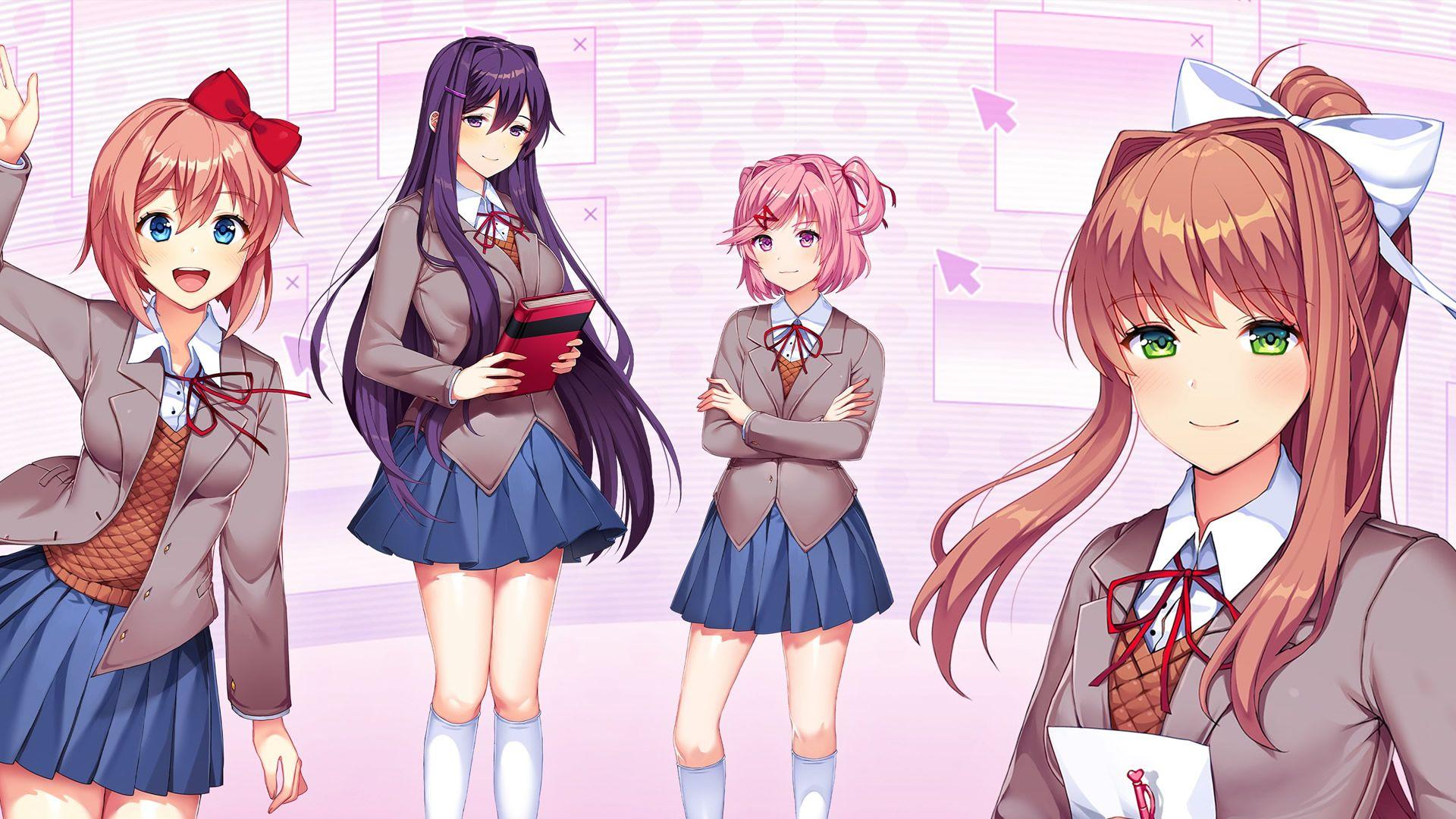
The well-known psychological horror game Doki Doki Literature Club It has vanished from the Google Play Store. After being available for free on Android phones for just a few months, the company has decided to remove it. Google Play Store claiming that it violates its internal rules because of the way it deals with certain sensitive issues.
The withdrawal has taken both its creator and Dan Salvatoas well as publisher Serenity Forge and studio Team Salvato, who have publicly defended the game's approach to mental health. While Google remains silent beyond an automated policy violation notice, the team is already working to ensure the title can be released. Back to Android or, failing that, find other distribution channels.
A cult hit that arrived late to Android
Doki Doki Literature Club was initially released on PC in 2017 as a free visual novelAnd over time, it became a cult classic thanks to word of mouth and its shift towards psychological horror. It later made the leap to consoles with the expanded version Doki Doki Literature Club Plus!, available on Nintendo Switch and PlayStation, and later also on Xbox.
After years of popularity on computers and consoles, the game finally landed on Android last DecemberThe mobile version of the visual novel had only been on the Play Store for a few months when it was removed, making the decision especially painful for its creators and for those who first discovered it in the Google ecosystem.
The game's impact is significant: it has accumulated over 126.000 reviews with an “overwhelmingly positive” ratingWith thousands of recent reviews demonstrating that the community remains very active almost a decade after its original release, the free version has been downloaded over 30 million times and the paid Plus edition has surpassed one million purchases, figures that place it among the most influential visual novels of recent years.
On Google Play, the Android version included a near-perfect user rating and over 20.000 positive reviews, in addition to the "17+" age rating. Despite these warnings and access limitations through parental controls, the title has ultimately clashed head-on with the platform's content policies.
Google's official reasons: "sensitive issues"
According to Salvato and Serenity Forge, the notification received from Google indicates that the video game violates the Terms of Service The app was removed from the Play Store for "the way it portrays sensitive topics." Although the company's statement doesn't go into details, everything points to references to depression, self-harm, and suicide being at the heart of the controversy.
Google Play content policies They prohibit apps that promote self-harmsuicide, choking games, or other behaviors that could cause serious harm. The debate arises precisely from the difference between exhibiting an uncomfortable theme and glorifying it. The game's creators insist that Doki Doki Literature Club does not encourage suicide or glorify suffering, but rather uses psychological horror and interactive storytelling to Explore mental health consciously and with nuance.
Since its release, the title has often been cited as one of the most thoughtful portrayals of depression and emotional distress in video games. Numerous players have noted that the game helped them to to feel less alone and more understood in difficult times, something that its creators also emphasize in recent statements.
The paradox for many fans is that the game has been, for years, considered an example of how to address these issues responsibly, with clear warnings and without glorifying them, while now it is seen penalized precisely for talking about them in a massive digital store.
A psychological horror film disguised as a romantic comedy
Part of the controversy stems from the very nature of Doki Doki Literature Club. At first glance, it presents itself as a cute anime-style school dating simulatorWith a book club, poems, and a seemingly lighthearted tone, this colorful and friendly appearance is deliberately deceptive: the game hides a much darker plot that gradually reveals its true nature as psychological horror.
The work uses a metanarrative structure that breaks the fourth wall And it plays with the player's expectations, deconstructing the clichés of the romantic visual novel. This formal decision is key to the game's impact and the way its themes are addressed: the gentle surface serves as a contrast to amplify the emotional rawness of the story's development.
Aware of its own difficulty, the game includes from the beginning explicit content warningsThe first message that appears upon starting it is that it is not suitable for children or sensitive people, and the menu offers the option to activate additional warnings before the most disturbing scenes, as well as a link to a detailed list of potentially triggering topics.
In addition to these internal precautions, the game's listing on Google Play clearly stated Its rating is for ages 17 and up and was subject to the platform's standard parental controls. The studio emphasizes that multiple measures have been taken to contextualize the content and minimize the risk of it falling into the hands of users unprepared for its message.
Even so, Google has determined that the way these issues are handled clashes with its rules, raising questions about where exactly the line is established between what is acceptable and what should be removed, especially when it comes to works of fiction with artistic intentions and explicitly discouraging messages.
The study's position: defending the message and seeking solutions
After learning of the withdrawal, Serenity Forge, Team Salvato, and Dan Salvato himself published a joint statement on social media in which they strongly defended the project integrityThey insist that DDLC is “widely recognized for representing mental health in a way that deeply connects with gamers around the world,” helping many people feel “heard, understood, and less alone” during their journey.
In the same text, the team makes it clear that it does not consider the game to promote harmful behaviors, but rather that it uses the interactive medium to generate empathy and reflectionSalvato emphasizes that the goal has always been to create a significant impact by using fiction as a bridge to those who need to feel accompanied, and that this purpose is precisely what encourages him to continue creating new works.
Beyond the conceptual defense, the study asserts that it is appealing Google's decision and “doing everything possible” to have the game reinstated on the Play Store. The team is confident they can convince the platform that the content, while graphic, is presented responsibly, with clear warnings and no incentives for self-harm.
Meanwhile, Serenity Forge has acknowledged that they are exploring alternative distribution methods in AndroidAlthough there are no concrete announcements yet, the possibilities on the table include publishing the game via direct APK download or through other mobile app stores that allow this type of content, provided that reasonable security conditions for users can be guaranteed.
For now, those who downloaded the game before its removal They can still access their copy It's installed on the device, but new downloads from the Play Store are no longer possible. The future of the official Android version therefore remains uncertain.
A case that reignites the debate about censorship in digital stores
Google's decision doesn't come in a vacuum. In recent years, there have been several cases where video games with mature themes Unconventional artistic approaches have clashed with the policies of major platforms. The industry has long debated the extent to which these rules constitute a form of censorship for certain stories, especially those focused on mental health, sexuality, or violence.
Recently, other experimental titles and works with content considered NSFW They have been removed from stores like Steam and download platforms due to pressure from banks and payment processors, concerned about their image among groups that reject certain types of fiction. In some cases, the developers of these games have complained about a lack of transparency and communication from the stores when justifying the removals.
Doki Doki Literature Club has unwittingly become a particularly striking example of this phenomenon. Many players and analysts consider its treatment of mental health to be... responsible and, sometimes, even therapeutic for certain audiences, precisely because of the honesty with which it addresses psychological distress and the empathy it generates towards its characters.
The removal from the Play Store also contrasts with the fact that the game still available seamlessly on iOS and on other digital platforms such as Steam, PlayStation Store, the Nintendo Switch eShop, and the Xbox stores. This disparity fuels the feeling that there is no unified standard in the industry and that decisions depend largely on how each company interprets its own internal rules.
Some followers speculate that it might simply be a policy application error Google's stance could be corrected once the case is reviewed in detail. Others, however, fear that this is a trend toward stricter policies that could affect more projects attempting to address mental health in a raw way, thus limiting the space for complex narratives in the mobile environment.
What can Android gamers do now?
In the short term, the situation for users is relatively clear: those who already had Doki Doki Literature Club installed on their device They can continue playing normallyThe removal only affects the ability to download it again from the store, not access to existing copies. However, future updates may take longer to arrive or depend on the solution the studio finds.
Those who did not download the game before April 8, the date of its removal, will have to wait until Google reverses its decision Or that the studio will enable an official alternative for Android. For now, Serenity Forge has not given specific dates or confirmed which option it will prioritize, beyond guaranteeing that it will inform the community as soon as there are updates.
Meanwhile, those who want to experience the story for the first time can still do so at PC and on major consoleswhere the game remains on sale unchanged. The PC and console versions, including the Plus edition, continue to be recommended by many specialized media outlets and maintain an active user base.
For European players, the situation is no different from that of the rest of the world: The withdrawal has a global impact. The game is not available on the Play Store, so in Spain and the rest of the European Union, it is not currently possible to download the title from the Google Play Store. In practical terms, the only difference lies in the local regulatory framework regarding child protection and parental controls, but the final decision still rests with the tech company.
The outcome of the case will be closely followed by studios and publishers across Europe, as it could set a precedent on How are video games that address mental health treated? directly on mobile devices. A favorable outcome for Doki Doki Literature Club would reinforce the idea that it is possible to address sensitive topics responsibly on these types of platforms; a negative outcome, on the other hand, could discourage other creators from taking risks with similar projects.
With the game removed from the Play Store but fully accessible on PC and consoles, the conflict between Google and the developers of Doki Doki Literature Club leaves a fundamental question unanswered: To what extent should large digital stores filter or limit works? which address psychological suffering in a raw, yet honest way. While the community debates censorship, responsibility, and creative freedom, the future of the Android version remains uncertain, pending a possible correction or the emergence of new ways for users to continue accessing this unique literature club from their mobile devices.