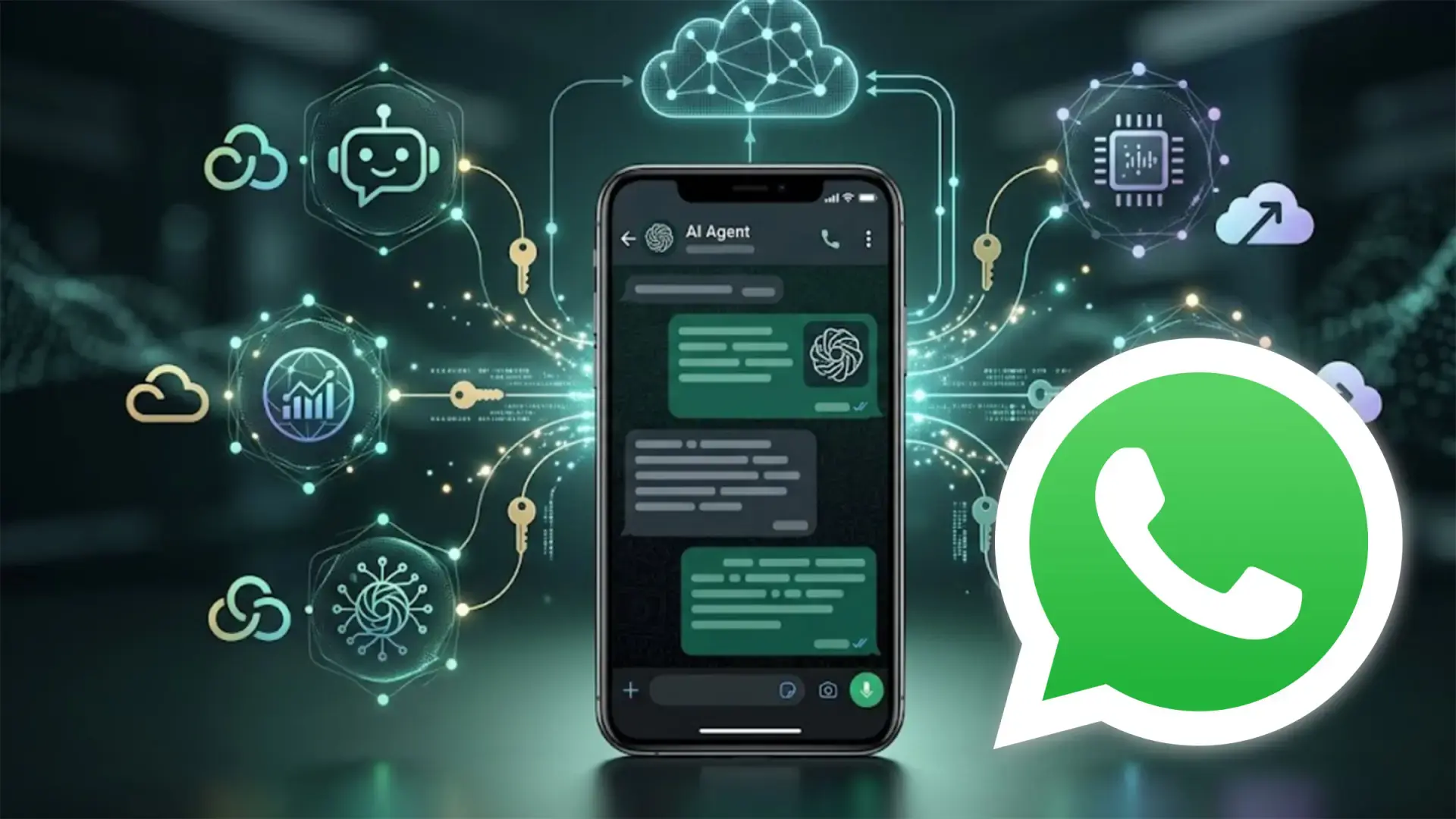
- WhatsApp is testing a feature to link up to five external AI agents per account using an API key.
- Agents will only be able to access the individual chat to which they are linked, without access to groups, contacts, or files.
- Conversations with these agents will not have end-to-end encryption, unlike regular chats.
- The feature is currently in beta testing for Android and does not yet have a global release date.

WhatsApp, the world's most popular messaging app, is taking significant steps to expand its artificial intelligence ecosystem. The Meta-owned company has begun testing a feature that will allow users to connect to third-party AI agents and converse with them directly from the platform, without needing external apps or browser extensions. This new feature, discovered by the tech website WaBetaInfo in beta version 2.26.35.3 for Android, represents a significant shift in how users interact with virtual assistants.
Until now, WhatsApp had its own built-in assistant, Meta AI , which users could chat with or mention in group conversations. However, the new feature goes further: it will allow the integration of AI agents from other companies or developers, each with its own individual chat, just like any other contact. The idea is that users can assign tasks, ask questions, or manage various services without leaving the app, leveraging the platform's base of over 3.000 billion monthly active users.


Configuration via API and a limit of five agents
The process for linking an external agent is relatively simple, although it does require a few technical steps. According to screenshots published by WaBetaInfo, the user must access WhatsApp settings and select the option to create a new agent. There, they must assign a name and profile picture, which will appear in the chat list like any other contact. Once this step is completed, the application generates a unique API key that must be copied and pasted into the service where the agent is hosted, whether it's an AI platform, a custom bot, or a cloud service. This key acts as a connection bridge and can be regenerated at any time to disconnect or reconnect the agent.
The company has set a limit of five agents per account , allowing users to utilize different assistants for different purposes, each with their own individual chat. For example, a user could have one agent to manage bookings, another to answer emails, and another for productivity tasks, all from the same application. This restriction aims to prevent a single system from accessing all of a user's activity, as each agent remains confined to their specific conversation.
Privacy and access limitations
One of the most important aspects of this new feature is privacy. Third-party agents will only be able to access the content shared in your individual chat ; that is, they will not be able to read other conversations, consult your contact list, or access multimedia files stored in your account. They also will not be able to be added to groups or communities, at least in this initial phase. This measure aims to separate the agent's activity from the rest of the user's personal information, offering a controlled environment for interaction.

However, there's a key difference compared to regular conversations: chats with AI agents won't be end-to-end encrypted . This means that messages sent to the agent pass through a Meta service acting on behalf of the third-party developer, and both the developer and Meta itself will have access to the content of these exchanges. The company has clarified that conversations between people and calls will continue to be encrypted using standard methods, but this exception is something to keep in mind for those who decide to use this feature.

Agent management and elimination
The application also offers tools for managing linked agents. From the settings, users can modify each agent's name or profile picture, as well as delete them entirely. If an agent is deleted, the connection is permanently severed, and it will no longer be possible to send or receive messages in that chat. However, the conversation history is not automatically deleted, so previous messages will remain visible. To reconnect an agent, a new API key must be generated, and the linking process must be repeated.
This opening marks a significant shift in WhatsApp's historical stance, which until now has blocked or suspended accounts that attempted to connect third-party bots through unofficial methods. The rise of platforms like OpenClaw and the popularity of Telegram as a space for experimenting with AI agents have led Meta to rethink its strategy. The company has already taken steps in this direction with the launch of Meta Business AI for WhatsApp , a customer service bot for WhatsApp Business, and is now aiming for broader integration.


Context and future expectations
The feature is currently in testing with a limited number of Android users and is not yet generally available. WhatsApp has not announced a specific date for the global rollout, but all indications suggest that, if the trials are successful, the tool will soon reach all users. This initiative is part of Meta's broader strategy to transform its applications into task-based platforms, going beyond simple messaging. The company is also working on other personal agents, such as Muse, which will be available on WhatsApp, although it is a proprietary development.
For users, the ability to connect external agents opens up a range of possibilities: from productivity assistants to bots specializing in shopping, bookings, or customer service. However, the lack of end-to-end encryption and the developer's access to messages are aspects that should be considered before sharing sensitive information. WhatsApp, for its part, has included a warning in the interface reminding users that agent responses may contain errors and recommends verifying the information before acting on it.

Impact on the digital ecosystem
WhatsApp's opening to third-party agents is not merely a technical curiosity; it represents a new distribution surface for products and services that thrive in conversation. With over 3.000 billion monthly active users, the platform becomes a direct access channel to a massive audience, without requiring users to download an additional app or learn a new interface. For startups and developers, this means a well-designed agent can reach millions of people with minimal friction.

However, it also presents challenges in terms of privacy and security. The lack of end-to-end encryption in these chats means that data shared with the agent can be accessed by the service provider, forcing users to be aware of what information they share. Furthermore, managing up to five agents per account requires clear organization to avoid confusion. Despite these limitations, the trend is clear: artificial intelligence is becoming increasingly integrated into everyday applications, and WhatsApp wants to be at the forefront of this movement.

In short, WhatsApp's new feature for connecting third-party AI agents represents a significant step forward in the evolution of instant messaging. The ability to have up to five external assistants, each with their own chat, offers unprecedented flexibility, although this comes at the cost of not having the same level of privacy as traditional conversations. The feature is currently in beta and is expected to be rolled out gradually, marking the beginning of a new era in which chatbots and intelligent agents will become part of the daily lives of millions of users. The key will be finding the right balance between usability and data protection, something Meta will have to manage carefully to maintain the trust of its community.