- Facebook suffered a global outage on the afternoon of March 3, 2026, with a particular impact on the web and account access.
- Tools like DownDetector recorded spikes of thousands of reports in just a few minutes, as did other Meta services.
- The outages affected login, feed loading, publishing, and Meta Business Suite in several countries, including a major impact in Mexico and a presence in Europe.
- Meta did not initially provide details about the reasons, which increased the uncertainty of users and companies that depend on the platform.
On the afternoon of Tuesday, March 3, 2026, thousands of users began to notice that Facebook was not functioning normally . What initially seemed like an isolated connection problem for some users ended up becoming a global issue, with reports quickly spreading across the Americas, Europe, and other regions.
As the minutes ticked by, monitoring platforms and alternative social networks began to fill with messages pointing to the same problem: a massive Facebook outage, difficulties logging in, and continuous errors loading content . Many users suddenly found themselves disconnected, unable to access their personal profiles, professional pages, or management tools.
A global outage that affected millions of users
According to data compiled by specialized portals like DownDetector , the peak of incidents occurred between 15:00 PM and 17:00 PM (Mexico time) , a period during which error reports skyrocketed. At times, these platforms recorded thousands of reports concentrated in just a few minutes , confirming that this was not an isolated problem.
A significant portion of the notifications were related to basic access to the platform: automatic logouts, inability to regain access to the account, and error messages when entering credentials . In many cases, the system indicated that the password was incorrect even though users insisted they were entering their usual credentials.
Other reports described how, even when the session remained open, the news feed wouldn't update , posts wouldn't appear or would take a long time to load, and photos and videos would freeze mid-stream. On the desktop version, some users reported encountering blank screens or "500 Internal Server Error" messages , common when there are server failures.
In addition to the impact on personal use, the outage also affected business and media profiles. Meta Business Suite, the page and content management tool, experienced intermittent outages and errors when scheduling or managing posts , which particularly complicated the work of marketing teams and community managers.
DownDetector data: where and how the fall was detected
The first concentrated alerts appeared on monitoring services around the early afternoon. According to data published by these platforms, most reports concerned problems with the Facebook website , followed by difficulties with the mobile app and loading the news feed.
At different times of the day, the percentages of incidents varied according to the area, but the patterns were repeated: the majority of users pointed out direct failures in the web version ; to a lesser extent errors in the app were mentioned and, lastly, specific problems with the flow of publications and the chronology.
Heat maps produced by these services showed areas with high concentrations of reports in large urban areas . In the Americas, numerous reports were registered from some of the main cities in the United States and Latin America. In Mexico, the incidents were concentrated in areas such as Mexico City, Guadalajara, Monterrey, Puebla, Guanajuato, and Yucatán , among others.
Simultaneously, problems were also documented in other regions such as the United Kingdom and various parts of Europe and the United States, where users reported being unable to access their accounts or encountering messages such as "Account temporarily unavailable ." At certain times during the afternoon and evening, several hundred or even thousands of reports had already been tallied in European countries.
These types of platforms, based on user reports, allow us to distinguish between a widespread outage and a specific connection problem . In this instance, the rapid increase in reports made it clear that the Facebook outage was widespread, affecting several continents simultaneously.
What problems did Facebook users experience?
The testimonies gathered on social media and digital platforms coincided on several key points. The most frequent symptom was the unexpected closure of sessions : some people commented that, without prior notice, they were logged out of their accounts and, when trying to log back in, they encountered error screens.
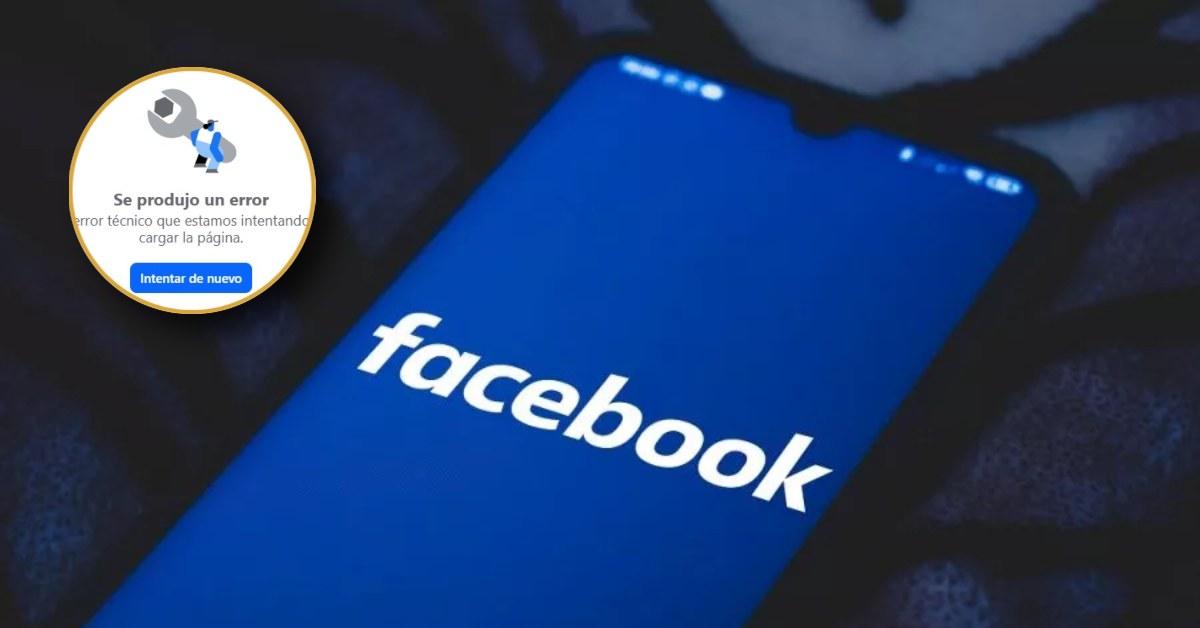
A significant percentage of users encountered messages indicating that the page was unavailable or that their account was temporarily unusable. These notifications, which are usually associated with maintenance or temporary server issues, appeared en masse this time , increasing the sense of confusion.
Among the most common complaints, users also mentioned errors loading the news feed, posts that weren't updating, or posts that simply weren't displaying . Many initially thought it might be a problem with their internet provider, until they checked other services and found that other websites were working normally.
Regarding messaging and related tools, some users reported delays when sending messages via Messenger and difficulties uploading photos and videos . Problems were also detected in page management, where scheduling content or creating new posts resulted in error messages or failed to complete.
This set of symptoms, affecting access, navigation, and publishing, reinforces the hypothesis of a widespread failure in the platform's infrastructure, not just an isolated component . This explains why the incident was perceived as a general outage rather than a simple performance dip.
Impact on other Meta platforms: Instagram, WhatsApp and more
Although the main focus was on Facebook, users in various regions also began reporting outages in other Meta apps . Throughout the afternoon, complaints were received about problems with Instagram, WhatsApp Web , Messenger, and even Threads , leading to suspicions that the issue might originate from shared elements of the group's infrastructure.
In the case of Instagram, some users reported difficulties loading their timeline, viewing stories, or posting new photos and videos . Others encountered blocks when trying to access their profiles or received error messages when updating the app.
Regarding WhatsApp and Messenger, some users reported delays in message delivery, problems connecting to the server, or intermittent interruptions in conversations . Although at times the outages weren't as noticeable as on Facebook, they were still recorded as similar incidents.
This timing of outages across different services from the same company generated numerous comments on alternative social media platforms, where a large-scale Meta service outage was openly discussed . Without a detailed technical report, it was difficult for users to determine whether it was the same underlying problem or several interconnected incidents.
The truth is that, for a significant portion of the afternoon, part of the Meta application ecosystem exhibited erratic behavior , which affected both personal communication and the professional use of these tools in companies and media outlets.
User reaction and initial lack of official explanations
As is often the case in these types of incidents, many users turned to other social media platforms to check if the outage was widespread . Platforms like X (formerly Twitter) were flooded with messages, screenshots, and memes commenting on the inability to access Facebook or the strangeness of finding their accounts inoperative.
In some countries, the hashtag related to the Facebook outage trended for several hours , fueled by both those seeking information and those taking advantage of the situation to joke around. Meanwhile, digital media outlets and technology websites began publishing articles explaining what was known at that point and compiling data from monitoring tools.
Meanwhile, the parent company, Meta, initially maintained a low profile . In the early stages of the outage, no detailed public explanation was offered regarding the cause of the failure or the approximate timeframe for full service restoration, which increased the uncertainty of those who rely on these platforms for their daily work.
Businesses, content creators, and online community managers found themselves with a key tool partially unusable, without a clear indication of how long the outage might last. In this context, the lack of immediate official information was one of the most criticized aspects by users , who demanded greater transparency regarding the actual state of the services.
Historically, other Facebook and Meta service outages have been attributed to problems with the technological infrastructure, errors in internal updates, or server configuration issues . Although the cause wasn't publicly identified during the first few hours of this outage, many experts again pointed to these types of technical factors as possible culprits.
Context: This is not the first time Facebook has gone down.
Although in recent years Facebook has lost ground to other networks such as TikTok or Instagram, it remains one of the most used social platforms worldwide , especially for keeping in touch with family and friends, as well as for the dissemination of informative and commercial content.
In various markets, including European and Latin American countries, statistics still place it among the top performers in terms of active users . This means that each significant disruption has the potential to reach millions of people, both personally and professionally.
This isn't the first time Meta's network has experienced this type of situation. In other recent instances, there have been partial outages or intermittent service disruptions that affected the app and website for minutes or hours, generally attributed to technical issues within the service's internal infrastructure.
These past experiences help contextualize what happened on March 3rd: large digital platforms, due to their inherent complexity, are not immune to outages . However, the growing dependence of many individuals and businesses means that each outage gains media attention and generates an immediate reaction in the digital sphere.
Pending further analysis from Meta, this incident once again highlights the importance of having alternative communication channels and an online presence , especially for businesses that rely heavily on a single social network. Until the service is fully restored, the usual recommendation is to remain calm, verify information with reliable sources, and avoid sudden changes to passwords or settings that could further complicate account access.
What happened this Tuesday with Facebook confirms that, despite being an everyday technology and seemingly always available, major platforms are still susceptible to outages that can leave millions of users disconnected for a period of time . The incident has served as a reminder of the magnitude of a social network of this kind today and the extent to which its operation influences the digital routines of individuals, businesses, and media outlets around the world.