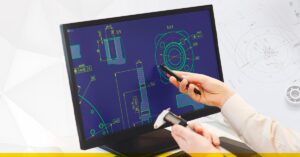
- Artificial intelligence acts as a copilot that optimizes technical production and expands the designer's exploratory capabilities.
- The role of the professional evolves from manual execution towards creative direction and mastery of Prompt Engineering.
- Human sensitivity, ethics, and strategic thinking remain irreplaceable pillars in the face of automated generation.

I'm sure it's happened to you: you open a blank canvas and stare at the screen, unsure where to begin. That feeling of being stuck is every creative's nightmare. Right now, we're experiencing a real upheaval in the world of graphic design with the arrival of artificial intelligence. Many wonder if machines are going to take our jobs, but the reality is that we're facing a redefinition of the profession , not its disappearance. Tools like Midjourney and Adobe Firefly aren't here to replace us, but rather to become part of our toolbox so we can reach new heights.
Anyone who used Photoshop in its early days remembers the impact it had, especially when installing fonts to personalize designs . Well, generative AI is the next logical step in that evolution. It's not about letting an algorithm decide everything, but about integrating intelligent automation to free us from the most tedious tasks. The key today isn't just knowing how to draw or design, but knowing how to interact with technology so that the final result has soul, meaning, and, above all, a clear strategy behind it.
AI as an engine for optimization and exploration
The initial stages of any project are often a time-waster. Finding references, creating mood boards, and testing color palettes can take hours. This is where AI becomes an unbeatable creative copilot . Thanks to platforms like Flux or Leonardo.ai, we can generate dozens of visual proposals in a matter of minutes. We're no longer limited to a single source of inspiration, but can explore an almost infinite range of possibilities, giving us much more freedom to experiment before committing to a specific art direction.
In this new scenario, the designer's role has shifted. Mastering the technical tools is no longer enough; now, mastering the language is essential. We're talking about Prompt Engineering : the ability to translate an abstract concept into precise instructions that AI can execute. The designer becomes an instruction director , someone who knows how to guide the machine to achieve exactly what the brand needs.
Within the daily workflow, the application of these technologies is widespread. We can generate hyper-realistic mockups to present a project, create unique textures that match the visual identity, or experiment with contrasts and colors using tools like Huemint. Even familiar programs like Illustrator are integrating intelligent shape adjustments that make the work much smoother and less mechanical, similar to how text can be edited in Inkscape to enhance designs.
The differentiating value: the human spark
There's one thing that AI, no matter how advanced, can't replicate: intention. Algorithms often generate what we might call the "perfect average." These are technically flawless images, but they sometimes lack that spark or soul that makes a design truly memorable. True originality arises precisely when we're able to break those patterns, introducing a deliberate mistake, a profound emotion, or a disruptive vision that only a human being can conceive.
Furthermore, there are significant challenges we cannot ignore. Technological dependence is a real risk; if we let machines think for us, we risk stifling our technical and creative skills. Maintaining a solid foundation in basic design principles is crucial to being able to judge whether what AI proposes is truly good or merely "aesthetically pleasing."
New frontiers: Predictive design and personalization
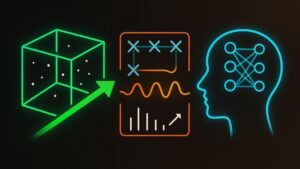
AI doesn't just create images; it also analyzes data. Predictive design allows professionals to anticipate the color and typography trends that will be popular in the coming months. This is pure gold for any agency, as it allows them to create content that resonates with the audience even before the trend becomes mainstream. On the other hand, there's personalization at scale , where algorithms adapt a brand's visuals based on each user's behavior, forging a much stronger emotional connection.

- Content Automation: Generating thousands of ad variations to optimize campaigns in real time.
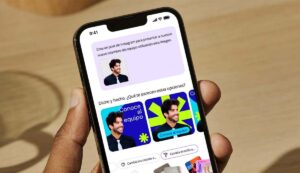
- Intelligent UX: Interfaces that dynamically adapt to the end user's preferences, as happens when Spotify changes its interface on Android Auto.
- Visual hybridization: A blend of 2D, 3D and artificial generation techniques to create cutting-edge styles.
The evolution towards multimedia design and animation
While static design was already changing, the world of animation is undergoing a true revolution. Today, almost everything is animated: from branding to user interfaces. AI is democratizing processes that were once prohibitively expensive, such as automatic rigging and frame interpolation . This allows small studios and independent artists to achieve visual effects that were previously only within reach of industry giants.
However, it's vital to remember that AI can imitate, but it can't act. The narrative intent and emotion of a character still depend on the animator's judgment. The future belongs to those multidisciplinary professionals who can combine the machine's computing power with artistic sensibility. Mastery of multimodal tools, such as Gemini, which reason through text, images, and video simultaneously, will be the differentiating factor in the job market.
We cannot forget the ethical debate. The question of authorship and intellectual property rights over works generated by algorithms is still murky territory. To prevent art from becoming homogenous and repetitive, human intervention must be the final filter. AI should be the foundation upon which we build, but artistic judgment is what ultimately defines the work.
The integration of artificial intelligence into the creative ecosystem has moved beyond a promise to become a tangible reality that is redefining productivity and innovation. By delegating repetitive tasks to algorithms, designers reclaim their time to focus on strategy, narrative, and ethics, transforming the industry into a space where technology doesn't compete with talent, but rather expands it into previously unimaginable dimensions.