- Meta will raise the price of the Meta Quest 3 and Quest 3S starting April 19 in Spain and the rest of Europe.
- The increase is due to the rising cost of RAM and NAND memory, driven by high demand from AI.
- The Quest 3S will increase by about 30 euros, while the 512 GB Quest 3 will increase by around 70 euros.
- Although they will be more expensive, Meta argues that they still offer good value for money compared to other virtual reality glasses.

The Meta Quest 3 and Meta Quest 3S are set to become more expensive in virtually every market where they are sold, including Spain. The company has confirmed a price increase that comes amid a RAM and NAND flash memory supply crisis, a problem affecting much of the tech industry.
This price change marks a shift from the aggressive strategy Meta had used to market these headsets, focusing on a highly competitive price-to-performance ratio . The rising cost of key components, particularly memory, has prompted the company to make this adjustment rather than cut features or abandon support for its virtual and mixed reality platform.
When will the price of the Meta Quest 3 and Quest 3S increase?
Starting in the early hours of April 19 , Meta will implement the new pricing for the entire Quest 3 and Quest 3S range. From that moment on, the headsets will no longer be priced according to the current rates in both euros and dollars, affecting the European Union, the United States, the United Kingdom, Japan, Korea, Mexico, Australia, New Zealand, Taiwan, and Singapore.
Until that date arrives, European users can still find the 512GB Meta Quest 3 for around €549 in Spain, while the 128GB Meta Quest 3S is priced between approximately €319 and €329,99. These are significantly lower prices than those that will apply once the price increase takes effect.
Meta had already lowered the price of its top-of-the-line model. The 512GB viewer dropped from $649,99 to $499,99 (around €549,99 in Europe), putting it at the same launch price as the now-discontinued 128GB model. However, this relatively advantageous situation is now offset by the new price increase.
It's worth noting that the price change isn't limited to new products . The company has also indicated that refurbished Meta Quest 3 and 3S units will also see a price increase, although they haven't yet specified the exact figures, which are expected to reflect a difference of between $50 and $100 or €100 depending on the version.
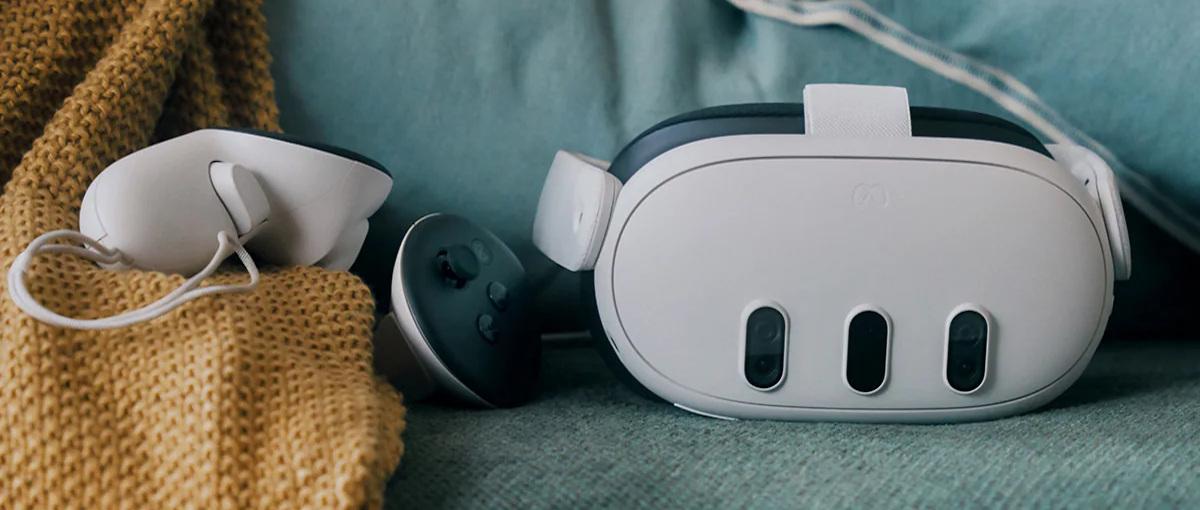
New prices for Meta Quest 3 and 3S in Spain and Europe
In the European market, including Spain, the price increase is already clearly defined. Meta will apply different price hikes depending on storage capacity, although the general rule is that the most advanced model will be the most expensive.
These will be the indicative prices in euros after the adjustment for the Meta Quest 3 range in the European Union:
- Meta Quest 3S (128 GB): it goes from around €329,99 to €359,99 (an increase of €30).
- Meta Quest 3S (256 GB): goes from €439,99 to €469,99 (an increase of €30).
- Meta Quest 3 (512 GB): goes from €549,99 to €619,99 (an increase of €70).
In dollar terms, the situation is very similar. The Quest 3S increases by $50 in each of its variants , while the 512GB Quest 3 will rise by $100, reaching nearly $600 in the United States. This is a significant jump for a product that already represented the high-end option within Meta's standalone headset lineup.
Looking at the reference prices before the change, the 128GB Quest 3S headset cost $299,99 , the 256GB version was $399,99, and the 512GB Meta Quest 3 was $499,99. In Europe, those same models were priced around €329,99, €439,99, and €549,99 respectively, figures that had reinforced the perception of good value for money.
The impact on European wallets will vary depending on the model. The extra €30 for the Quest 3S might be relatively manageable for someone looking for an entry point into virtual reality, but the additional €70 for the 512GB Quest 3 is considerably more noticeable and reduces some of its appeal as an "affordable premium" headset.
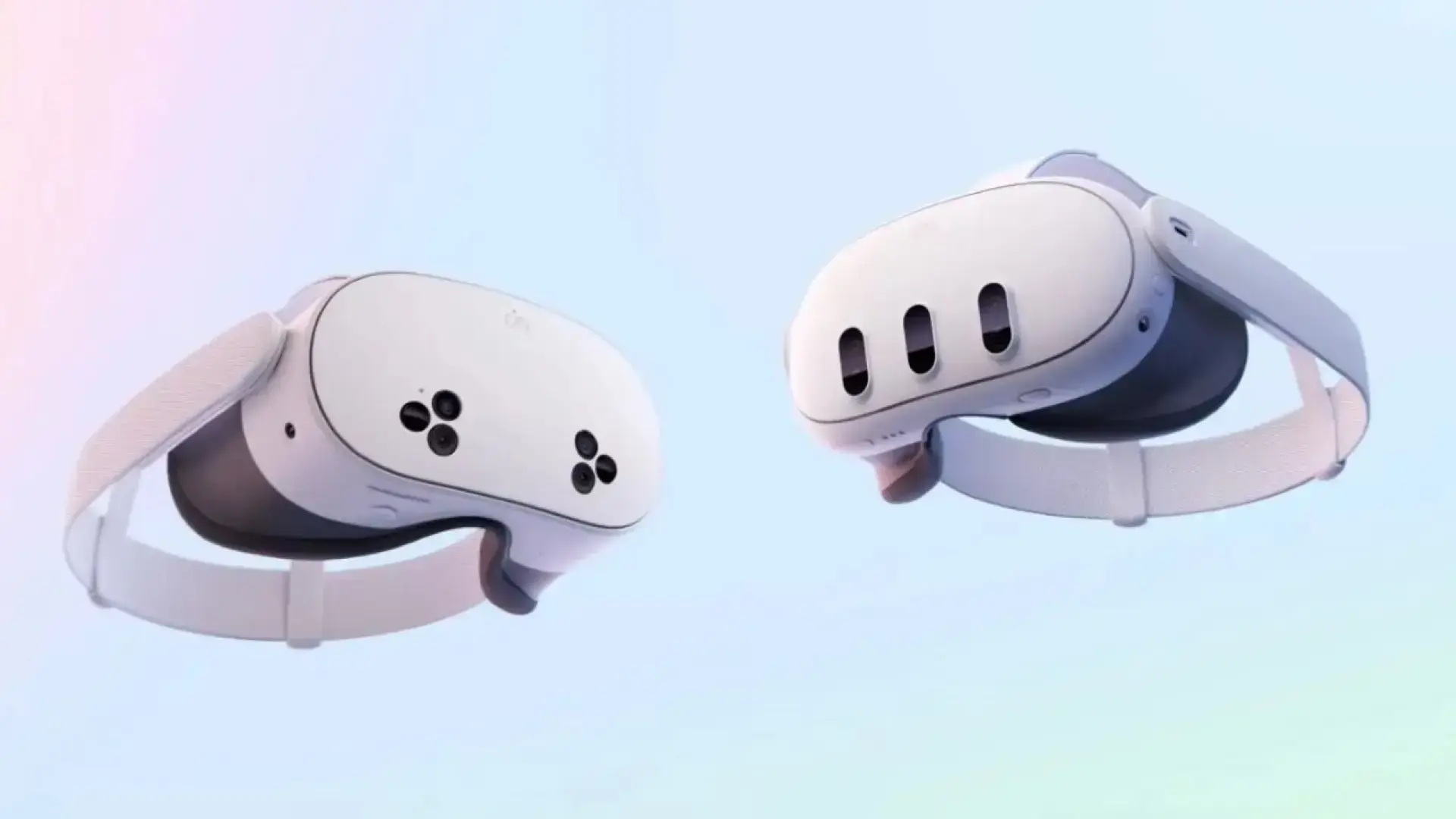
The shortage of RAM and NAND memory, the trigger for the price increase
Meta has bluntly explained that the price increase is due to the global rise in the cost of critical components , with particular emphasis on memory chips. Their statements detail that "the cost of manufacturing high-performance virtual reality hardware has increased significantly," pointing to RAM and NAND memory as the main culprits.
The situation is part of a kind of "RAM crisis" triggered by artificial intelligence . Large data centers and specialized AI hardware consume enormous amounts of memory, straining the supply chain and driving up the price of DRAM and NAND modules for the rest of the industry. Various analyses suggest this pressure could last for several years.
This domino effect has already been felt in products as diverse as desktop PCs, laptops, consoles, smartphones, and graphics cards . Many manufacturers have had to revise prices upwards or halt price reductions that seemed inevitable, and now the virtual reality sector is also entering this dynamic.
In the company's own words, adjusting prices is necessary to continue offering quality hardware and software, as well as the support associated with the Quest platform . In other words, Meta states that it prefers to maintain technical specifications and the level of support rather than cut corners on memory or downgrade components to balance costs.
From a more critical perspective, some voices point out that it's unusual to see price increases midway through the life cycle of a consumer electronics product. The norm is usually the opposite: that over time, devices become cheaper or receive permanent price reductions to remain competitive. Therefore, some in the community see the official statement as an attempt to soften an unpopular decision, however real the cost pressures may be.
What do the Meta Quest 3 and 3S offer that makes them more expensive?
Beyond the price increase, it's worth reviewing what's behind these headsets. Both the Meta Quest 3 and Quest 3S share the same core hardware: a Qualcomm Snapdragon XR2 Gen 2 SoC specifically designed for virtual and mixed reality experiences, along with 8 GB of RAM in both models.
This set allows them to run games and applications with a level of detail and stability clearly superior to that of previous generations, and has been one of the arguments that explained their good performance-price ratio until now.
The differences are mainly visual. The Meta Quest 3 model uses higher-resolution LCD panels , with 2.208 x 2.064 pixels per eye, around 1.218 pixels per inch, and about 25 pixels per degree. This translates to a sharper image within the consumer virtual reality segment.
In terms of optics, the Quest 3 uses pancake lenses with continuous IPD (interpupillary distance) adjustment, making it easy to fine-tune the fit to find the most comfortable position for each user. The displays support 72Hz, 90Hz, and 120Hz refresh rates, and the official field of view is approximately 110 degrees horizontally and 96 degrees vertically—competitive parameters compared to other consumer offerings.
The Meta Quest 3S, on the other hand, cuts back primarily on the screen and lenses to reduce cost. This model uses LCD panels with 1.920 x 1.832 pixels per eye , approximately 20 pixels per degree and around 773 pixels per inch. The image is slightly less sharp, but sufficient for many users seeking their first experience with VR.
Instead of pancake lenses, the Quest 3S uses Fresnel lenses with three preset IPD positions , which somewhat limits adjustability. The field of view is smaller, approximately 96 degrees horizontally and 90 degrees vertically, although it maintains the same refresh rates of up to 120 Hz, which is key to the smooth feel.
Another key difference lies in the passthrough, meaning what the user sees of their real-world surroundings through the headset's cameras. The more affordable model omits the depth sensor , limiting capabilities in some more advanced mixed reality experiences, while the larger Quest 3 offers a more comprehensive and accurate passthrough.
How the price increase affects users in Spain and the rest of Europe
For Spanish and European users, this change means that entering the Quest ecosystem will be significantly more expensive if they wait beyond April 19th. The most logical recommendation for those already convinced to buy is not to wait too long and to take advantage of the current prices while they last.
Currently, the 128GB Quest 3S can be found for around €319-€329 and the 512GB Quest 3 for around €549, prices that will be replaced by €359,99 and €619,99 respectively. The difference is significant, especially for the higher-end model.
Despite this price increase, Meta insists that its headsets continue to offer outstanding value for money compared to other alternatives . When compared to devices like the PS VR2, which costs around €449,99 but also requires a PlayStation 5, or high-end options like the Apple Vision Pro, with prices easily exceeding $3.000 in its market, the Quest family remains in a more accessible price range.
Even so, the context doesn't help. The price increase comes at a time when the DRAM memory crisis and the rise of AI have driven up the cost of much of the hardware . Consumers have already seen PC RAM, SSDs, memory cards, and even consoles like the PS5 experience their own round of price hikes in certain regions.
In forums and social media, users repeatedly express their regret that these kinds of moves make it harder to get started in virtual reality . Some point out that the sector needed precisely the opposite: increasingly affordable devices to popularize the technology and attract new audiences to the VR and mixed reality ecosystem.
Meta's stance and the future of virtual reality
In its official statements, Meta maintains its long-term commitment to virtual reality and that these headsets are part of a broader roadmap, with more hardware and new experiences on the horizon. The company emphasizes that, since the launch of the Quest 3 series, it has been incorporating software improvements, such as a revamped interface and features like the Surface Keyboard and Touchpad.
The catalog of games and applications has also expanded with major VR titles, such as Assassin's Creed Nexus VR, Batman: Arkham Shadow, and Asgard's Wrath 2 , alongside more independent offerings that round out the selection. This content ecosystem is one of the factors Meta uses to justify that the Quest line remains competitive even with the price increase.
However, the company's internal situation presents both positive and negative aspects. At the beginning of the year, Meta carried out significant layoffs in its Reality Labs division and closed studios such as Armature Studio, Sanzaru Games, and Twisted Pixel—moves that have fueled doubts about the true priority of virtual reality within the group's overall strategy.
For now, the Quest headsets remain the cornerstone of Meta's mixed reality ecosystem, boasting an active user base and a community that continues to generate mixed opinions about this price change. While some consider the product to still be the best value headset on the market , others see this adjustment as a hindrance to the widespread adoption of the technology.
With this new landscape, the Meta Quest 3 and 3S have gone from being an aggressively priced option to a step above in terms of the investment required to access standalone virtual reality. The combination of capable hardware, a solid game library, and constant updates continues to work in their favor, but the limited RAM and the rising cost of memory are now clearly impacting what European users will pay when they decide to make the switch.