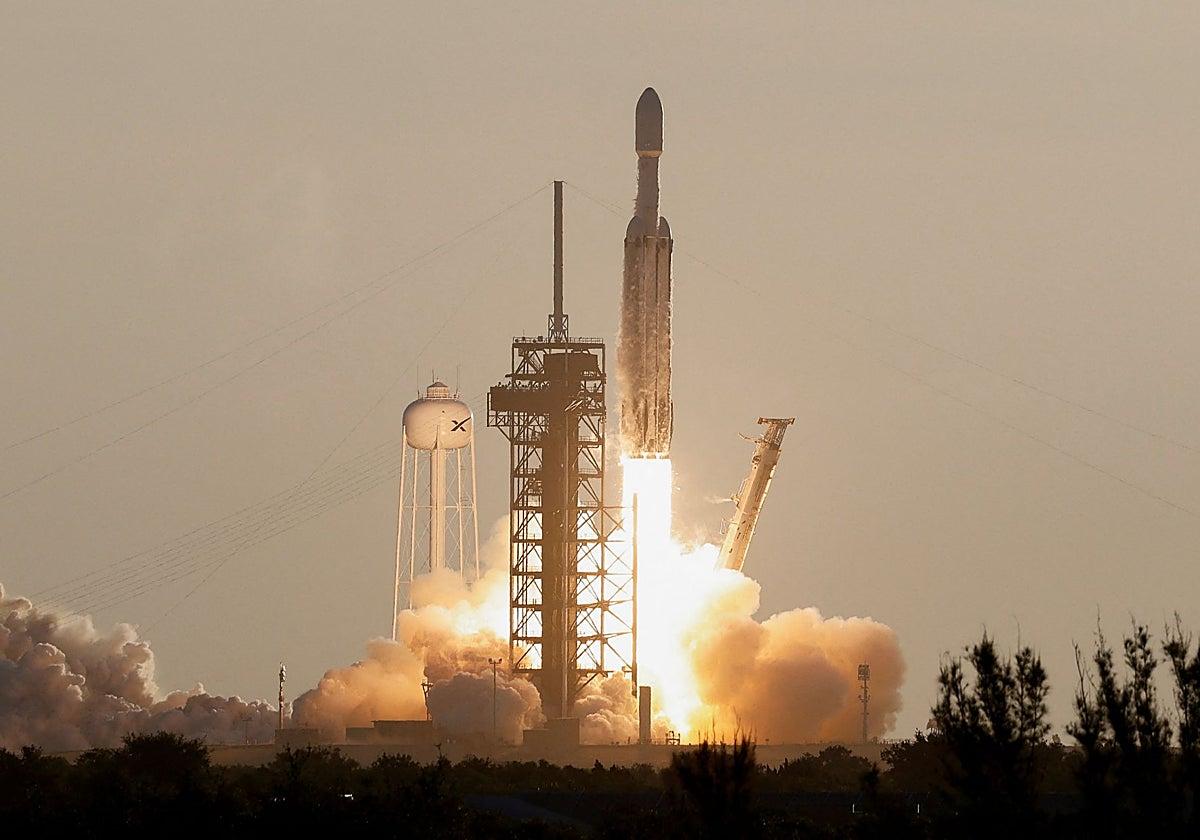
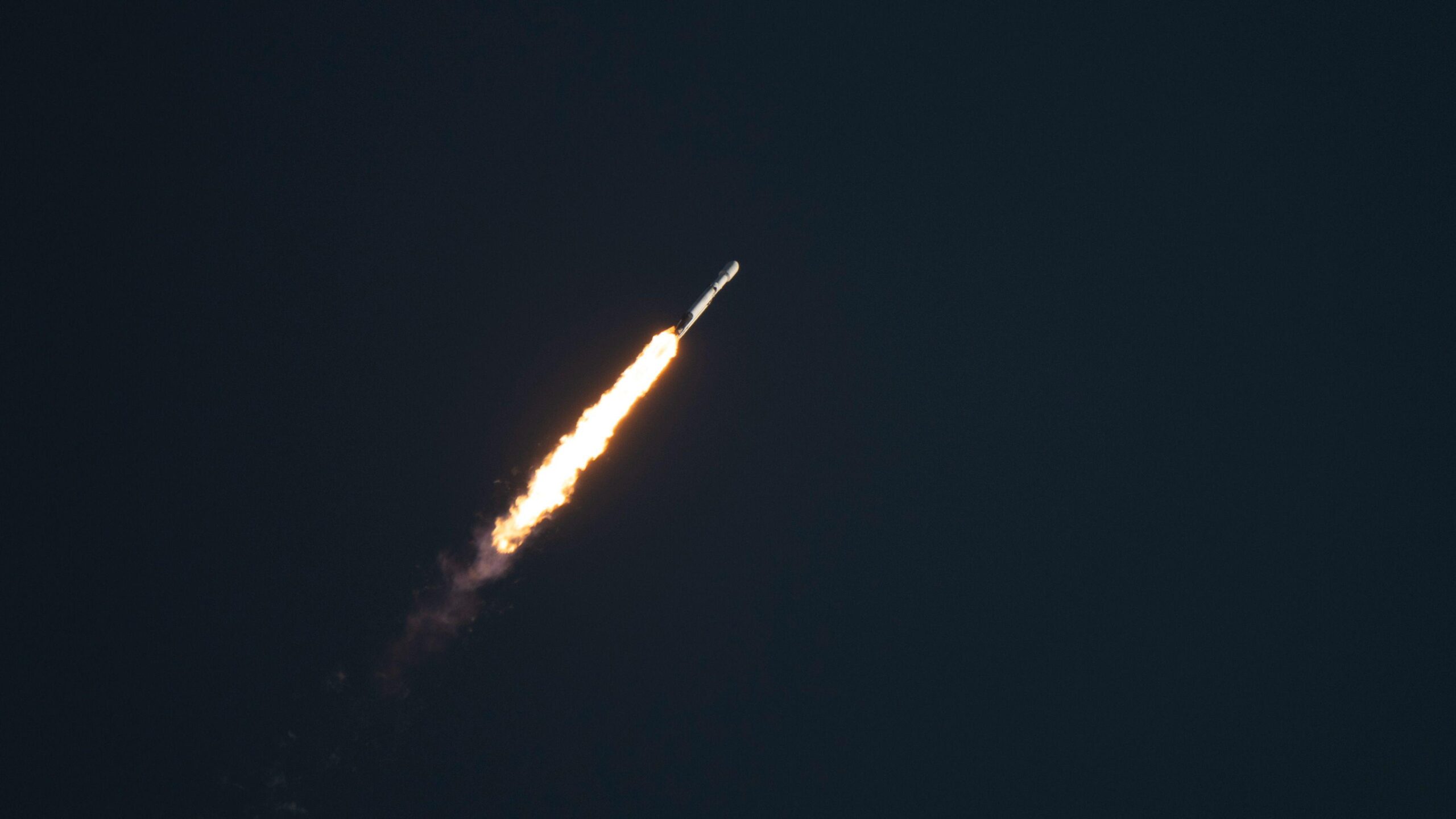
- NASA's Nancy Grace Roman Space Telescope launched on August 30 aboard a SpaceX Falcon Heavy from Florida.
- With a field of view 100 times greater than that of Hubble, it will study dark energy, dark matter and exoplanets.
- Its first scientific images are expected to reach Earth in early 2027.
- The mission, costing around $4.000 billion, will work in synergy with ESA's James Webb and Euclid satellites.

NASA has marked a milestone in space exploration with the successful launch of the Nancy Grace Roman Space Telescope, an observatory designed to offer an unprecedented panoramic view of the cosmos. The launch took place on Sunday, August 30, at 13:26 p.m. CEST from Launch Complex 39A at the Kennedy Space Center in Florida, aboard a SpaceX Falcon Heavy rocket. This new telescope, named after NASA's first chief of astronomy, promises to revolutionize our understanding of the universe.
The mission, which has overcome numerous budgetary and technical hurdles over more than a decade of development, has as its main objective to unravel the mysteries of dark energy and dark matter, as well as to conduct a massive census of exoplanets. With a field of view approximately one hundred times larger than that of the Hubble Telescope, Roman will be able to map the sky at breakneck speed, generating an unprecedented volume of data for modern astrophysics.
A journey of 1,5 million kilometers
Following the separation of the rocket's second stage, confirmed by NASA at 2:06 PM CEST, the observatory began its journey to the L2 Lagrange point of the Sun-Earth system, located approximately 1,5 million kilometers from our planet. This region, known for its gravitational stability, is the same orbital environment shared by the James Webb Space Telescope since 2022. The Roman Observatory will take about 100 days to reach its final destination , where it is expected to begin its regular scientific operations.
During the journey, NASA engineers will activate and calibrate the telescope's instruments, a process that doesn't require the complex optical deployments needed for the James Webb Space Telescope. This advantage will allow the first calibration images to reach Earth before Christmas, although the first high-quality scientific images are not expected until early 2027 , according to the US space agency.
The launch proceeded without incident, and the Falcon Heavy's side stages landed successfully on launch pads LZ-40 and LZ-2 off the coast of Florida, while the center stage was jettisoned after completing its first mission. This was the thirteenth flight of a Falcon Heavy and the fourth used by NASA for a science mission, following the Psyche probe, Europa Clipper, and the GOES-19 satellite.
An unprecedented window to the universe
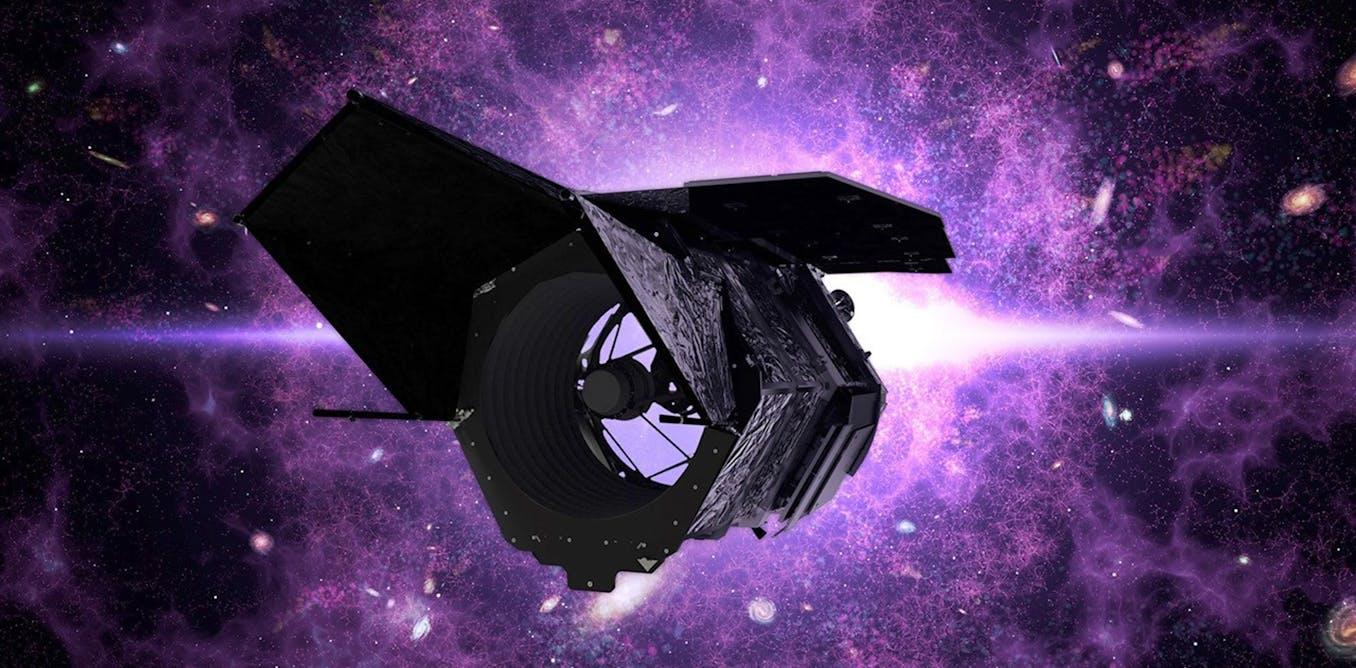
The Nancy Grace Roman Telescope, also known as the NGRST or Roman Space Telescope, is a 9.174-kilogram observatory with a 2,4-meter diameter primary mirror, the same size as Hubble's but almost 80% lighter thanks to the use of new materials. Its main instrument, the Wide Field Instrument (WFI), is a 300-megapixel infrared camera composed of 18 cadmium-mercury telluride sensors that observe in a wavelength range of 0,48 to 2,3 microns. Each image captured by the Roman will encompass a portion of the sky larger than the apparent size of the full moon , with a resolution comparable to that of the veteran space telescope.
This massive observational capacity will allow the Roman Telescope to map the universe up to a thousand times faster than Hubble. According to data provided by NASA, in just one month of observations it will be able to map half of the stars in the Milky Way , a task that would have taken Hubble approximately a century. The telescope will generate around 1,4 terabytes of raw data per day, the equivalent of downloading about 350 4K Ultra HD movies every 24 hours, which will be transmitted to Earth via a Ka-band antenna at a speed of 290 megabits per second.
In addition to the WFI, the observatory incorporates a second experimental instrument: the Coronagraph Instrument (CGI). This advanced active optics system, equipped with two deformable mirrors of 1.400 pistons each, is capable of blocking starlight to reveal much fainter objects in the surrounding area. The CGI will be able to detect exoplanets up to 100 million times fainter than their host stars , a qualitative leap of between 100 and 1.000 times compared to any current space-based coronagraph. This instrument is designed as a testbed for the future Habitable Worlds Observatory (HWO), NASA's next major project to search for life beyond our solar system.
The major scientific goals
The mission's main objective is to investigate the nature of dark energy, the mysterious component estimated to make up about 68% of the total content of the cosmos and believed to be responsible for the accelerated expansion of the universe. To achieve this, the telescope will study the distribution of hundreds of millions of galaxies, observe Type Ia supernovae, and analyze how matter weakly bends light from distant galaxies. Comparing these measurements will allow scientists to reconstruct the history of cosmic expansion with great precision and determine whether dark energy behaves as a cosmological constant or whether its properties have changed over time.
As for dark matter, the Roman telescope won't be able to see it directly, but it will detect its gravitational effects on galaxies and on the light that passes through the large structures of the universe. The combination of deep and wide-angle maps will allow scientists to study how this mysterious substance is distributed and how it has guided the formation of galaxies and galaxy clusters throughout cosmic history.
The mission's second major scientific focus will be the identification of exoplanets using gravitational microlensing. The telescope will observe the center of the Milky Way for extended periods, tracking the brightness of tens of millions of stars to detect planets difficult to find with other methods: cold worlds, planets far from their stars, and even rogue bodies traveling through the galaxy unattached to any planetary system. NASA expects Roman to discover around 2.500 planets using this technique, although more optimistic estimates raise this figure to as many as 100.000 new exoplanets.
Synergy with other observatories
One of the keys to this mission's success will be its complementarity with other major space-based and ground-based observatories. While the James Webb Space Telescope can study individual objects in extraordinary detail, the Roman Observatory will allow scientists to discover and classify entire populations of galaxies, stars, and planets. Its enormous surveys will identify countless targets that can later be examined with Webb, Hubble, and ground-based telescopes such as the Vera C. Rubin Observatory in Chile.
The collaboration also extends to the European Space Agency's (ESA) Euclid mission, which can observe a larger area of the sky than Roman, albeit with less detail. Since their study areas will overlap, scientists will be able to use Roman's higher-quality data to apply corrections to Euclid's data and extend these refinements over the much larger area covered by the European telescope. This international synergy will allow for a more complete and accurate view of the universe than any single mission could achieve on its own.
In addition, the Roman spacecraft will contribute to the study of compact objects such as black holes and neutron stars using gravitational microlensing, and its repeated observations of the sky will allow scientists to identify neutron star mergers, stellar disruption by black holes, and the activity of supermassive black holes. NASA expects that many of the mission's most important discoveries will arise from phenomena we have yet to imagine , as happened with the Hubble Space Telescope after its launch in 1990.
The legacy of Nancy Grace Roman
The mission pays tribute to Dr. Nancy Grace Roman (1925–2018), NASA’s first chief of astronomy and the first woman to hold an executive position at the U.S. space agency. Known as the “mother of the Hubble Telescope,” Roman played a pivotal role in planning the first great space observatories, including the Great Observatories program, which encompassed Hubble, the Chandra X-ray Observatory, the Compton Gamma Ray Observatory, and the Spitzer Space Telescope. Her vision and leadership helped establish NASA as a world-class scientific institution and laid the foundation for generations of space telescopes that continue to expand humanity’s understanding of the cosmos.
As a symbolic detail, the observatory bears a commemorative plaque with over 1,3 million names of people from around the world who wanted to participate in this space adventure. These names will travel with the telescope on its journey to the L2 lander, an initiative NASA has repeated in several of its missions to bring space exploration closer to the public.
The total cost of the program, including development, operations, and launch, is around $4.500 billion (approximately €3.700 billion), an investment that has been nearly canceled on several occasions due to budget cuts proposed by various US administrations. However, the US Congress ultimately approved the mission, which was delivered nine months ahead of schedule and within budget—a rarity for an astrophysics mission of this complexity. The data obtained by the Roman Observatory will be made publicly available without any proprietary waiting period , a commendable exercise in transparency that will allow the global scientific community to take full advantage of this new window to the universe.
With the successful launch of the Nancy Grace Roman Observatory, NASA is ushering in a new era in the exploration of the cosmos. This observatory, which combines the clarity of a large space telescope with a panoramic view of the sky, promises to change our understanding of the universe and answer some of the most fundamental questions in modern astrophysics. If Hubble taught us to contemplate the universe in depth, Roman will show us, with similar detail, its immensity.