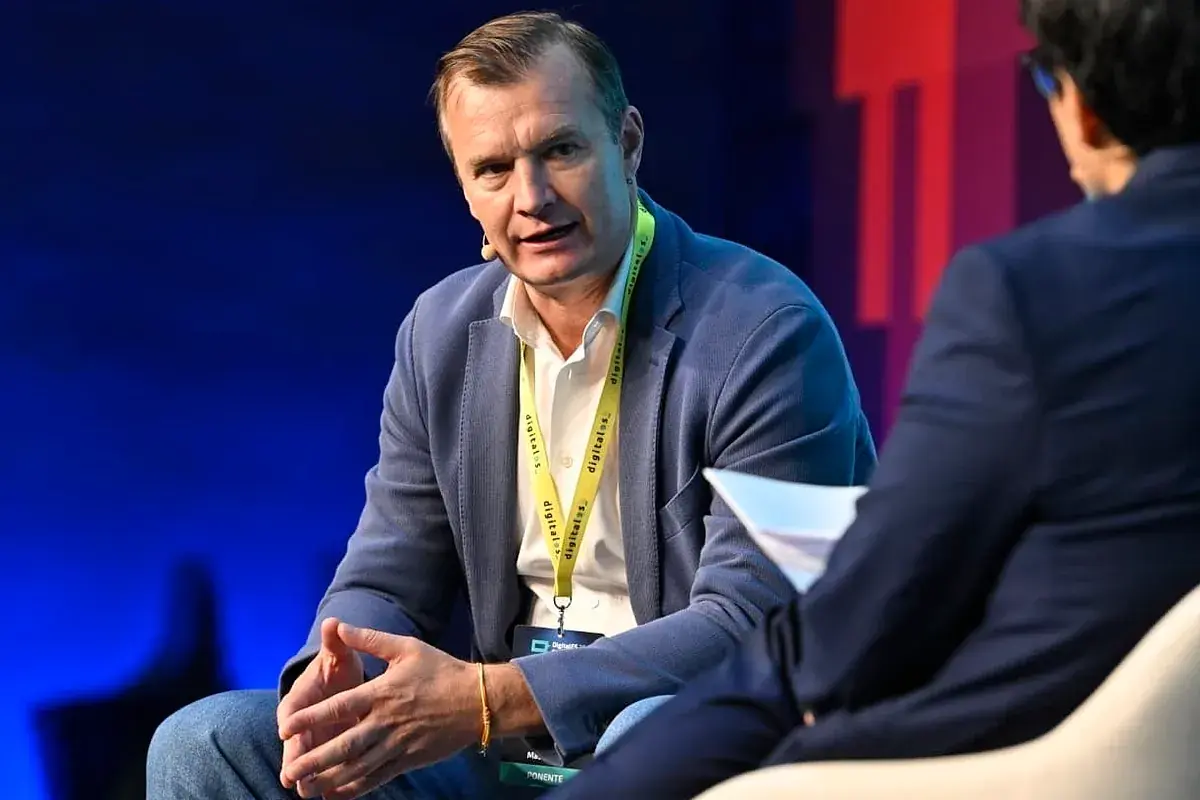
The telecommunications landscape in Spain could be about to take an unexpected turn. Masorange, the country's largest operator by number of customers, is rethinking its mobile network provider strategy. Until now, the plan drawn up for 2024 envisioned a gradual transition to Sweden's Ericsson, with the phase-out of equipment from China's Huawei. However, sources close to the company suggest that this scenario may not unfold entirely, and that the operator is considering keeping the Asian giant as a technology partner, at least for a while longer.
The final decision has not yet been made, and everything will depend on a public tender to be held next October. In it, the world's leading mobile infrastructure manufacturers will present their financial and technical bids. Ericsson, Nokia, Samsung, and Huawei itself will compete for a contract that will define the future of the Spanish mobile network for the next decade. Geopolitical uncertainty and new European cybersecurity regulations add pressure to a process that is anticipated to be complex and decisive.
The 2024 agreement and its current status
In July 2024, Masorange signed an agreement with its network providers establishing two clearly distinct phases. The first, to be completed by the end of 2027, involved completely eliminating equipment from ZTE, the smallest Chinese manufacturer, and reducing Huawei's market share from the initial 54% to approximately 37%. Simultaneously, Ericsson's share of all radio nodes in Spain was to increase from 42% to 63%. This first phase has only been partially implemented, and the current market shares stand at 57% for Ericsson and 43% for Huawei, indicating that the process is progressing more slowly than anticipated.
The second phase, contingent on Ericsson meeting certain quality standards, envisioned the complete replacement of Huawei's equipment, making the Swedish company the sole provider for 100% of the network. This, however, is now in doubt. Masorange has informed Ericsson that there are no guarantees this phase will be implemented, arguing that the Swedish company has not met all the agreed-upon objectives. This stance has opened up a range of possibilities, from maintaining Huawei's current market share to bringing in new players like Nokia or Samsung.
The October competition and the alternatives on the table
The tender scheduled for October will not only determine the future of Masorange's mobile network, but also aims to strengthen its presence in the mid-bands, especially in the 3,5 GHz frequency, where the operator lags significantly behind its competitor Movistar. According to CNMC data from the first quarter of 2026, Masorange has 6.335 nodes deployed in this band, compared to Movistar's 10.415. This difference is a key factor that the company hopes to address with the new contract.
Depending on the financial bids and technical guarantees submitted, the future scenario could vary substantially. If Huawei presents an aggressive proposal, it could maintain its presence in the network, either with its current 43% market share or with the 37% projected for the end of the first phase. On the other hand, Nokia and Samsung, which have never been strategic suppliers for Masorange or its predecessors Orange and MásMóvil, see this tender as a unique opportunity to enter the Spanish market. It is speculated that one of these two companies could win the contract to provide networks in some provinces, such as Valencia and Pontevedra, thus gaining a foothold that could potentially reach up to 30% of the total network.
Geopolitical risk and the new European law

The possibility of Masorange retaining Huawei as a strategic supplier is not without risks. The new Cybersecurity Act (CSA2), proposed by the European Commission, establishes a 36-month period, expiring in early 2030, for operators to remove equipment from so-called "high-risk suppliers," a category that includes Huawei and ZTE. Unlike the previous regulation, which only recommended this measure for 5G networks, CSA2 makes it an obligation affecting all mobile, fixed, and satellite networks.
This new regulation poses a considerable challenge for any operator that decides to maintain agreements with Chinese manufacturers. In Masorange's case, any agreement with Huawei would have to include a clause guaranteeing reimbursement of equipment costs if the company is ultimately classified as a high-risk supplier. This condition, naturally, increases Huawei's price and complicates its economic viability. Meanwhile, in France, the home country of Orange, Masorange's parent company, Huawei has been banned since 2020 for national security reasons, a contradiction that has not gone unnoticed in the industry.
Reactions of the parties involved
In response to this situation, a Masorange spokesperson stated that the operator "has not made any decisions regarding changing its supplier strategy and is in no hurry to make a decision about a possible change or continuation of the current strategy." This stance contrasts with that of Ericsson, whose spokesperson affirmed that the Swedish company "remains committed to Masorange and continues to execute the contract according to the established plan and with the highest quality standards," highlighting joint milestones in areas such as autonomous networks and 5G Advanced.
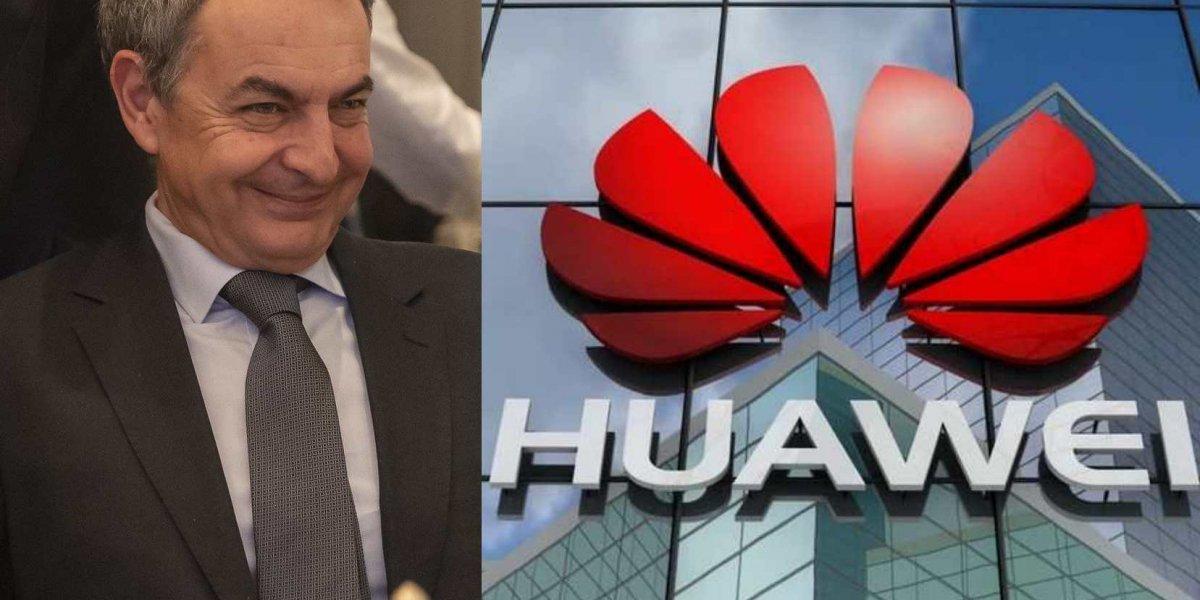
The uncertainty also extends to the political sphere. Former Prime Minister José Luis Rodríguez Zapatero, who has maintained ties with Huawei for years, has been mentioned in some reports as a possible intermediary in the negotiations. However, these claims have not been officially confirmed, and the Chinese company has avoided commenting on the matter. What is clear is that Masorange's decision will have a significant impact on the balance of power among the major telecommunications manufacturers in Europe and will set a precedent for other operators on the continent.
Ultimately, the future of Masorange's mobile network hangs in the balance. The company will have to carefully weigh the economic, technical, and geopolitical factors before making a decision that will affect millions of users in Spain. The October tender will be the arena where this battle will be fought, and the outcome could redefine the landscape of mobile infrastructure providers in Europe. In the meantime, consumers can only hope that the final decision guarantees a quality service, regardless of which brand ultimately wins.