- Lenovo Legion Go 2 with SteamOS arrives in June with official support for Valve's system and high-end hardware.
- It includes an AMD Ryzen Z2 Extreme APU, an 8,8" 144Hz OLED display, 32GB of RAM, and up to 2TB of SSD storage.
- The SteamOS model will be cheaper than the Windows 11 version, with a starting price of $1.199.
- It positions itself as a more powerful alternative to Steam Deck, although with a significantly higher price.
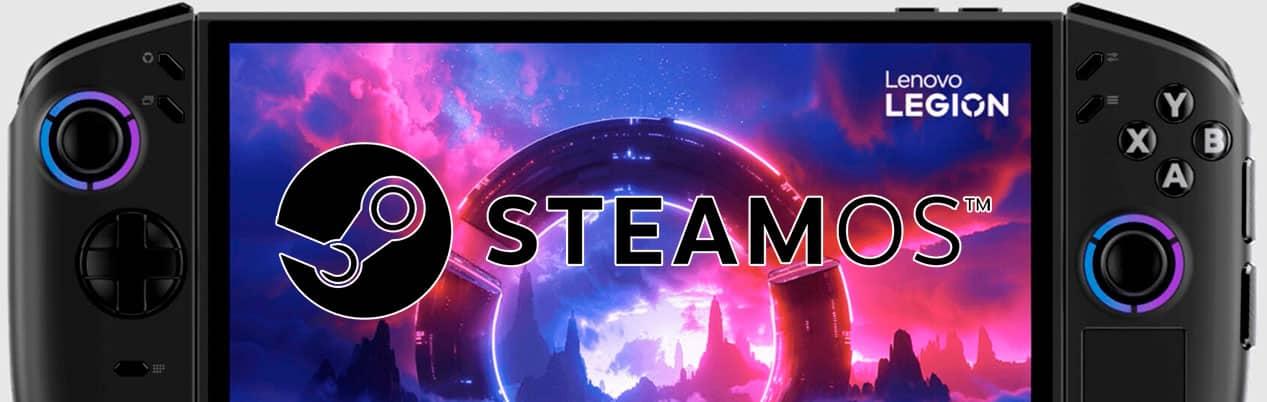
Lenovo has used CES 2026 to make a move in the portable console PC market and confirm what had been rumored for months: the Legion Go 2 will be available with SteamOS pre-installed and official support from the company. This is a specific variant that uses Valve's operating system instead of Windows 11, designed for those who want a machine focused almost exclusively on gaming.
This launch positions Lenovo as the first manufacturer to offer SteamOS pre-installed on an AMD Ryzen Z2 Extreme APU , the flagship chip in current handheld consoles. The new Legion Go 2 with SteamOS retains virtually all the hardware of the Windows model, but lowers the price and positions itself as a direct competitor to Steam Deck in terms of power, user experience, and available game library.
A “Powered by SteamOS” model with a more affordable price
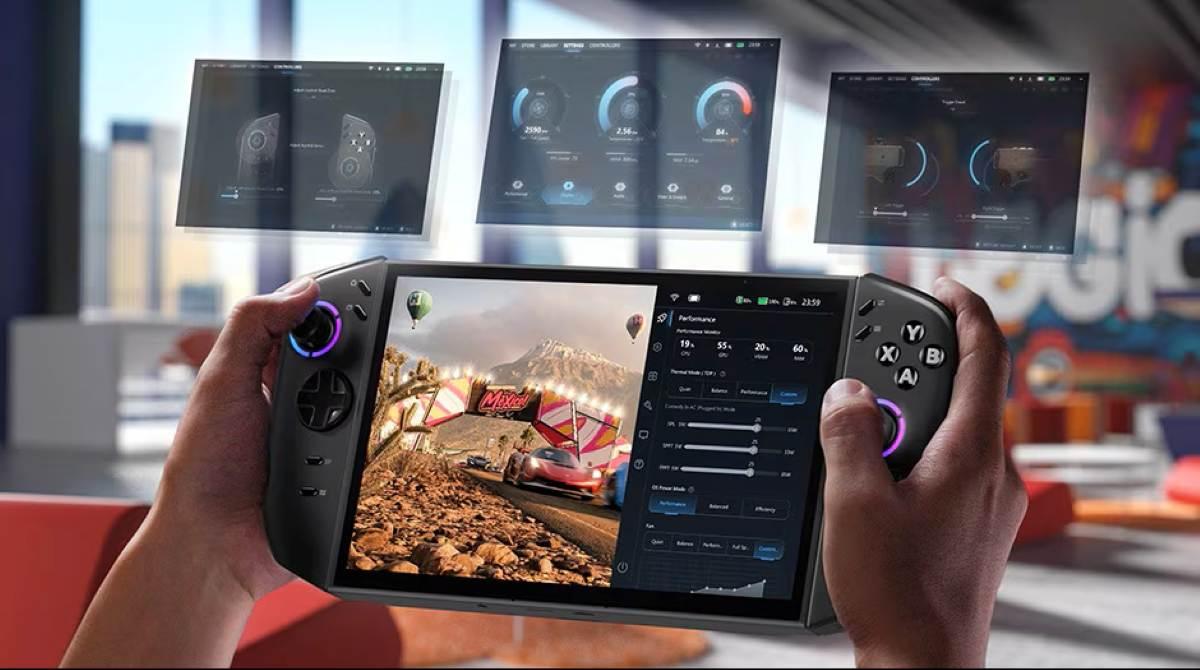
Lenovo has announced a "Powered by SteamOS" version of the Legion Go 2 that will come with Valve's operating system pre-installed, instead of Windows 11. This edition will go on sale in June of this year and, at least in the United States, will have a starting price of $1.199 , placing it below the Windows variant, which starts at $1.349 with the same APU.
In Europe, the Legion Go 2 with Windows 11 has been listed starting at €999 for less ambitious configurations, and around €1.299 for the model with 32GB of RAM and a 1TB SSD. The SteamOS version doesn't yet have an official price in euros, but all indications are that it will follow the pattern of being somewhat cheaper than its Windows counterpart , with initial channel estimates placing it at around €1.049-€1.100.
This price difference is significant: we're talking about a device that shares virtually the same technical core and, moreover, makes better use of resources thanks to SteamOS , a gaming-focused operating system that avoids much of the extra overhead of Windows 11. For those who just want to turn on the console and start playing, without worrying about the desktop, background services, or applications they won't use, it's a pretty sensible option.
Lenovo has also confirmed that, as with the Windows model, users will have the option to install other operating systems if they wish , taking advantage of SteamOS's public availability on Valve's support website. However, the real appeal of the Legion Go 2 lies precisely in not having to deal with formatting or manual installations.
High-end hardware: Ryzen Z2 Extreme and 8,8-inch OLED display
The Legion Go 2 with SteamOS doesn't compromise on specifications compared to the previous model. Inside, it features an AMD Ryzen Z2 Extreme APU , AMD's most ambitious processor for handheld consoles, combining three Zen 5 cores and five Zen 5c cores , with maximum frequencies of up to 5 GHz and 3,3 GHz, respectively. For graphics, it uses an integrated GPU based on the RDNA 3.5 architecture with 16 Compute Units , comparable to what's found in other top-of-the-line machines in the industry.
The processor is paired with 32 GB of LPDDR5X RAM running at 8.000 MT/s, a figure that provides ample headroom for demanding games and light multitasking. For storage, Lenovo offers up to 2 TB of PCIe SSD capacity , expandable via a microSD card slot, allowing users to manage relatively large game libraries without relying solely on internal storage.
On the front, the star attraction remains the 8,8-inch OLED display with a 1920x1200 (WUXGA) resolution in a 16:9 aspect ratio. This panel offers a refresh rate of up to 144Hz with VRR , 10-point multitouch support, approximately 97% DCI-P3 color gamut coverage, peak brightness of around 500 nits in SDR, and compatibility with DisplayHDR True Black 1000. On paper, it's a clear leap forward compared to the previous generation and also compared to the standard Steam Deck.
To power this entire system, Lenovo relies on a 74 Wh battery divided into two cells , accompanied by a 65 W USB-C charger. The manufacturer complements this hardware with a revised cooling system, dubbed Legion Coldfront , which includes a larger fan and redesigned vents to improve airflow and control temperatures under sustained load.
Continuity of design: detachable controllers and a dedicated Steam button
In terms of design, the Legion Go 2 with SteamOS maintains the same philosophy as the Windows version . The device retains the familiar detachable controllers, reminiscent of the Nintendo Switch Joy-Cons, allowing the controllers to be separated from the main body for more comfortable play on a table or with the console mounted on a stand.
One of the most distinctive features of this controller is the mouse mode on the right controller , which allows it to be used like a traditional mouse. This is useful for navigating the desktop interface or even for certain games that are better controlled this way. Lenovo has also retained the fingerprint reader, trackpad, and integrated stand on the back.
Connectivity is on par with a modern PC: it features USB4/USB-C ports with DisplayPort 2.0 and Power Delivery 3.0 , a microSD card slot for expandable storage, as well as Wi-Fi 6E and Bluetooth 5.3 for wireless networking and accessories. For everyday use, it's a machine that can function as both a pure console and a small desktop computer when connected to an external monitor.
The major physical change in this version is the inclusion of a dedicated Steam button that provides direct access to the system's main menu, the store, and SteamOS shortcuts. This addition, along with the full integration of Valve's system, brings the user experience much closer to that of a traditional console, something many laptop PC users have been requesting for some time.
SteamOS vs. Windows 11: Performance and User Experience
One of the key selling points of the Legion Go 2 is its operating system. SteamOS, based on Linux and developed by Valve, is specifically designed for gaming , with a controller-friendly interface, simplified menus, and a very fast sleep/resume mode. In tests conducted on other handheld PCs, switching from Windows 11 to SteamOS resulted in performance improvements of up to 20% and longer battery life, thanks to better resource management and the elimination of unnecessary services for this type of use.
Windows 11 remains a versatile and perfectly adequate system for general use, but on a machine dedicated to portable gaming, it drags along applications, services, and processes that do little to enhance the experience. This is one of the reasons why some members of the community began installing SteamOS on their own on the first Legion Go, even without official support, with results already pointing in the same direction: lower power consumption, cooler temperatures, and a feel closer to that of a traditional console.
With the arrival of this "Powered by SteamOS" edition, Lenovo has gone from glancing at Valve's operating system to fully embracing it . For users, this translates into direct access to the Steam game library, features like Steam Remote Play for remotely playing games installed on the PC, family sharing options, and, overall, a much more seamless experience when the goal is simply to sit down and play without any further configuration.
However, SteamOS still has its limitations: it doesn't offer native compatibility with Xbox Game Pass , and while Game Pass and the Xbox library can be accessed via Cloud Gaming, the experience depends on an internet connection. Furthermore, some games with very strict anti-cheat systems or limited Proton support may have issues or require adjustments, something users should consider if their game library relies heavily on competitive online titles.
Direct competition for Steam Deck and the rest of the handheld PC
Lenovo's move comes at a time when the portable PC console market is experiencing a resurgence . Steam Deck led the way in the West, and soon after came offerings like the ASUS ROG Ally and the MSI Claw. Legion Go joined this wave as one of the most serious "official" alternatives to Valve's own machine , and with this second generation running SteamOS, it aims to solidify its position at the top of the market.
Compared to the current Steam Deck, the Legion Go 2 with SteamOS offers more raw power, a larger OLED screen with a higher refresh rate , as well as more RAM and significantly better storage configurations. The price, of course, is also very different: while the Deck has established itself as a relatively affordable option, Lenovo's offering is positioned a step above, making it more of a compact gaming PC than a mass-market console.
In this context, many manufacturers are taking advantage of the fact that a Steam Deck 2 is still some time away to launch more ambitious hardware, albeit at a higher price. Lenovo, with this Legion Go 2, is targeting precisely that niche: the user who wants something "more" than a Deck in terms of performance and screen quality, and who is willing to pay for it, but without sacrificing the ecosystem and convenience of SteamOS.
On the Windows side, products like the ROG Ally X compete directly with the Legion Go 2 in price and specifications, although they rely on Microsoft's operating system. Here, each user will have to decide whether the flexibility of Windows or the more closed but optimized experience of SteamOS is more appealing. Lenovo, by offering both options, is in a relatively comfortable position to cater to both user profiles.
Availability in Spain and Europe, prices and market context
Lenovo has confirmed that the Legion Go 2 with SteamOS will be available starting in June , with synchronized releases in key markets such as the United States and the European Union. In Spain, it is expected to arrive around the same time, following the release of the Windows version, which was officially distributed in the country through major retailers.
As for the price, the official starting price is $1.199 for the SteamOS model, compared to $1.349 for the Windows 11 edition that uses the same APU. In the European market, where the first Legion Go 2 with Windows reaches €1.299 in its most complete configuration, the SteamOS version is expected to be priced lower, with estimates around €1.049-€1.100 according to various industry sources.
This positioning puts the Legion Go 2 with SteamOS on par with other offerings like the ROG Ally X in terms of price, but with a different approach to operating system and controls. Lenovo's console leverages detachable controllers, the right controller's mouse mode, and its 8,8-inch OLED screen, while other machines opt for more compact designs or more traditional form factors.
Behind these figures, the current state of the hardware market is also evident: the increased cost of RAM and other components has driven up the price of many x86 handheld consoles . Compared to some devices that are approaching or exceeding €2.000, the Legion Go 2 with SteamOS falls into a higher price range, but it remains affordable for enthusiasts seeking performance without the need for more exotic configurations.
While Lenovo has yet to announce the final prices in euros and the exact configurations for Spain, what is clear is that the brand wants to maintain Legion Go 2 as one of the benchmarks in the segment , reinforcing a strategy that already involved opening the door to SteamOS in the first generation and that now materializes in a model with official support, cutting-edge hardware and a clear intention to compete head-to-head with the Steam Deck itself.
With all this movement, Lenovo positions the Legion Go 2 with SteamOS as a laptop aimed at those who prefer a device clearly focused on gaming, with a specialized operating system, high-end specifications, and a price lower than the Windows 11 variant , but still far from being a budget option; a product designed for those who prioritize power, screen quality, and the Steam ecosystem, even if that means paying considerably more than for Valve's console.