- The solar eclipse in August will be total in much of northern Spain and partial in the rest, with the Sun very low at sunset.
- Between the end of April and the beginning of May, you can do a visual test to check if you will have a clear western horizon.
- Interactive maps and official tables allow you to find out the schedules, duration and percentage of blackout in each location.
- It is essential to use approved sunglasses and plan your trip, accommodation and exact observation location in advance.

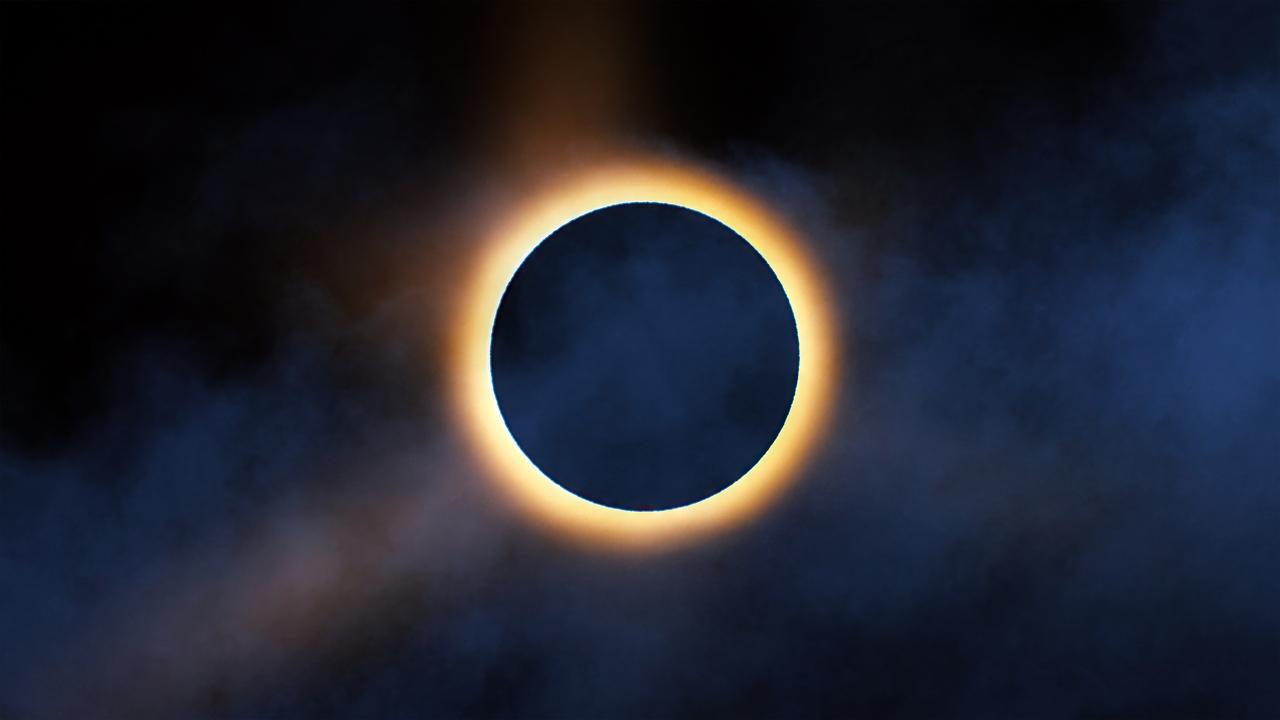
The total solar eclipse on August 12 promises to be one of the most spectacular astronomical events seen in Spain for a very long time . Not only will it be visible as a total eclipse across much of the country, but it will also occur practically at sunset, with the sun very low on the horizon, creating a cinematic atmosphere. For many, it will be the first time in their lives they witness day turning into night in a matter of seconds.
Now, the big question everyone's asking is: how can you tell if you'll be able to see the eclipse in August from your specific location ? It's not enough to be within the path of totality or partial eclipse; you also need to make sure you'll have a clear view of the sun, with no mountains, buildings, or trees blocking it at the crucial moment. Luckily, several Spanish observatories and scientific organizations have published very simple methods to check this in advance and choose the best spot to safely enjoy the phenomenon.
What type of eclipse will it be and when will it occur?
A total solar eclipse will take place on August 12, visible from much of the Iberian Peninsula and the Balearic Islands . It will be the first of its kind visible on the peninsula in over a century, as nothing similar has been seen since 1912. The Moon will pass directly in front of the Sun, completely obscuring it for a brief period, resulting in a few seconds of total darkness in the middle of summer.
The maximum eclipse will occur near Iceland at around 19:46 PM (Peninsular and Balearic Islands time) , where totality will last a maximum of approximately 2 minutes and 18 seconds. Along its path, the umbra—the area where the Sun is completely obscured—will cross the North Atlantic and reach Spain from the northwest in the late afternoon.
In our country, the eclipse will be total across much of the northern half of the Iberian Peninsula , while in the southern half the phenomenon will be partial, meaning the Moon will only cover a fraction of the solar disk. The further south and outside the path of totality, the smaller the percentage of the Sun that will be obscured and the more subtle the darkening will appear.
Another key feature is the time of day: the totality phase will occur very close to sunset . This means the sun will be low on the horizon, especially in eastern Spain and the Balearic Islands, where totality will occur as the sun is just rising. This makes checking visibility from your location even more important.
In addition to this August eclipse, the calendar brings a series of other striking events, including a total lunar eclipse : on August 2, 2027, there will be another total solar eclipse visible from Spain , and on January 26 of the following year, an annular eclipse will occur, completing a veritable "triad" of major eclipses over the Iberian Peninsula and the Balearic Islands between 2026 and 2028. After this series, another total solar eclipse will not be visible from Spain until the middle of the century, around 2053.
How to know if you will see the eclipse from your location
Being within the path of totality doesn't guarantee a clear view: if the Sun is behind a building, a mountain, or a grove of trees, you'll still miss it . That's why the Royal Astronomical Observatory of Madrid and other centers have devised a very practical trick: conduct a "dress rehearsal" in the days leading up to the event to check if you'll have a clear view of the horizon precisely where and when you need to look on August 12th.
The idea is based on a very simple principle of celestial mechanics: there are days in late April and early May when the Sun is at the same height above the horizon as it will be during the totality of the eclipse . If you can see the Sun clearly on those specific dates and times, then you will also be able to see it during the eclipse, provided you are within the area where the phenomenon is visible.
The Royal Observatory has published a list of recommended dates and times for conducting the test in mainland Spain. During these periods, you should look west and check if the Sun is visible from the location where you want to observe the eclipse.
- 25 April: between 20:15 and 20:21
- 27 April: between 20:17 and 20:23
- 29 April: between 20:19 and 20:25
- 30 April: between 20:20 and 20:26
- May 2: between 20:22 and 20:28
- May 4: between 20:24 and 20:30
The explanation accompanying these tables is clear: the indicated time corresponds to the moment when the Sun will be at the same height above the horizon as during the totality of the eclipse . If during those minutes you can locate the Sun and nothing is blocking it, it means that, from that same observation point, the Sun will also be visible in August for the duration of the phenomenon.
According to various sources and the Observatory itself, the most accurate dates for viewing the eclipse are April 29th and 30th . These two days are particularly useful because the Sun sets at virtually the same point on the horizon as it will occupy during the eclipse. However, the experiment is perfectly valid if you conduct it between April 25th and May 4th, as the changes in the Sun's position from day to day are minimal.
To further simplify the method, many guides recommend looking west around 20:30 PM (peninsular time) on April 29th . Other suggestions are more precise, placing the optimal viewing window between approximately 20:19 PM and 20:25 PM. The important thing is not to pinpoint the exact minute, but rather to ensure that, with the sun very low, your observation point has a clear view of the horizon in that direction.
This "dress rehearsal" also has a small added safety margin thanks to the equation of time : some calculations, such as those from the Time and Date website, indicate that, for the chosen practical reference point, on the actual day of the eclipse the Sun will be slightly better positioned for observation than during the April test. In other words, if you're already at the limit but can see the Sun clearly during the test, in August the conditions will be a tad more favorable.
What never changes is the basic precaution: in all these tests, and during the partial phases of the eclipse, you must always wear certified solar eclipse glasses . You should never look directly at the Sun without proper protection, even if it is near the horizon or appears faint. Damage to the retina is silent and irreversible.
Eclipse path and visibility in Spain
The path of the eclipse across the Earth's surface traces a relatively narrow path of totality where the Sun will be completely covered by the Moon . On either side of this path extends a much wider region where the eclipse is seen only as partial, with varying degrees of obscuration depending on the distance from the center of the path.
The graphical representations of the phenomenon—maps and animations—clearly show the path of totality, as well as the maximum duration of darkness at each stage of its trajectory. They also show the areas where the eclipse will be only partial, along with the approximate percentage of the solar disk obscured at each point.
In the case of Spain, the eclipse will enter through Galicia and move eastward, crossing the northern part of the peninsula and reaching the Balearic Islands in the final stages of the phenomenon. Much of the northern half will be within the path of totality, while the southern half will see a partial eclipse of varying intensity depending on latitude.
The official maps and animations also provide a detailed view of the eclipse's progression for each provincial capital . In the "From Provincial Capitals" tab or section, you can find start, maximum, and end times, as well as the sun's altitude above the horizon and, where applicable, the exact duration of totality.
There is also a section with tables that allows for more detailed information: for each Spanish municipality, you can obtain specific data on eclipse visibility . This indicates, for example, the percentage of the solar disk obscured in the case of a partial eclipse, or how many seconds of total darkness there will be if your location is within the privileged zone.
Indicative opening hours in some key cities
The exact times vary slightly from place to place, but there are some very illustrative examples that help to understand how the eclipse will be experienced in different parts of Spain . Galicia, for example, will be the first Spanish region where the phenomenon will be visible, while the Balearic Islands will be among the last areas to enjoy it.
In A Coruña, the eclipse will begin around 19:31 p.m. The maximum will occur around 20:28 p.m. , and the event will end around 21:22 p.m. , shortly before sunset. The totality will last approximately 76 seconds , with the sun positioned about 12 degrees above the horizon—that is, quite low but still clearly visible if the horizon is clear.
In Burgos, the sequence is similar: the eclipse will begin around 19:33 p.m. , reach its maximum around 8:29 p.m. , and sunset will occur around 21:20 p.m. , a few minutes before the phenomenon completely ends. Totality will last approximately 104 seconds , with the sun about 20 degrees above the horizon, an angle even closer to the horizon that increases the drama of the scene.
In Palma de Mallorca, much further east, the eclipse will begin around 19:38 p.m. The maximum will arrive around 20:32 p.m. , very close to sunset, with the sun just 2 degrees above the horizon. This means that, in the Balearic Islands, the total eclipse will be seen with the sun almost "touching" the sea or the landscape , which could result in spectacular images, provided there are no low clouds or obstructions.
Generally speaking, the duration of totality along the central line of the band will range from approximately 1 minute and 50 seconds to around 1 minute and 36 seconds , gradually shortening as one moves toward the northern and southern edges of the band. In the peripheral areas of that band, total darkness can be reduced to just a few seconds.
For those who want to be as precise as possible, there are very comprehensive interactive maps where you simply click on a specific point to obtain all the local ephemeris data: exact start, maximum, and end times, sun altitude, phase duration, percentage of obscuration, etc. Some of these tools include historical cloud cover data to estimate the probability of clear skies in each region.
Areas of Spain where the eclipse will be best seen
From a visibility standpoint, northern and eastern Spain will be the prime viewing areas . Regions such as Galicia, Asturias, Cantabria, Castile and León, La Rioja, Aragon, and the Balearic Islands are well-positioned along the path of the moon's shadow, giving them an advantageous view of the spectacle.
Along the Galician and Cantabrian coasts, there are numerous spots with clear sea horizons ideal for observing the eclipse at sunset . Places like Llas beach (in Lugo), the Punta Roncadoira lighthouse, or the famous Cathedral Beach are examples of locations where the combination of landscape and sky promises to be unforgettable, weather permitting.
In the interior of northern Spain, cities like León, Burgos, and Valladolid are located in the central part of the path of totality, guaranteeing them a significant stretch of complete darkness. In Palencia, a much-discussed spot for observing the Sun is Cerro del Otero , which offers wide visibility across the horizon and a relatively unobstructed environment free of lights and other light pollution.
Other northern regions, such as Asturias and La Rioja , are also in very favorable conditions, with an interesting balance between the height of the Sun, the duration of totality and the possibility of finding rural locations that are not crowded, where you can set up telescopes, cameras or simply lie down and enjoy the moment.
In the Aragon region and the eastern part of the Iberian Peninsula , cities like Zaragoza and various areas of the Valencian Community are good candidates, especially regarding the probability of clear skies at that time of year. The key point is that the further east you are, the lower the sun will be at the moment of totality, so finding a completely clear horizon to the west is essential.
The Balearic Islands, with Palma de Mallorca playing a particularly prominent role , will offer a unique view of the eclipse. The sun will appear extremely low, almost touching the horizon during totality, creating opportunities for striking photographs with silhouettes of ships, cliffs, and coastal buildings against the darkened disk.
Beyond the major cities, many enthusiasts recommend opting for rural inland areas with low light pollution and fewer crowds . Small villages, natural viewpoints, hills, and mountains accessible by short roads can, in practice, be much more pleasant and peaceful places to observe the eclipse without the crowds.
Impact on accommodations and how to plan your trip
The anticipation surrounding the eclipse is already strongly felt in the tourism sector. Hotel bookings in northern Spain have skyrocketed for many months before the event , especially in cities located directly in the path of totality and in coastal areas with good views of the horizon.
In destinations like Burgos and certain areas of Asturias, accommodation prices for the night of August 12th have tripled compared to typical summer rates . What would normally cost between 80 and 130 euros per night has skyrocketed to over 300 euros per person in the few establishments that still have vacancies.
In cities like León and Valladolid, a similar trend is evident: prices have doubled , with nights easily reaching 140 or 150 euros. This price increase reflects the enormous pressure of international demand, as Spain has established itself as one of the best places in the world to view the August eclipse thanks to its accessibility, summer climate, and tourist infrastructure.
Specialized agencies point out that this is a highly planned, loyal niche tourism, distinct from traditional sun and beach vacations . Many groups of astronomy enthusiasts, photographers, and other curious individuals have been following eclipse calendars for years and booking well in advance, leaving little room for last-minute reservations.
The general recommendation is clear: if you want to travel to be in the best possible location, book accommodation as soon as possible , paying particular attention to rural areas, where hotel capacity is limited and likely to sell out well in advance. Having an alternative plan—for example, a second destination slightly further away but still in a good location—can be very useful if the weather threatens to turn cloudy in your first choice.
Tips for safely observing the eclipse
Besides knowing whether or not you'll be able to see the eclipse from your location, it's essential to prepare to observe it safely with the right equipment . The number one rule, repeated by all observatories, is that you should never look at the Sun with the naked eye, with regular sunglasses, or through cameras, binoculars, or telescopes without specific filters.
To observe both the partial phases and the preliminary trials in April and May, it is recommended to use certified solar observation glasses that comply with ISO 12312-2:2015 and bear the CE marking. Some official bodies, such as the National Geographic Institute, have endorsed specific models and provide detailed instructions in Spanish on their correct use.
These glasses should be inspected before use: if they are scratched, punctured, or damaged, they must be discarded . It is not a good idea to improvise homemade filters with smoked glass, X-ray film, or tinted plastic; they can allow harmful radiation to pass through even though they may appear to significantly darken the light.
During totality, when the Sun is completely covered by the Moon, it is generally permitted to observe it with the naked eye without protection, provided you are actually within the path of totality. However, it is crucial to know the exact moment this phase begins and ends : as soon as even a tiny sliver of sunlight reappears, you must immediately put your eclipse glasses back on.
If you plan to use cameras, binoculars, or telescopes, you'll need specific solar filters attached to the front of the instrument . Looking through binoculars without a filter while wearing eclipse glasses, for example, is unsafe because the optics concentrate the light before it reaches your eyes. Ideally, you should seek information from astronomical societies or specialized stores, or attend observations organized by official centers.
Tools and resources to refine observation
In addition to the tables and recommendations from the National Astronomical Observatory, several online tools facilitate detailed planning for eclipse viewing. One of the most popular is an interactive map that allows you to enter any geographic location on the planet to obtain local parameters for the phenomenon.
On these types of maps, simply clicking on your location or entering the coordinates provides information such as the exact start time of the eclipse, the time of maximum eclipse, the duration of totality or partial eclipse, and the sun's altitude above the horizon . Some of these maps, such as those developed by enthusiasts and open-source projects, also incorporate historical weather data to estimate cloud cover probabilities.
There are specific apps for eclipses, such as platforms that analyze average cloud cover in previous years during the date and time of the event . These tools are very useful for deciding whether it's worth traveling a few kilometers to an area with, in principle, a higher probability of clear skies.
The websites of the National Astronomical Observatory often include links to "detailed by town" sections , where data calculated for hundreds or thousands of municipalities is grouped. There are also links to collaborative projects like EclipseFan, which offer interactive maps and resource compilations based on contributions from the scientific and amateur communities.
By combining all these resources—official charts, interactive maps, cloud forecasting apps, and visual rehearsals in April and May—you can design a very solid strategy to ensure that nothing catches you off guard on August 12. From choosing the exact hill to calculating how long you'll have of totality, every detail counts to make the most of this historic opportunity.
With all this in mind, it's clear that getting a good view of the August eclipse depends on a combination of good planning, a suitable location, and plenty of caution . For those within the path of totality, those few seconds of day turning into night will be something they'll remember for a lifetime; for those who can only enjoy the partial phase, it will still be a breathtaking spectacle. The important thing is to arrive on the big day prepared: know if the sun will be visible from your location at the crucial moment, have a backup plan in case of heavy cloud cover, and always wear certified eye protection.