- The fraud of son in trouble They exploit emotional urgency to obtain immediate payments via WhatsApp or other digital channels.
- The scam has been perfected with voice cloning using artificial intelligence and with the silent hijacking of accounts (Ghost Pairing).
- Cybercriminals combine WhatsApp with other platforms (social networks or services like Google Classroom) to gain trust before the scam.
- Always verify through another channel, be wary of unexpected messages, and never share verification codes are key to protecting yourself.
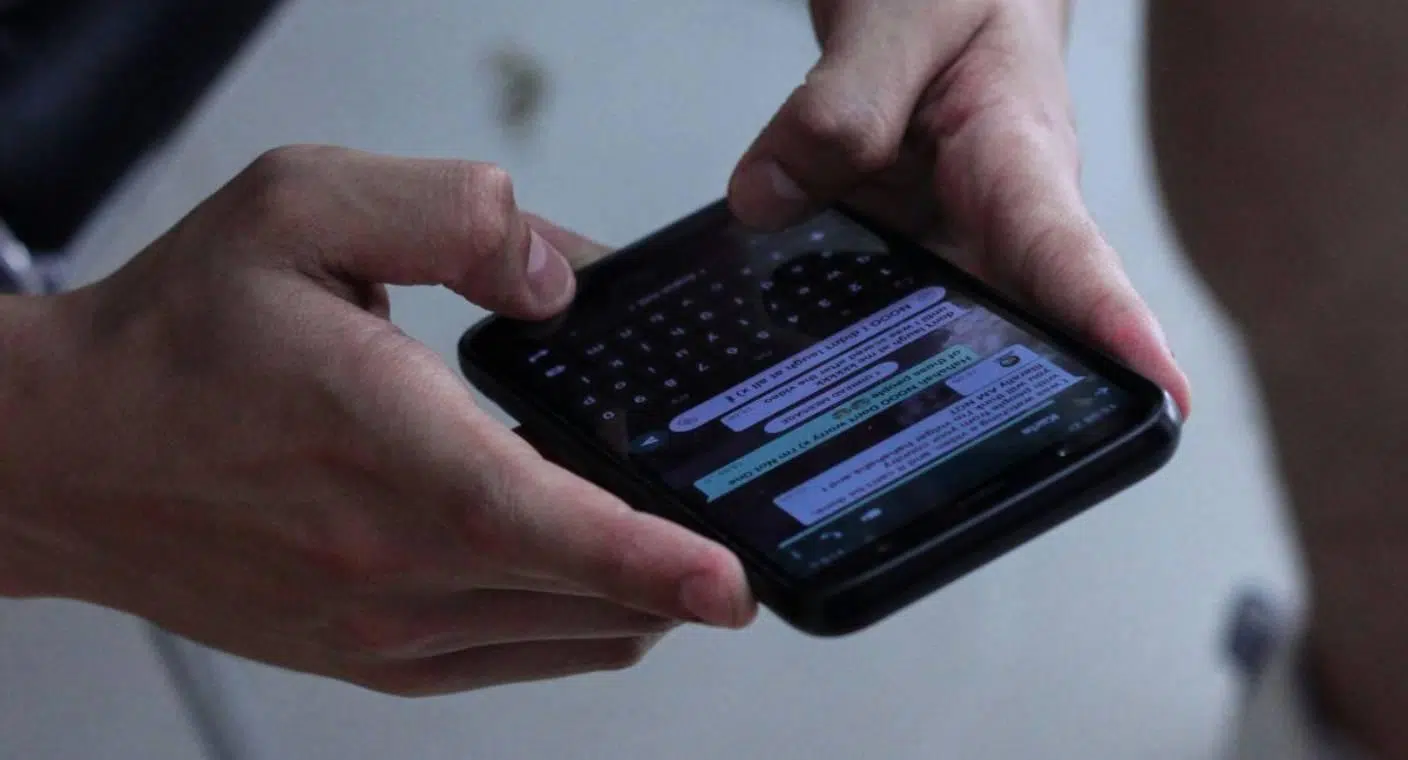
The "child in distress" scam has become one of the most characteristic scams in recent years in digital messaging, especially on WhatsApp, where criminals play on urgency and family ties to empty bank accounts in a matter of minutes, which is why it is key to identify scams on WhatsApp.
Behind a seemingly harmless message, the attackers pose as a son or daughter in the midst of an emergency , demand immediate money, and pressure the victim to act without thinking or checking who is really on the other side of the screen.
How the classic distressed child scam works
The most common version of this scam begins with a text from an unknown phone number , usually via WhatsApp or SMS, in which someone presents themselves as the victim's son or daughter and claims that they have lost or broken their mobile phone, so they are using a borrowed phone, which is why it is advisable to identify unknown numbers.
After this initial contact, the supposed relative presents a financial emergency : they need money to buy a new device, pay an unexpected bill, get out of a medical emergency, or resolve a sudden incident. The goal is to make the person feel both pressure and sympathy.
Typically, the scammer will demand immediate payment via Bizum on WhatsApp , bank transfer, or other instant payment solutions . They often end the message with phrases like "I can't talk much" or "I'll explain it better later" to discourage the victim from asking more questions or asking uncomfortable ones.
In many cases, victims don't verify the sender's identity through any other channel, relying solely on the emotional content of the message . This is precisely the terrain where social engineering thrives: exploiting emotional connections to suppress critical thinking.
The new twist: voices cloned with artificial intelligence
In recent months, this fraud has taken a significant leap forward with the use of AI-based voice cloning , a risk documented in the article "WhatsApp and AI Risks ." The scheme is no longer limited to text messages: the victim receives a voice note or even a call where they hear what appears to be the real voice of their son, daughter, or other close relative.
The audio message typically describes an extreme situation, such as a car accident, a robbery, or a serious legal problem . The nervous, halting, and distressed tone is designed to frighten the recipient and prompt an immediate response, without questioning whether it is actually that person.
According to cybersecurity experts, current tools allow for the remarkably accurate imitation of a voice using only a few seconds of recording , obtained from videos on social media, clips from public platforms, or fragments of leaked calls. This phenomenon is linked to data theft in messaging apps.
In these setups, the scammers directly provide bank details, account numbers, or precise instructions on how to send the money, and avoid going into too much detail about the supposed emergency so as not to give the victim time to detect inconsistencies.
The pattern repeats itself time and again: unexpected contact, dramatic story, great urgency, and an immediate request for money . The use of a cloned voice and an emotional narrative only reinforces the sense of reality and further lowers defenses.
Ghost Pairing: Silent account hijacking to reinforce deception
Alongside the refinement of the troubled son, a technique known as Ghost Pairing or “silent hijacking” of WhatsApp accounts has spread , which can be used to support this and other frauds based on impersonation, as explained in cases of WhatsApp account hijacking.
With this method, cybercriminals can link the victim's WhatsApp account to another device without needing to steal the SIM card or know the password. This allows them to send messages to the victim's contacts, read conversations, and impersonate them for days.
The trick lies in the preliminary phase: the attackers make contact with the person and, under some pretext (security verification, technical help, identity confirmation, fake prizes), get them to share the WhatsApp verification code that arrives by SMS or notification.
Once the criminal enters that code into their own device, they take control of the account and can message family and friends from the victim's real number . This makes any request for money or urgent help seem much more credible, because the message appears to come from a genuine contact.
In the context of a child in distress, this type of silent kidnapping even allows the scammer to have prolonged conversations with several family members , combining texts, audios and images to build a convincing story and pressure them to make several payments.
WhatsApp's role as a central channel for fraud
With over 3.000 billion users worldwide , WhatsApp has become one of the preferred channels for cybercriminals to carry out the "child in distress" scam and other similar variations in Europe and Spain; companies are working to strengthen security on WhatsApp.
Cybersecurity companies point out that the immediacy and closeness of instant messaging reduce the filters of distrust that users apply to email, for example. A message that arrives "as if it were from family" is almost always read immediately and usually receives a quick response.
Furthermore, WhatsApp is increasingly being used as the final channel to which victims are directed from other platforms . The scam may begin on a social network, a seemingly legitimate website, or even an educational service, but the final stages of the fraud are attempted within the chat, far from the stricter moderation and review systems.
Experts like those at Check Point Software have observed a common pattern: scams, even those that differ significantly, tend to shift the conversation to WhatsApp to increase their chances of success. Once there, the attacker exploits the sense of urgency, trust, and the feeling of private communication.
In Spain, this situation is particularly sensitive, as WhatsApp is an everyday tool for communicating with children, parents, and grandparents . This habit of "talking about everything through chat" means that many parents are accustomed to receiving requests for favors or money via the app, which fraudsters exploit without hesitation.
Emotional fraud: from text to audio and the call
The success of the troubled child lies in the systematic exploitation of emotions . It doesn't matter if the message arrives in writing, audio, or a quick phone call: the idea is to provoke fear, guilt, or a sense of responsibility in the shortest time possible.
In the traditional scenario, a simple “Mom, I’ve lost my new phone, I need you to send me a Bizum” can be enough to prompt a parent to react without question. The lack of specific details is disguised as nervousness or urgency , reinforcing the idea that it’s a critical moment.
When voice cloning is involved, the impact increases. A family member who hears what sounds like their child's real voice crying or breathing heavily has much more difficulty keeping a cool head , even if certain details don't quite add up.
The criminals avoid giving the victim time to hang up and call through another channel: they pressure the transfer to be made in a few minutes and, sometimes, ask that the situation not be discussed with anyone "so as not to worry" the rest of the family.
This entire emotional setup is complemented by highly polished social engineering techniques: generic references to studies or work, credible schedules, messages sent at times when the victim is more tired or distracted (at night, weekends, holidays…), and language that imitates that of the impersonated person.
How attacks are prepared: information and personalization
The "child in distress" scam is rarely launched entirely at random. In many cases, scammers gather publicly available information from social media or other platforms before contacting the victim.
Names of children, family photos, references to trips, schools or universities, and even comments about recent problems can all be used to create a highly personalized message . The more recognizable information the text includes, the more likely the recipient will believe it's genuine.
In more elaborate scenarios, attackers combine this preparation with voice cloning, so that the audio not only sounds like the real family member, but also mentions details that make sense to the listener.
This level of personalization means that, sometimes, even seeing the usual number on the screen is not a complete guarantee: phone spoofing and the use of hijacked WhatsApp accounts can completely mask who is on the other end.
What makes this scam especially dangerous is that it doesn't only target people without technological knowledge . Even experienced users can fall for it if the attack occurs during a moment of emotional vulnerability or distraction.
Combination with other platforms and previous hooks
The child in distress no longer always starts directly on WhatsApp. Increasingly, attackers use Facebook , Instagram, or TikTok . Posts, ads, or private messages may appear as bait, simulating promotions, giveaways, or casual contacts that gradually lead the user to give away their phone number.
There have even been cases of campaigns using seemingly legitimate services, such as educational platforms like Google Classroom , sending fake invitations or fabricated academic communications so that the recipient considers them legitimate from the outset.
Once the victim trusts that channel, they are offered to continue the conversation via WhatsApp "for greater convenience," and that is where the fraud unfolds with messages about a son in distress, impersonations, or requests for verification codes.
This strategy of crossing platforms has a clear objective: to take the person out of relatively controlled environments and bring them to a space where communication is more direct, private and difficult to audit afterward.
Practical tips to avoid falling for the "child in distress" scam
Cybersecurity experts insist that, even as attackers' technology becomes increasingly sophisticated, the best defense remains caution . Applying a few basic habits can make the difference between detecting a scam early and losing a significant amount of money.
First, be wary of any unexpected message urgently requesting money , even if it supposedly comes from a son, daughter, or other close relative. The recommendation is to pause for a few seconds, take a deep breath, and not act impulsively.
It is essential to verify through an alternative channel : call the family member's usual number, use another application, contact through another trusted person or, if in doubt, speak directly with someone close who can confirm the situation.
Experts also recommend that families establish a pre-agreed code or keyword known only to close members. In a suspicious call or message, asking for this code can serve as an additional filter to detect identity theft.
Another essential rule is to never share verification codes received via SMS or notification, whether from WhatsApp or other services. No family member, nor a legitimate company or official organization, needs you to send them these codes via chat.
Good security practices on WhatsApp and in everyday life
Beyond reacting to suspicious messages, it is advisable to review privacy settings and strengthen account security to make it more difficult for cybercriminals to take advantage of the "child in distress" scam or other similar variations.
In the case of WhatsApp, it's advisable to enable two-step verification , which adds an extra PIN when trying to register the account on a new device. This extra layer makes silent hijacking via Ghost Pairing more difficult.
It is also important to keep the application and operating system always up to date , as new versions usually introduce security improvements that correct potential vulnerabilities exploited by attackers, such as the security improvements in Android.
Another useful measure is to regularly check the devices linked to the account and log out of any that are unfamiliar or no longer in use. For instructions on how to do this, consult guides on logging out of WhatsApp Web . This check allows you to detect suspicious activity before the account is used to deceive family members.
Finally, it's crucial to foster a culture of reasonable skepticism at home . Openly discussing these types of scams with children, parents, and grandparents, explaining how they work, and what warning signs should raise red flags can prevent the deception from succeeding when the time comes.
The evolution of the "child in distress" scam, now reinforced by voice cloning and silent account hijacking, demonstrates that cybercriminals are willing to exploit any emotional and technological vulnerability ; therefore, combining basic technical measures in applications like WhatsApp with a bit of calm, verification, and critical thinking has become essential to avoid falling into a trap that, at first glance, seems like a simple message from a concerned relative.

Table of Contents
- 1 How the classic distressed child scam works
- 2 The new twist: voices cloned with artificial intelligence
- 3 Ghost Pairing: Silent account hijacking to reinforce deception
- 4 WhatsApp's role as a central channel for fraud
- 5 Emotional fraud: from text to audio and the call
- 6 How attacks are prepared: information and personalization
- 7 Combination with other platforms and previous hooks
- 8 Practical tips to avoid falling for the "child in distress" scam
- 9 Good security practices on WhatsApp and in everyday life
