- Googlebook OS combines Android, ChromeOS and Gemini for laptops with mobile continuity.
- Initial analyses show a more native Android desktop, but with fewer features than ChromeOS.
- Linux support is progressing in preview, while doubts persist about web and desktop apps.
- The European rollout extends to several countries, and Spain appears in forecasts for November.
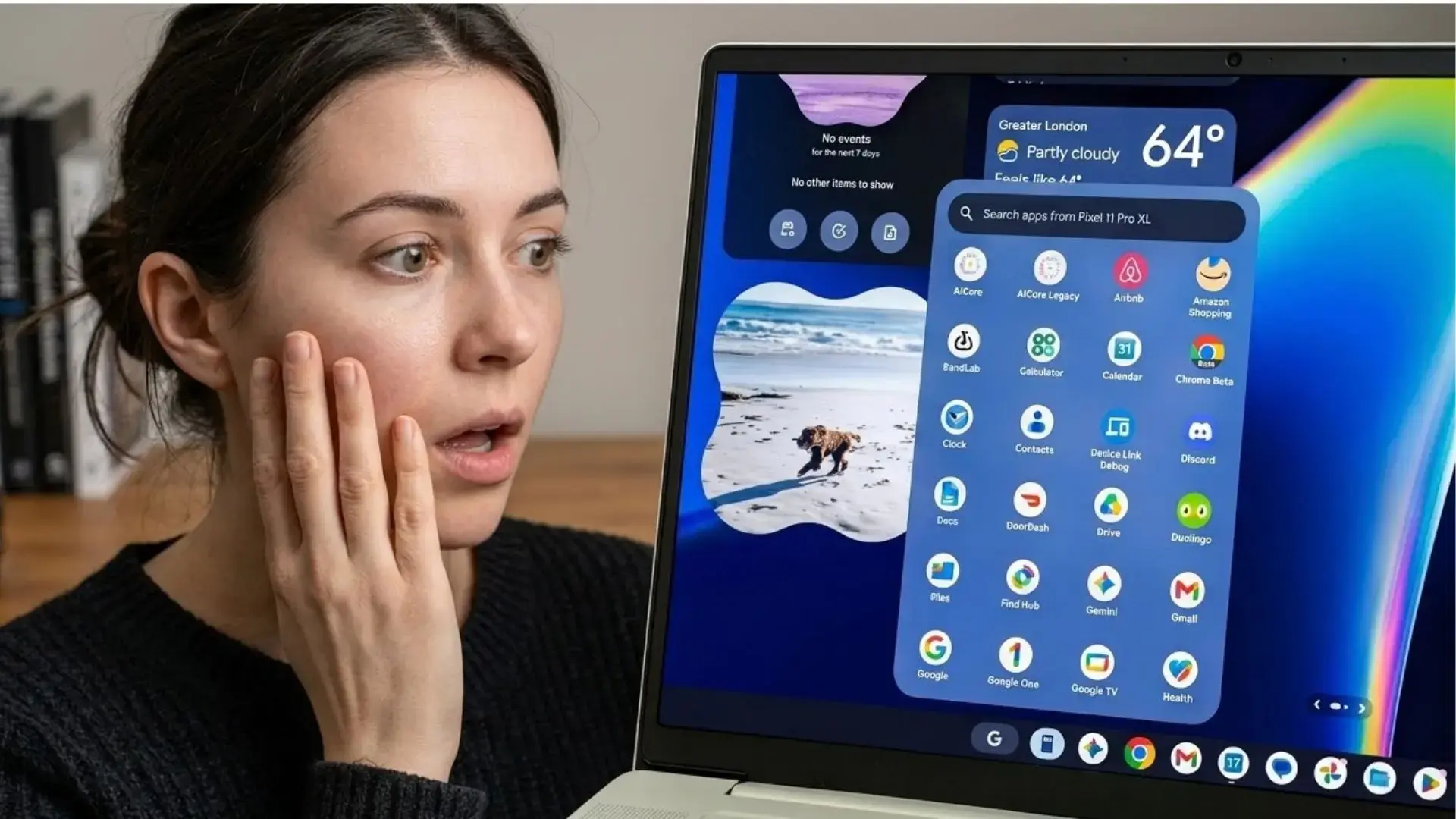
Googlebook OS has become one of the most talked-about topics in the tech ecosystem since Google unveiled its new family of laptops. The offering is more than just a rebranding of ChromeOS: it's based on Android, retains desktop features inherited from Chromebook, and adds artificial intelligence capabilities powered by Gemini. The underlying idea is that users can start a task on their mobile device and seamlessly continue it on their computer.
However, the first few weeks of use have generated a mixture of enthusiasm and caution. Reviews agree that there is a solid foundation , especially for those already familiar with Android, but they also point out significant shortcomings compared to the maturity of ChromeOS. In Europe, availability is being rolled out in phases, and Spain is still only listed in forecasts, not on a finalized official schedule.

A system that originates from Android and looks directly to ChromeOS
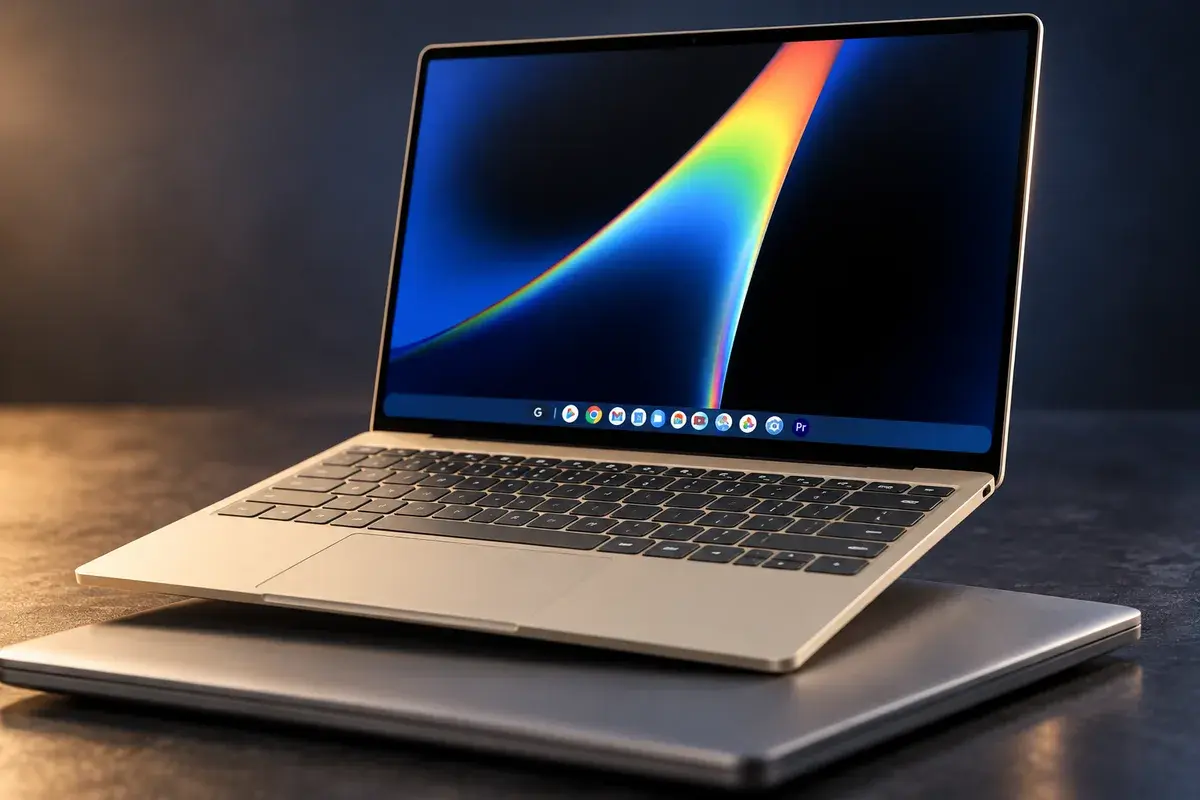
Googlebook OS architecture combines Android apps , the Chrome browser, and web tools in a single environment. In practice, the interface is reminiscent of ChromeOS due to its desktop-like approach, although the behavior and many settings are closer to an Android adapted for larger screens. This similarity allows a regular Android mobile user to adapt quickly, especially if they already use a Pixel.
During initial setup, the device can import Wi-Fi networks, passwords, and phone settings with encrypted synchronization. Features like Continue allow you to pick up where you left off on your phone; Quick Access makes it easy to view and use smartphone files directly from the file explorer; and Cast My Apps brings phone apps to a computer window. These are all designed to reduce reliance on cables, cloud services, or manual transfers.
Artificial intelligence is another key component. Magic Pointer allows you to summon Gemini on the screen with a cursor gesture, while Create Your Widget generates custom panels from a written instruction. Rambler converts voice notes into structured texts with titles and summaries. Google has also mentioned Magic Cues, although it hasn't fully explained how it works.
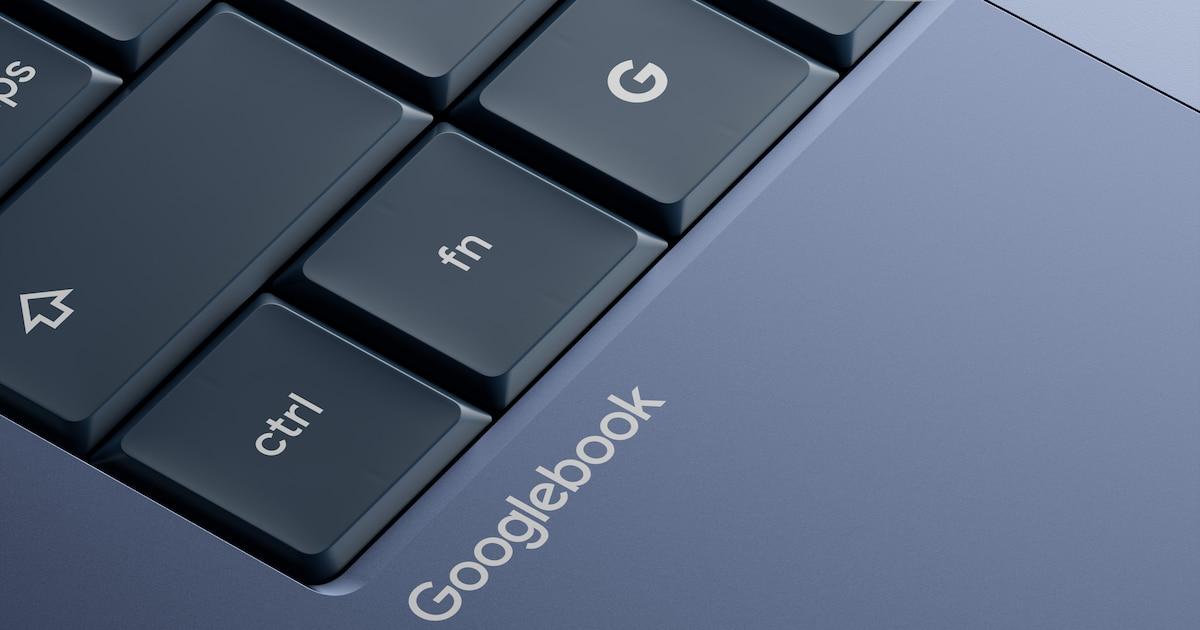
In terms of hardware, the first Googlebooks come from Acer, Asus, Dell, HP, and Lenovo . Most start with 16 GB of RAM, expandable to 32 GB, and a 256 GB or 512 GB SSD. There are models with Intel Core Ultra 5 and 7 processors from the Panther Lake family and others with Qualcomm Snapdragon X Elite. They also include a Titan C security chip, a fingerprint reader, and, in several cases, facial recognition. Premium materials, such as aluminum, magnesium, or carbon fiber, appear in various finishes.
Prices start at $899 or €799 for the most affordable option, though models from Dell, HP, Lenovo, and Asus go up to $1.199 or $1.299 depending on the configuration. The company has also brought back the Glowbar, a light bar that indicates battery status, boot status, and interactions with Gemini, and promises updates for up to ten years.
Availability in Europe and forecasts for Spain
The initial launch took place in the United States on October 4th , with pre-orders available. Since then, Google has expanded to markets including Canada, the United Kingdom, Ireland, France, Germany, and Australia. This European expansion confirms that the platform is not limited to North America, although the rollout pace and available features may vary from country to country.
For Spain, the most concrete information comes from a forecast published by NeoTeo: the Acer Googlebook 14 could arrive in November for €1.199 . This is a projection from a specialized publication, not an official confirmation from Google or Acer, so it should be taken with a grain of salt until a formal announcement is made. In the rest of Europe, prices in euros start at around €799 for the most basic options.
Availability also affects the experience, because not all models use the same processor . Some devices use Intel processors, while others use Snapdragon, which impacts battery life, performance, and thermal behavior. In Spain, if the forecasts are accurate, the launch would coincide with the pre-Christmas season, a crucial time to gauge actual market reception.
Performance and battery life: what the first tests say
A PCMag review placed the Acer Googlebook 14 first among four Googlebooks in WebXPRT 4 and PCMark Work 3.1 for Android, and second in Basemark Web 3.0. It's important to understand that these tests compare devices within the same family, not against Windows or macOS laptops. The model reviewed featured an Intel Core Ultra 5 325 processor, 16 GB of LPDDR5X memory, and a 512 GB SSD.
In terms of battery life, PCMag measured 16 hours of local 720p video playback in full screen, with brightness at 50%, volume at 100%, and Wi-Fi, Bluetooth, and keyboard backlighting turned off. This was a specific scenario, not a real-world workday. Acer, for its part, claims up to 16 hours of web browsing and 14 hours of video playback, with a 71 Wh battery and fast charging to 50% in half an hour.
Usage impressions suggest that performance varies significantly depending on the model . In tests with Acer and HP, the Snapdragon-powered device felt somewhat smoother than the Intel model and exhibited fewer page reloads when opening multiple tabs and applications. However, these are initial observations, not a definitive conclusion for the entire range.
Linux and applications: the most delicate point of the first version
Software compatibility is one of the open fronts. Initial analyses revealed that some web applications don't install as PWAs , as was the case with Slack, and that ChromeOS offered more flexibility for integrating web services. Google indicated that manual installation from Chrome would come later, but the episode reinforced the feeling that Googlebook OS starts with less flexibility than a Chromebook.
Linux support also raised concerns. In the initial version, Linux graphical applications weren't a priority and could appear within a Terminal-linked window, lacking full desktop integration. Advanced users reported stability issues with programs like GIMP. Furthermore, 9to5Google pointed out that the desktop app gap persists and that Photoshop for Android doesn't offer the same depth as its Windows or macOS versions.
Google has responded with a preview Linux terminal within an isolated virtual machine . The environment is Debian and allows the use of tools such as apt, git, ssh, Node.js, Python, Ruby, Go, and Rust, with automatic localhost forwarding to the browser. Each shared folder requires explicit permission, and a VM reset allows experimentation without losing files on the host system.

The company has promised improvements such as USB passthrough, ADB over USB, dynamic memory and storage , GPU/NPU acceleration, and virtual machine persistence. Bringing Linux applications with graphical interfaces to the launcher is also on the roadmap. These steps could address some of the criticisms, but they still don't make Googlebook OS a perfect replacement for ChromeOS for everyone.
Running Googlebook OS on a Mac: a technical experiment
Developer Skylar Taylor-Barrick has released the open-source project gbos-vm on GitHub . Its goal is to run Googlebook OS on Apple Silicon-based Macs using a QEMU-based virtual machine. The system uses an official Dell Googlebook recovery image, modified to work with virtual hardware. It is neither a generic Android image nor a native installation, and has no official affiliation with Google or Dell.
The main challenge lies in the graphics. Android uses Vulkan for rendering, while Apple devices use Metal, so the project translates calls between the two APIs using MoltenVK and POSIX shared memory . The system boots, utilizes the Mac's GPU, and opens Chrome, albeit with clear limitations: a maximum of 60 frames per second, visual glitches with certain WebGL content, unstable audio, and features like reverse clipboard, right-click, and prolonged use that haven't been thoroughly tested. Bluetooth also fails to pair with real devices.
The requirements are demanding: a Mac with Apple Silicon, at least 16 GB of RAM and about 60 GB of free space, plus Xcode, Homebrew, the Java Kit, and the Android SDK. The first run downloads around 9 GB from Google servers. In terms of security, it lacks components such as TPM and some hardware key protection, so the author recommends using it for testing and development, never as a primary system or with sensitive accounts.
Googlebook OS represents an ambitious effort to unify Android, ChromeOS, Gemini, and ensure continuity across devices , with laptops from Acer, Asus, Dell, HP, and Lenovo already making inroads in several markets. The idea appeals to those seeking a familiar desktop environment for Android users, but the first version has shortcomings in web applications, Linux support, desktop software integration, and features inherited from ChromeOS. In Europe, the rollout is progressing in stages, and Spain is still awaiting official confirmation, with forecasts pointing to a November release and a price of €1.199 for the Acer Googlebook 14. The gbos-vm experiment demonstrates that the system is generating technical interest, although its limitations serve as a reminder that it is not yet a closed and mature platform for everyone. The key will be how quickly Google addresses these issues and how the public responds when the devices become available in more countries.