- Google has begun rolling out Gemini in Chrome in the UK, the first European country to receive the integration.
- Waze incorporates features based on Gemini, such as motorcycle mode and custom navigation.
- The new tools allow users to summarize content, compare information, and report incidents by voice.
- Spain does not yet have a date for the arrival of Gemini in Chrome, although the rollout is expected to continue.

Google's artificial intelligence continues to expand.
Meanwhile, Waze has also received an update with features powered by Gemini . The Google-owned navigation app has incorporated a specific mode for motorcycles, personalized routes based on user history, and a voice-activated incident reporting system. These new features aim to make driving safer and better suited to each type of vehicle.

What can Gemini do in Chrome?

Gemini's integration with Chrome functions as an assistant that understands the content open in the browser. Users can ask it to summarize a lengthy article, compare information across multiple tabs, or answer questions about what they're viewing— all without having to copy and paste text into another application. Furthermore, the tool connects with other Google services, such as Gemini Personal Intelligence, to link Gmail, Photos, and YouTube , allowing users to, for example, schedule a meeting or search for a location without closing the active tab.
Another standout feature is the ability to modify images using instructions written in natural language, thanks to Google's Nano Banana technology . Gemini also remembers the context of previous conversations , making it easier to continue research or comparisons without having to repeat information. Regarding security, Google has implemented measures to detect manipulation attempts, such as instruction injection, and requires confirmation before executing sensitive actions.

The UK rollout follows similar launches in the US, Canada, India, and New Zealand. The iOS version of Chrome will arrive in August , the company announced. Spain is not currently included in the roadmap, but the expansion across Europe suggests it will arrive soon.
Waze gets an update with artificial intelligence

The Waze navigation app has also received a major overhaul thanks to Gemini. One of the most striking new features is Motorcycle Mode , which uses artificial intelligence to calculate routes specifically for two-wheeled vehicles. This mode takes into account motorcycle-specific shortcuts and restrictions, and also alerts users to hazards such as potholes, speed bumps, raised pedestrian crossings, and narrow bridges. The information is fed by real-time traffic data and input from a team of map editors who are also motorcyclists.
For now, motorcycle mode is available in Argentina, Brazil, Colombia, the Philippines, Malaysia, Mexico, and Peru, on both Android and iOS. Its arrival in Europe has not yet been announced , although the integration of Gemini's AI into Google Maps suggests an evolution toward navigation better suited to different types of users.
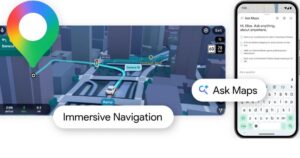
Another feature included in this update is personalized navigation. Waze learns the driver's habits and suggests routes according to their preferences , such as prioritizing highways or avoiding roads with many stops. This option can be easily disabled in the settings. Additionally, a "Less Talk" mode has been added, which reduces the frequency of voice commands to avoid interrupting music or podcasts, keeping only critical alerts active.

The Gemini integration also allows users to report road incidents simply by speaking. Users can report obstacles, road closures, or traffic changes without having to navigate through menus , speeding up the reporting process and benefiting the entire community. This feature, along with intelligent voice-guided destination search, brings the Waze experience closer to that of a personal assistant.
Taken together, these new features reflect Google's commitment to bringing Gemini to an increasing number of services. Chrome and Waze are just two examples of how artificial intelligence is being integrated into everyday tools , offering more contextual and useful functions. Although Spain is still waiting for some of these features, the trend is clear: AI is no longer limited to chatbots, but is becoming a constant ally in web browsing and daily commutes.