- Disney is internally analyzing the possible acquisition of Epic Games, driven by part of its management team.
- The operation would be based on the strategic importance of Fortnite and the technology of Unreal Engine.
- Financial problems and layoffs at Epic open a potential window of opportunity for Disney.
- Tim Sweeney and Tencent's involvement are the main obstacles to a sale going through.
The possible Disney's entry into Epic Games' capital It has gone from being a simple rumor to becoming one of the most talked-about topics in the video game industry. Although there is no official confirmation yet, various sources close to the industry indicate that the top management at the Mickey Mouse company is seriously considering taking this step.
The move would come at a delicate time for Epic Games and FortniteThe company is marked by internal restructuring and staff adjustments. In this context, some Disney executives see the situation as a strategic opportunity to strengthen its presence in the gaming world with a top-tier asset, while other executives are considerably more cautious.
An open debate at the top of Disney
According to information attributed to the technology journalist Alex HeathWithin Disney there is a clear division between supporters and detractors of a possible acquisition of Epic Games. Some senior executives believe that the company Fortnite It would be the ideal partner to build the group's digital future, integrating community, technology and franchises under one umbrella.
Other leaders, however, doubt that an operation of this magnitude is the best way to consolidate their position in the sector. Disney has had a uneven career in video gamesAlternating its own projects with periods in which it has preferred to license its brands to third parties, the economic and operational cost of managing a giant like Epic does not convince everyone.
At the same time, external voices are also pressuring for the step to be taken. Kevin Mayer, former Disney executive and former CEO of TikTok, has publicly argued that The company should acquire a large video game asset.positioning Epic as one of the most logical options. In his opinion, integrating an established studio would be the most direct way for Disney to gain real influence in an industry that continues to grow.
This entire debate is taking place, moreover, after the company has already carried out a $1.500 billion investment in Epic Games for joint projects within Fortnite, a figure that serves as a demonstration of the strategic interest that the entertainment group attributes to the video game and, in particular, to the Epic universe.
Fortnite, a central piece of the potential agreement
The main attraction of a hypothetical operation is obvious: Fortnite remains one of the most influential games in the worldDespite having lost some of the luster of its best years, for Disney, it's not just about adding another hit title, but about acquiring a social platform where millions of users of all ages connect daily.
In recent times, Fortnite has evolved from a simple battle royale to constantly expanding digital environmentIn addition to traditional competitive modes, the game offers creative experiences, virtual concerts, narrative events, and community-generated content. This ecosystem fits perfectly with Disney's vision of extending its stories and characters beyond film and television.
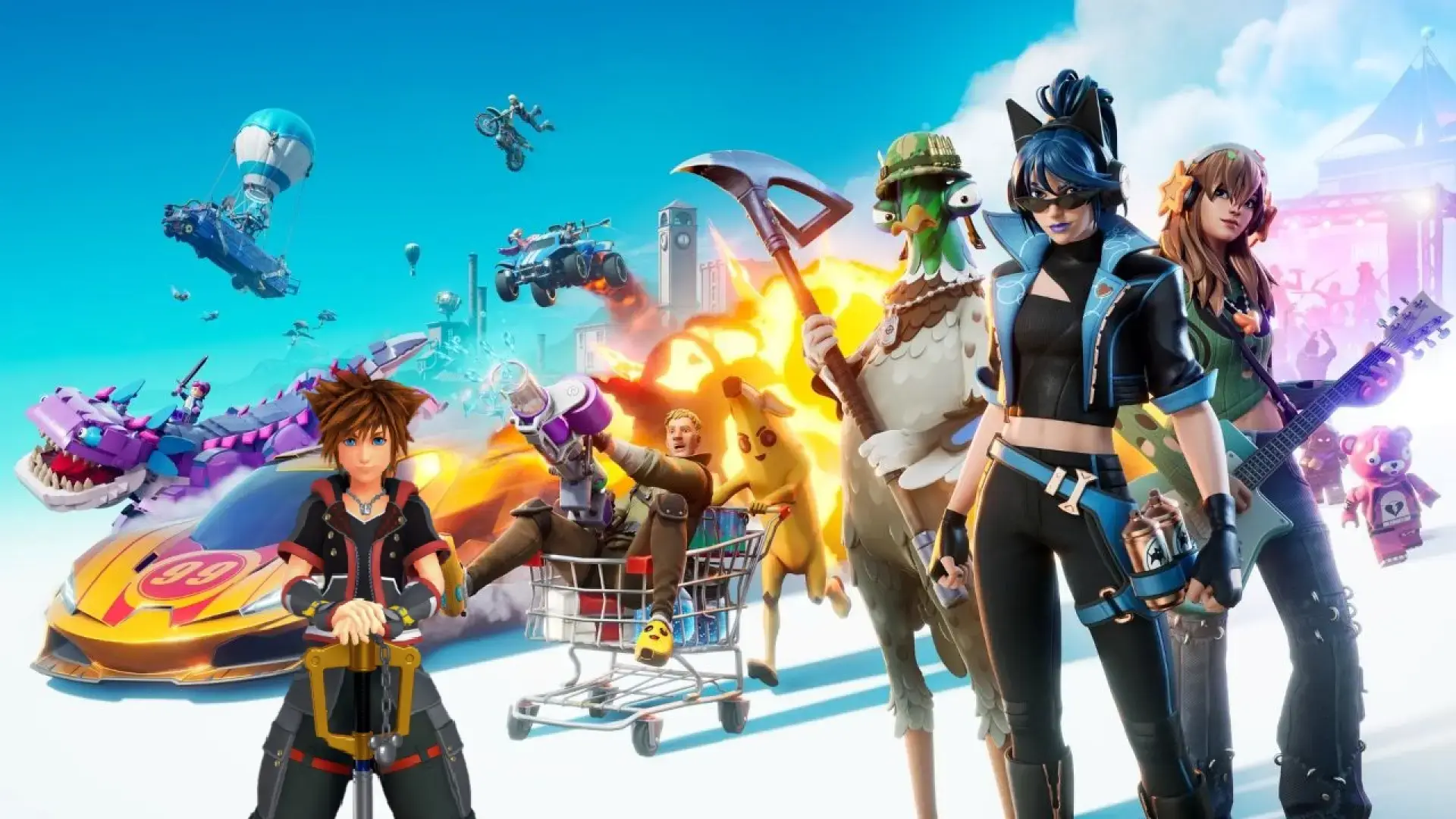
We have already seen some steps in that direction: collaborations with Marvel, Star Wars, Pixar and even skins inspired by classic games from the studio, like Hercules, have arrived in the game in recent years; one is even expected Kingdom Hearts crossover.
An acquisition of Epic would allow them to go far beyond these occasional appearances. The idea being considered by some in the industry is the construction of a metaverse of its own based on Fortnitewhere Disney franchises would be permanently integrated. Instead of temporary campaigns, it would be a persistent space where characters, brands, and interactive experiences designed for the long term would coexist.
This move would put Disney in direct competition with platforms like Roblox and other attempts at shared virtual worlds, opening the door to business models that combine the sale of cosmetics, battle passes, themed experiences, and digital merchandising associated with its licenses.
Epic Games, caught between restructuring and market pressure
While Disney weighs its options, Epic Games is going through one of the most difficult periods in its recent historyThe company itself has acknowledged that it spends more than it earns, which has forced it to make drastic decisions to adapt its structure to the new economic context.
In recent months, the study has announced the dismissal of more than a thousand employees and the cancellation of several modes and projects linked to Fortnite. This restructuring process, which could extend through 2026 and beyond, has generated internal and external criticism, from the player community to affected developers, some of whom were in very delicate personal situations.
Own Tim SweeneyEpic Games founder and CEO explained that the studio's business model needed a major overhaul to ensure long-term viability. The reliance on Fortnite revenue, which has fluctuated after years at the top, highlighted the need for diversification and better cost control.
Despite the impact of these cuts, Epic continues to push its collaboration with Disney and other brands, while trying to reinforce Fortnite's position as an experience hub. At the same time, the company is seeking new revenue streams through Unreal Engine and its ecosystem of toolswhich are used in the development of video games, film, television and immersive experiences, also in Europe.
This scenario of relative weakness is precisely what fuels speculation about a possible sale or, at least, about a greater openness to deeper strategic agreements than those that existed until now.
Tim Sweeney, Tencent, and the major obstacles to the operation
Beyond any interest Disney might have, The key is whether Epic Games is willing to give up its independenceTim Sweeney has for years advocated a business model focused on creative control and escaping, as far as possible, from decisions dictated solely by financial markets.
According to sources close to the negotiations, Any acquisition attempt would require Sweeney's direct approvalGiven that it maintains a very significant voting stake within the shareholder base, this makes the operation more than just a matter of money: it would be necessary to convince it that integration into a conglomerate like Disney would not dilute Epic's identity.
This factor is added to the Tencent's significant stake in Epic Games' capitalThe Chinese tech giant acquired a significant stake in the company some time ago, which complicates any direct change of ownership. Any agreement would have to be reached through complex negotiations, involving not only economic factors, but also regulatory and geopolitical ones.
In an international context where European and American authorities are scrutinizing major technology deals, an acquisition of this size would raise eyebrows. antitrust and competition concernsIn the European Union, where the video game market is particularly dynamic and sensitive to these kinds of moves, regulators could demand guarantees to prevent an excessive concentration of power in the hands of Disney.
Therefore, several sources indicate that, although the idea of a purchase is on the table and is generating enthusiasm in some sectors, Its materialization is still perceived as unlikely. In the short term. Sweeney, for now, insists that the team remains committed to the independent future of Fortnite and Epic Games.
Disney's strategy in video games and its impact in Europe
The potential acquisition of Epic would fit into a Disney's broader expansion plan in the gaming sectorAfter years of stumbling along, closing its own studios and betting on external licenses, the company seems determined to adopt a more active role in interactive entertainment.
Figures like Josh D'AmaroD'Amaro, currently in charge of parks, experiences, and products, has been instrumental in this shift. Considered a huge video game enthusiast, D'Amaro spearheaded the aforementioned $1.500 billion investment in Epic to develop joint projects within Fortnite, a move many interpret as a dress rehearsal for something bigger.
In Europe and Spain, where Fortnite maintains a very active community On consoles, PCs, and mobile devices, deeper integration with Disney could translate into localized themed events, targeted campaigns for European audiences, and even synergies with parks like Disneyland Paris. It wouldn't be unreasonable to envision cross-platform experiences between the game and physical attractions, leveraging Unreal Engine technology to design immersive environments.
Furthermore, the growing presence of European studios working with Unreal Engine In sectors like animation, architecture, and automotive, greater control of this technology by Disney would have a direct impact on the region. The company could strengthen alliances with developers on the continent or promote joint projects that combine audiovisual content and video games.
However, in the old continent, it is also viewed with suspicion Concentration of large franchises and platforms in the hands of a few playersSpecialized media and analysts point out that a potential purchase of Epic by Disney would reopen the debate about the balance of power in the market, especially when other technology corporations are also competing for players' time and money.
An open future, between collaboration and a possible acquisition
For the moment, the tangible reality is that Disney and Epic Games maintain an intense collaborative relationshipThrough cross-investments, campaigns within Fortnite, and projects exploring new forms of interaction between brands and audiences, this alliance has already allowed for experimentation with entertainment models that blend film, television series, and video games in a single virtual space.
Statements from Alex Heath, Kevin Mayer, and other industry leaders have fueled speculation about the next step: the complete integration of Epic into the Disney conglomerate. However, Tim Sweeney's long-standing reluctance to relinquish control, Tencent's presence, and internal doubts within Disney are acting as clear obstacles.
In the absence of a final decision, the only thing that is clear is that Video games have become a priority for Disney And that Fortnite, along with Unreal Engine, occupies a central position in their plans. Both in the United States and in Europe, the outcome of this struggle between independence and acquisition could redefine how major entertainment franchises relate to virtual worlds in the coming years.
Thus, Disney's acquisition of Epic Games remains a real but distant possibility, while both companies explore the limits of an alliance that, without changing hands, is already influencing the course of the video game industry.