- Hearts is a classic card game based on tricks and penalties
- The objective is to avoid heart cards and the queen of spades, accumulating the lowest score.
- Includes variants, adapted rules and advanced strategies to perfect the game
- Memory, risk management and observation of rivals are key to winning
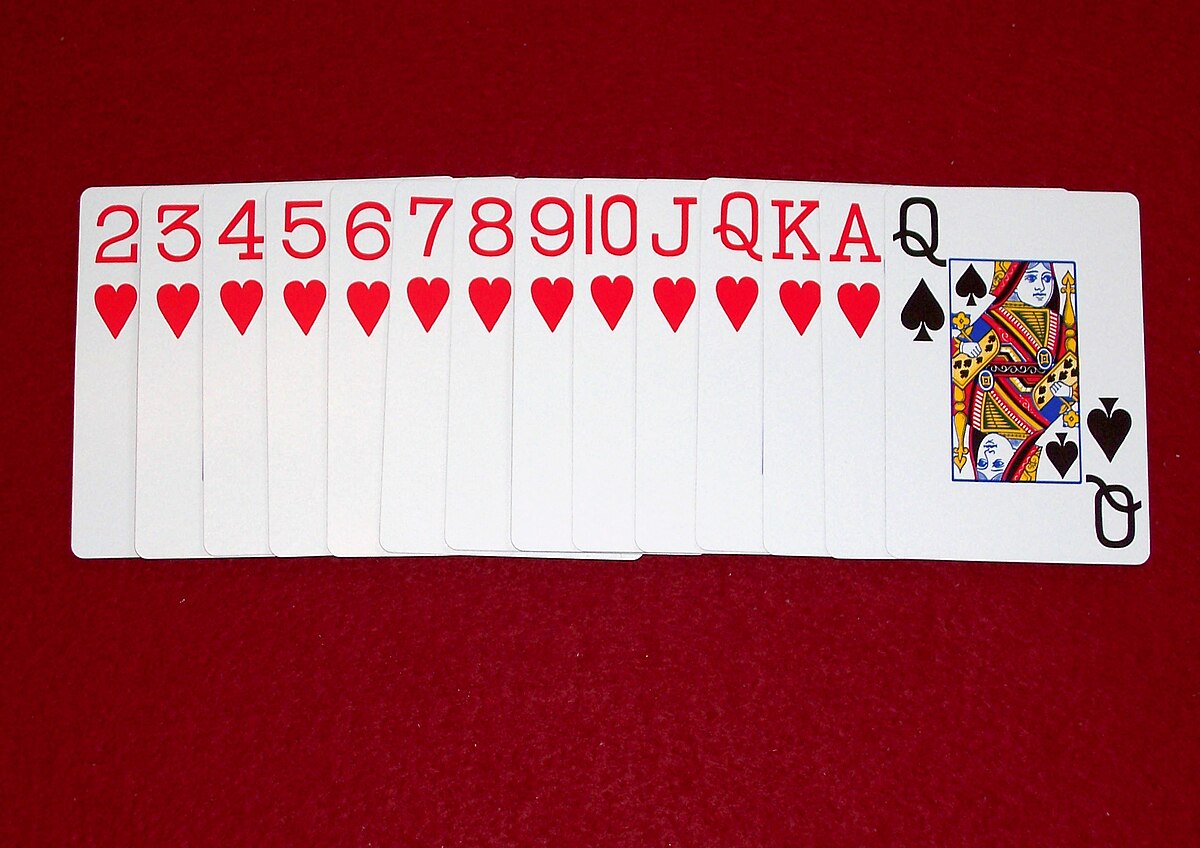
If you're a card game enthusiast looking for a challenge that combines strategy, excitement, and the need to anticipate your opponents' moves, Hearts—also known as Corazones—might be one of the best options for you. This classic game, which has captivated millions of people worldwide and is popular in both physical and digital formats, offers fast-paced matches, accessible rules, and a tactical depth that hooks you from the very first hand.
In this article, you'll find the most complete and clear explanation for learning how to play Hearts, mastering all its rules, moves, variations, lore, and key strategies. Whether your goal is to play for fun with friends, compete online, or hone your skills, you'll find everything you need here to become a true expert in this legendary trick-taking game.
What is the game Hearts? Origin and history
Hearts is a trick-taking card game where the objective is not to win the most hands, but to avoid accumulating penalty cards. It originated as an evolution of historical European games like Reversis, popularized in 18th-century Spain, where players who won hands or took certain specific cards were already penalized. At the end of the 19th century, Hearts spread to the United States, where it underwent significant adaptations—such as the inclusion of the Queen of Spades (Q♠) as a penalty card, which led to the "Black Lady" and "Black Maria" variants.
For decades, it remained one of the most popular forms of entertainment at gatherings, clubs, and homes, to the point that Microsoft Windows included it in its operating system in the 90s, accelerating its digital expansion. Today, both the classic version and its variations are played worldwide, both online and offline, and there are even championships and online communities dedicated entirely to this game.
Nowadays, when people talk about "playing Hearts" in Spain and Latin America, they usually refer to the "Black Lady" variant, which always involves four players using a standard English deck and a scoring system based on hearts and the dreaded queen of spades.
How to play Hearts? Rules, preparation, and dynamics
Necessary elements
A standard game of Hearts requires a standard 52-card deck (without jokers) and four players seated at the table. The game can be adapted for 3, 5, or 6 players by removing specific cards, but the most common and balanced gameplay is with four players.
Initial layout and game preparation
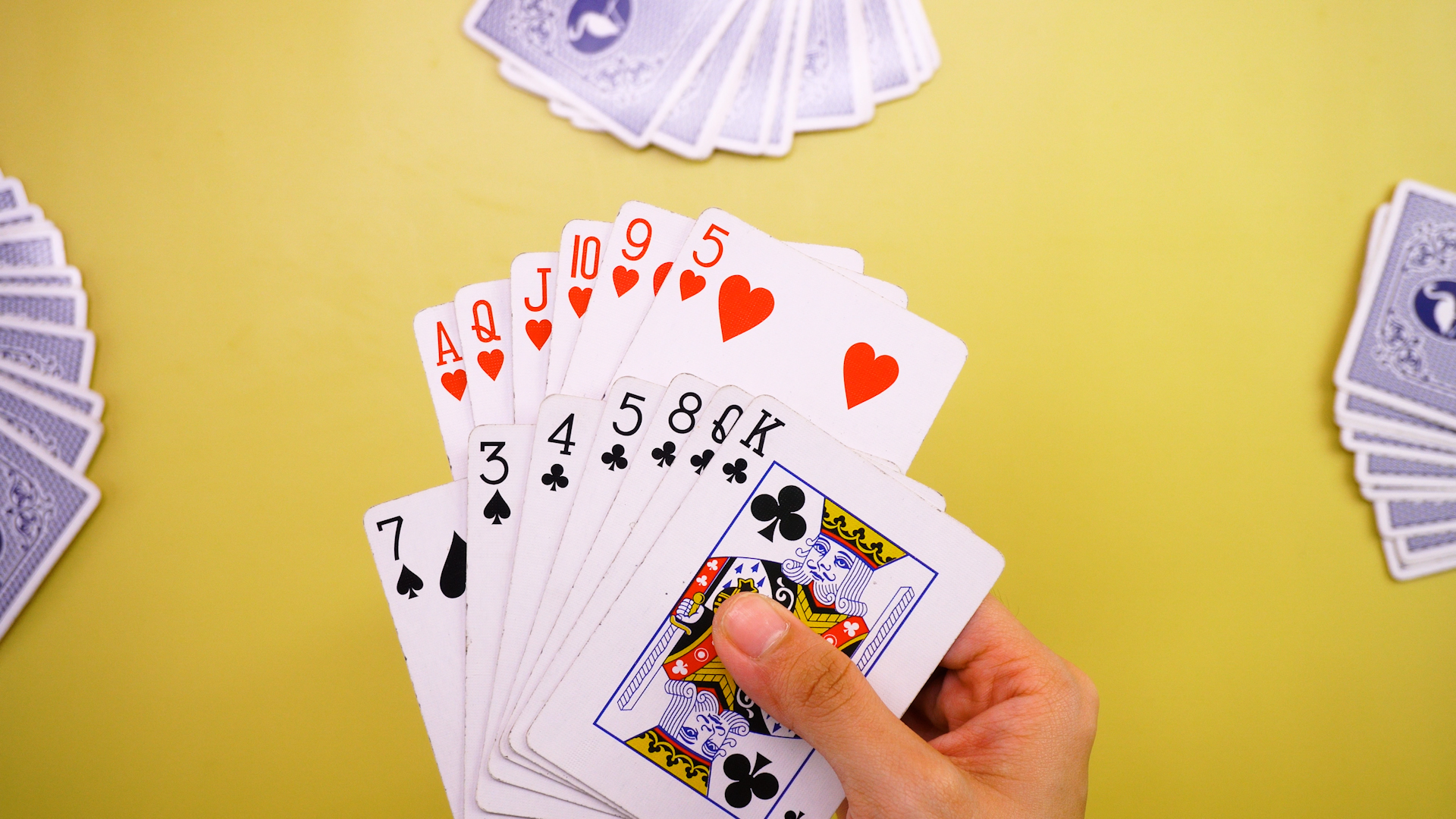
All the cards are dealt among the players, giving thirteen cards to each. The usual order of play is clockwise, and after the deal, each player looks at their hand and prepares for the first special action: the passing of cards.
The card pass: the first strategic move
Before starting each hand, players must select three cards from their hand and pass them to another opponent. This step is repeated in different directions each round:
- First round: Three cards are passed to the player on the left.
- Second round: Three cards are passed to the player on the right.
- Third round: Three cards are passed to the player opposite.
- Fourth round: No card passing is done.
From the fifth round onward, the passing cycle begins again, following the same order (left, right, forward, and so on). This mechanism introduces a first tactical level, since with the pass you can try to weaken your opponents' hand or protect yourself from certain risks.
Development of tricks and the real objective of the game
The player holding the 2 of clubs (2♣) always leads the first trick, and all players must follow suit if possible. That is, each player must play a card of the same suit as the card that led the round. If they have no cards of that suit left, they can discard any other card (this is where the risk of adding negative points to the opponents begins).
In the first trick, it is forbidden to play cards of the heart suit or the queen of spades (Q♠), unless you have no cards of the suit led. From this point on, the player who played the highest card of the suit led (the ace being the highest-ranking card) wins the trick. The winner takes those cards and leads the next trick.
Broken Hearts: How and When Can You Play?
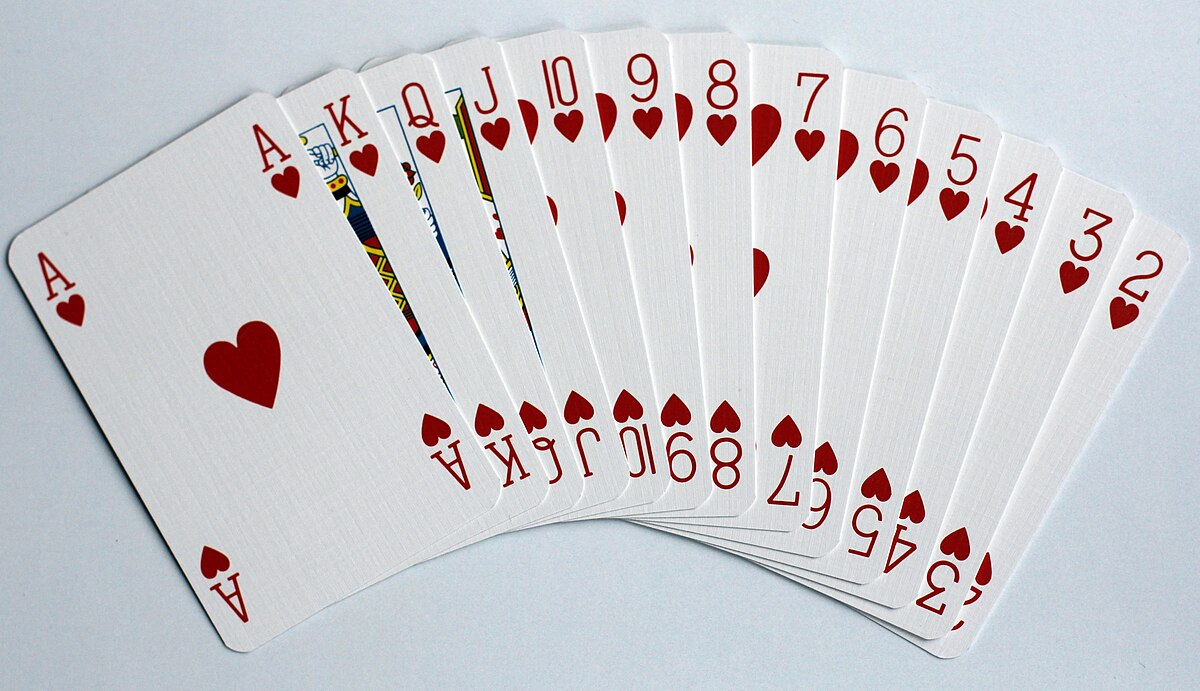
Hearts (♥) can only be played once they have been "broken" in the game. This happens when a player, unable to follow suit, discards and plays a heart. From that moment on, it is permitted to lead a trick with hearts.
This rule adds a special tension to the start of games, as it prevents negative points from being thrown too early and forces each move to be well planned.
Penalty cards and how points are scored
The main objective of Hearts is to avoid taking penalty cards in your tricks. Which cards generate points? Essentially, all the cards of the heart suit, which are worth 1 point each , and the queen of spades (Q♠), with 13 negative points . In total, there are 26 points at stake for each complete hand.
At the end of each hand or sequence of 13 tricks, each player totals the points earned from the cards they have picked up. The total score is accumulated game after game.

Completion and victory
The game continues with new rounds until one player reaches or exceeds 100 points. At that point, the game ends, and the player with the lowest score (fewest accumulated penalty points) is declared the winner. This threshold may vary depending on the variant or pre-agreed rules.
Hearts game variants and alternative rules
The popularity of Hearts has led to a large number of variations over time, depending on the country or group of players. Some of the best-known variations include:
- Black Lady: The most common version, which adds the queen of spades as a penalty card (13 points). This is the variant implemented on most digital platforms.
- Black Maria: Popular in the United Kingdom. In addition to the queen of spades, it also adds other penalties such as the ace and king of spades, with values of 10 and 7 points respectively.
- Spot Hearts: Each heart card scores according to its face value (the ace is worth 14 points, the king 13, the queen 12, etc.), and the queen of spades can be worth as much as 25 points.
- Hearts in pairs: Players are grouped into teams and their scores are combined.
- Reverse Hearts: The winner is the one who has scored the most points, which completely reverses the usual strategy.
There are also variations with auctions, wild cards, double decks, full record sets, and other special rules—such as shooting for the moon—which we'll detail below.
Shooting for the moon: what it is and how it affects the outcome
One of the most exciting and risky rules in Hearts is "Shooting the Moon": it consists of getting a single player to take all the penalty cards (the 13 hearts and the queen of spades) in a single game.
If you succeed, you have two ways to score, according to the agreement between players:
- Old Moon: The player who shoots at the moon does not score any points, but all opponents receive 26 points.
- New Moon: The "moon shooter" can subtract 26 points from his own score, while the others maintain their current score.
Trying to shoot for the moon is a risky maneuver and can radically change the course of the game. If someone else gets a single heart or the queen of spades before you achieve a full house, your entire plan will be ruined, and you'll rack up many negative points instead.
Detailed Hearts game dynamics: step by step
1. Dealing and passing cards
The game begins with the 52 cards being dealt one by one until each player has thirteen cards. Then, each player chooses the three cards they will pass, following the indicated cycle (left, right, opposite, none), and receives them from the other players before looking at their new hand and starting the round.
2. Tricks and rules for throwing cards
The first card played in the game is the 2 of clubs (2♣), which must be played by the player who holds it. The other players, in turn, are obliged to follow suit if they can. If not, they are free to discard any card, except that in the first trick, it is forbidden to play a heart or the Queen♠ unless you have no other option.
The tricks proceed clockwise, and the player who wins each trick leads the next with any card from their hand. However, it is not permitted to lead a trick with hearts until at least one has been played by a player with no cards of the suit led (broken hearts).
3. Rules for breaking hearts
You cannot lead a trick with hearts until hearts have been played for the first time, due to the rule against following suit. After that point, hearts can be played to lead any trick. In some variants, the same restriction applies to the Q♠—but not in the standard variant.
4. Rules for playing the Queen of Spades
The queen of spades (Q♠) can never be played in the first trick, even if you can't follow suit, unless it's the only possible discard. This card, aside from its high penalty, is often the driving force behind many strategies to rack up points against opponents, so controlling when and who to play it with is an essential part of the tactic.
5. Accumulation of points and end of the game
Once all thirteen tricks have been played (one for each card in hand), each player adds up the points from the penalty cards they have collected in their piles. The tally would look like this:
- Each heart card: 1 point.
- Queen of Spades (Q♠): 13 points.
When a player exceeds the previously agreed threshold of points (usually 100, although in some variants it is 50 or 80) the game ends and whoever has the fewest points wins.
Terminology and key concepts in Hearts
To navigate a game of Hearts fluently, it's a good idea to familiarize yourself with some common terms:
- base: Set of cards played during a round, won by whoever placed the highest card of the leading suit.
- Starting pole: The suit of the first card of each trick, which must be followed.
- Attend: Play a card of the same suit as the lead suit.
- Broken hearts: Moment when a player throws a heart because he cannot follow the suit, allowing hearts to begin to be played freely.
- Shoot for the moon: Collect all penalty cards in one hand and apply the special scoring rule.
- Mountain: Pile of cards that a player has won in tricks.
Strategy, tips, and tactics to win at Hearts
Tips for card selection in the pass
Passing three cards at the start of each round is your first big ace up your sleeve. It's usually a good idea to get rid of long suits, high hearts, and the queen of spades if she's poorly matched, or single cards in a suit to clear your hand and be able to discard penalties in later tricks.
Pay close attention to which suits have gaps in your hand so you can take advantage of assist obligations and unload negative points onto others.
Managing the Queen of Spades
The queen of spades is the most dangerous card (except in variants with additional penalties). If you have it and can't protect yourself, pass it; but don't give it to someone who can easily pass it back. If you see that someone else has it, play a low suit of spades to force them to "take it."
How and when to break hearts
Delaying the arrival of hearts can be useful if you have many low cards of that suit, but if you have several high ones, it's best to force their appearance early to get rid of them as soon as possible. Remember that until they're broken, you can't lead tricks with hearts.
The temptation (and risk) of shooting for the moon
If you find yourself with a hand loaded with high hearts and the Q♠ and you think you can take all the penalty cards, go for the "shoot the moon" strategy. However, it's a risky bet, because if an opponent takes just one heart, your strategy will collapse and you'll take all those points.
Tempo control and card memory
Hearts is a game where memory and observation play a crucial role. You must try to remember which suits have been played, which cards remain in play, and who might be empty in each suit, in order to anticipate where the points will fall and redirect them towards your opponents.
Adaptations, Hearts online and digital popularity
One of the reasons Hearts has maintained its popularity is its adaptation to online and mobile app play, facilitating quick matches and challenging players from around the world.
Currently, there are dozens of web and mobile platforms where you can enjoy Hearts in Spanish. Some sites even allow you to choose variants, customize rules, and play ranked or friendly matches.
The simplicity and depth of the game make it ideal for both casual home games and more serious competitions.
Curiosities, cultural history and appearance in literature
For over a century, Hearts has left its mark not only on the gaming tables but also on popular culture. For example, author Stephen King repeatedly describes the addictive and exciting atmosphere of Hearts in his novel "Hearts in Atlantis," where the game even becomes a kind of metaphor for obsession.
The appearance of Hearts on Microsoft Windows popularized the game among generations of users, facilitating its learning and encouraging thousands of people to search for their own strategies to beat the machine or real players in virtual games.
Other international variants and adapted rules
In addition to the aforementioned variants, there are multiple adaptations that enrich the Hearts universe:
- Hearts with auction: After the deal, the players bid to determine which suit will be the penalty suit.
- Hearts with wild cards: Wild cards are added and can be played at any time, but they do not win tricks or score negative points.
- Double Deck Hearts (Cancelled Hearts): For larger groups, if the same card is repeated in a trick, both tricks cancel each other out.
- Omnibus Hearts: Adds the 10 of diamonds as a positive bonus card (subtracts points) and allows additional actions.
- French and Greek variants: They incorporate special penalties for queens or aces and their own rules for bonuses and moonshots, increasing the complexity.
These variants are often found in specialized gaming groups and international tournaments, with classic Hearts being the easiest to start playing.
Hearts for three, five, and six players: adapted rules
Although Hearts is usually played with four people, there are also rules for 3, 5, or 6 players. In these cases, one or more cards are removed from the deck:
- Three players: The 2♣ is removed and each player receives 17 cards.
- Five players: The 2♣ and 2♦ are folded, giving 10 cards to each.
- Six players: The 3♣, 2♣, 2♦ and 2♠ are usually folded to deal 8 cards per player.
In variants for more than four players, card passing and scoring dynamics are often adjusted to maintain balance and excitement.
Common mistakes and how to avoid them in a game of Hearts
Despite its simple rules, it's very common to make some mistakes in Hearts that can cost you the game:
- Exposing the queen of spades too early: If you pass it and the next player can easily pass it back or get rid of it, you'll likely end up scoring an unexpected 13 points.
- Staying with only one stick: You should avoid ending up with only one suit if it is dangerous (for example, high hearts that you will end up having to play no matter what).
- Trying to shoot for the moon without thoroughly preparing your strategy: If your opponents detect that you're trying to take a full set of penalties, they'll do everything they can to clip your wings and deduct all your points.
- Forgetting the importance of low hearts: Saving too many may seem safe, but they are useful for clearing tricky tricks in the later stages of the game.
The key to mastering Hearts is careful observation, smart risk management, and the tactical flexibility to adapt to each hand.
Hearts and learning: memory, calculation, and teamwork
Beyond entertainment, Hearts is ideal for training memory, anticipation, and strategic thinking . Players must adapt to their opponents' actions, count cards, calculate possibilities, and detect patterns.
Furthermore, in pairs variations, collaboration and nonverbal communication are essential, as partners are never allowed to discuss their hand during the game. Hearts thus becomes an excellent exercise in socialization and mental dexterity.
Resources and where to learn more about Hearts
If you want to practice online, there are numerous sites where you can play a game in Spanish or English: Ludoteka, Cardgames.io, Magnojuegos, and mobile app versions. YouTube offers a wealth of explanatory videos of real games and basic and advanced tutorials to improve your technique.
Card game forums often share strategies, variants, anecdotes, and even tournament reports. If you're passionate about analysis, Wikipedia offers a comprehensive review of the history and international variants of Hearts.
Strengthen your knowledge by playing short games, experiment with different variations, and discover why Hearts remains a favorite among card lovers of all ages.
With a thorough understanding of the rules, variants, history, and strategies, you'll understand why generations of players continue to gather around the table to try to outwit their opponents, avoid penalty cards, and, with a bit of luck, shoot for the moon. Hearts is much more than a simple game: it's a battle of wits, memory, and psychology, ideal for both nights with friends and online competitions. If you haven't tried it yet, it's never too late to deal cards and test your skills!

Table of Contents
- 1 What is the game Hearts? Origin and history
- 2 How to play Hearts? Rules, preparation, and dynamics
- 3 Hearts game variants and alternative rules
- 4 Shooting for the moon: what it is and how it affects the outcome
- 5 Detailed Hearts game dynamics: step by step
- 6 Terminology and key concepts in Hearts
- 7 Strategy, tips, and tactics to win at Hearts
- 8 Adaptations, Hearts online and digital popularity
- 9 Curiosities, cultural history and appearance in literature
- 10 Other international variants and adapted rules
- 11 Hearts for three, five, and six players: adapted rules
- 12 Common mistakes and how to avoid them in a game of Hearts
- 13 Hearts and learning: memory, calculation, and teamwork
- 14 Resources and where to learn more about Hearts