- The United Kingdom is facing a significant increase in cyberattacks, from ransomware and phishing to state espionage operations.
- The NCSC leads national defense with threat monitoring, incident response, and extensive technical guidance.
- A robust legal framework (CMA, DPA, NISR, adapted GDPR) imposes strong obligations and penalties on organizations.
- Public and private programs are driving an expanding cyber sector, key to the British economy and industrial resilience.
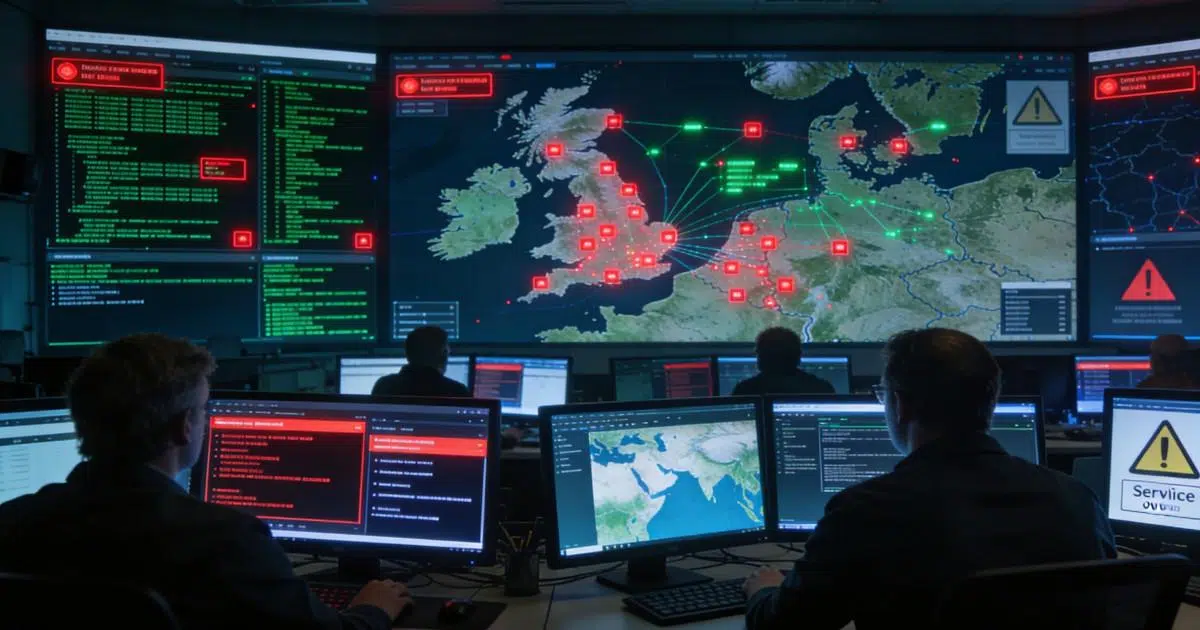
Cybersecurity in the United Kingdom has become a top priority for the government, businesses, and citizens. In recent years, the country has suffered from massive ransomware campaigns, international espionage operations, and attacks on critical infrastructure and public institutions. This has led to the strengthening of laws, technical standards, specialized agencies, and financial support programs to build a true national digital shield.
At the same time, the UK cybersecurity ecosystem is also a powerful economic and innovation driver : it generates thousands of skilled jobs, fosters cutting-edge startups, and relies on world-renowned universities and research centers. Understanding how this defense is structured, what threats drive it, and what obligations companies have is key for anyone operating or processing data in the UK, whether a local SME, a large multinational corporation, or a public administration.
Cybersecurity threat landscape in the United Kingdom
Cyber threats affecting the UK are varied, frequent, and increasingly sophisticated . We're not just talking about isolated attacks by cybercriminals, but organized campaigns, state-sponsored espionage operations, and criminal activities with a significant economic and social impact.
In the last year analyzed by the National Cyber Security Centre (NCSC), the UK had to intervene in 429 significant incidents , 204 of which were classified as “nationally significant.” This is more than double the number recorded in the same category the previous year, showing a clear increase in both the volume and severity of the cases handled.
Among these incidents, some 18 intrusions were categorized as “highly significant ,” just one step below a national cyber emergency. These operations seriously impacted essential services, central government departments, key sectors of the economy, and, in some cases, a substantial portion of the population.
This context has led to cybersecurity now being seen as an element of business survival and national resilience . Both policymakers and executives agree: hesitancy to invest in digital protection has become a strategic vulnerability.
Most frequent types of attacks: from phishing to ransomware
The techniques used against British organizations combine classic methods with advanced tactics . It is not a single type of threat, but a range of vectors that are often used in a chained fashion within the same campaign.
Phishing remains a major threat . Emails, SMS messages, and app messages impersonate banks, suppliers, government agencies, or even colleagues, with the aim of stealing credentials, personal data, or installing malware. Fake corporate login portals and payment pages are commonplace.
Ransomware has become one of the most lucrative threats for criminal groups and one of the most devastating for victims. Attackers encrypt critical data, paralyze systems, and demand a ransom to release the information. Sometimes, they also steal data beforehand and threaten to leak it if payment isn't made, thus adding a component of reputational extortion.
Data breaches can result from external attacks, but also from internal errors: emails sent to the wrong recipient, incorrect security configurations, exposed databases, or employees falling victim to social engineering campaigns. Whether intentional or accidental, these types of breaches carry very high regulatory, legal, and reputational costs.
Also a concern are distributed denial-of-service (DDoS) attacks , which overwhelm websites and online services with massive amounts of traffic, rendering them inoperable. These attacks are common against government portals, financial services, e-commerce sites, and companies with a strong digital presence.
Finally, the human factor within organizations cannot be overlooked. Internal threats range from disgruntled employees who leak data to users who carelessly leave vulnerabilities. Lax access controls, lack of training, and inadequate supervision increase the risk of these types of incidents.
The role of the National Cyber Security Centre (NCSC)
The National Cyber Security Centre (NCSC) is the UK's technical authority on cybersecurity . It reports to GCHQ and acts as a meeting point between government, the private sector, academia, and citizens to coordinate defense against cyber threats.
Its stated mission is to make the UK the safest place to live and work in the digital environment . To achieve this, the NCSC combines threat intelligence, incident response, technical advice, awareness programs, and international collaboration. It not only reacts to attacks but also works proactively to reduce the country's attack surface.
Among its key functions is the continuous monitoring of the threat landscape . It analyzes the tactics, techniques, and procedures (TTPs) of criminal groups and state actors, and shares information with businesses and public bodies through various channels, including intelligence reports, technical alerts, and sharing platforms.
When a serious incident occurs, the NCSC coordinates the national response : supporting affected entities, helping to contain the attack, advising on recovery measures, and participating in attribution when possible. In its annual review, it has recorded hundreds of incidents managed in a single year, with a particular focus on essential services and public administrations.
In addition, the agency promotes initiatives such as the Active Cyber Defence program , which includes services such as DNS Protector or web checking tools to automatically block malicious domains, fraudulent pages and phishing content aimed at British citizens and organizations.
International collaboration and cases of cyber espionage
The geopolitical dimension of cybersecurity is becoming increasingly evident, and the UK has publicly singled out certain state actors for campaigns of espionage and digital sabotage . China and Iran frequently appear in reports and advisories from the NCSC and the British government.
London has recently imposed sanctions on Chinese-based technology companies accused of launching indiscriminate cyberattacks against more than 80 IT systems belonging to governments and large corporations in various countries. Firms such as Sichuan Anxun Information Technology (i-Soon) and Integrity Technology Group have been singled out for managing covert networks and supporting malicious operations linked to Chinese intelligence services.
The NCSC believes that a private “ecosystem” exists in China that supports state cyber operations , comprised of cybersecurity firms, personal data brokers, and groups of hired hackers. These often semi-official structures facilitate operations such as the cyberespionage campaign known as SALT TYPHOON, which has targeted governments, telecommunications, military infrastructure, and public services on a global scale.
In parallel, the British center has also issued specific alerts about the increased risk of cyberattacks originating from or supported by Iran , especially in the context of tensions in the Middle East and military operations in the region. Although the UK is not always the primary target, companies with a presence or suppliers there can suffer collateral damage.
The risks cited include DDoS attacks, sabotage of corporate websites, theft of sensitive information, and attacks on industrial systems . There is also interest in the personal data of Iranian dissidents and in the potential combination of digital intrusions with physical sabotage of data centers and other infrastructure.
Economic and business impact of cyberattacks
Beyond the technical damage, cybersecurity incidents are having a direct impact on the British economy . NCSC reports and recent news stories show how a cyberattack can paralyze supply chains, hinder exports, or jeopardize major industrial companies.
One example cited is Jaguar Land Rover (JLR) , whose service was severely disrupted for weeks following a cyber incident. These types of disruptions affect the entire value chain and call into question ambitious macroeconomic objectives such as achieving the highest sustained growth among the G7, according to economic security experts.
The retail sector is not immune either. Major brands such as Marks & Spencer, The Co-op, and Harrods have suffered attacks, presumably linked to ransomware groups like Scattered Spider. In the case of M&S, the suspension of online orders and the recovery costs are estimated at hundreds of millions of pounds, including lost revenue, remediation efforts, and potential claims.
From a financial perspective, cyberattacks generate direct costs for technical response, customer notification, legal consulting, and regulatory penalties . Added to this are indirect costs such as decreased productivity, increased insurance premiums, reputational damage, and loss of investor and partner confidence.
For these reasons, the authorities insist that investing in cybersecurity is not optional : it is part of the cost of doing business in a digital environment. The government's message to CEOs and presidents of large companies is clear: they must take concrete and urgent steps to strengthen their defenses, because inaction translates into operational and financial risk.
Legal and regulatory framework for cybersecurity in the United Kingdom
Unlike other countries, the United Kingdom does not have a single, comprehensive cybersecurity law . Its framework comprises a set of sector-specific and cross-cutting rules that, together, regulate the use of systems, the protection of personal data, the continuity of essential services, and the prosecution of cybercrime.
The cornerstone of cybercrime law is the Computer Misuse Act 1990 (CMA) , later amended by the Serious Crime Act 2015. This law criminalizes unauthorized access to computers and data, alteration of programs, development and distribution of hacking tools, and acts designed to cause serious harm to the economy, the environment, national security, or human welfare.
The illegal interception of communications , including those transmitted by computer, is governed by the Regulation of Investigatory Powers Act (RIPA) and successor legislation on investigatory powers. These laws establish the legal limits on wiretapping and information gathering, as well as the corresponding penalties.
In the area of data protection, the United Kingdom applies the General Data Protection Regulation (GDPR) , adapted through the Data Protection Act 2018 (DPA). This framework requires organizations to implement appropriate security measures to safeguard personal data and establishes principles such as lawfulness, transparency, minimization, accuracy, storage limitation, integrity, confidentiality, and accountability.
The DPA also incorporates the Law Enforcement Directive , regulating the processing of data by authorities such as the National Crime Agency (NCA), the Financial Conduct Authority (FCA), and the Serious Fraud Office. The Information Commissioner's Office (ICO) is responsible for monitoring and penalizing non-compliance with these obligations.
In parallel, the Networks and Information Systems Regulation 2018 (NISR) transposes the EU NIS Directive and applies to operators of essential services (energy, water, transport, healthcare, etc.) and certain digital service providers. It requires proportionate technical and organizational measures to manage risks and mandates the reporting of incidents with a significant impact on service continuity.
Other relevant texts include the Fraud Act 2006 , which punishes fraud committed by digital means, the Copyright, Designs and Patents Act 1988 on intellectual property, and the Privacy and Electronic Communications Regulation, which imposes specific obligations on public communications service providers.
Data protection, sanctions and corporate liability
The sanctions regime for personal data breaches is particularly severe, providing a strong incentive to take cybersecurity seriously . The Data Protection Act establishes two main levels of administrative fines, depending on the severity of the infringement.
On the one hand, penalties of up to 2% of global annual turnover or 10 million euros (whichever is greater) are foreseen for infringements such as lacking adequate security measures, not keeping required records, not appointing a data protection officer when required or not cooperating with the ICO.
At the highest level, fines can reach 4% of global turnover or €20 million for violating basic data processing principles, ignoring data subjects' rights, or obstructing the regulator's work. Repeat offenses and intentional violations can further aggravate the situation.
In addition to administrative penalties, individuals affected by a security breach have the right to claim compensation for damages suffered, which exposes companies to civil lawsuits. And in certain cases, managers and those responsible may incur personal liability if it is proven that there was gross negligence or consent involved in the infringing conduct.
This approach compels organizations to adopt a risk management model based on proactive responsibility : assessing threats, documenting decisions, justifying measures, and maintaining evidence of compliance. The simple claim that an attack was unavoidable is no longer generally accepted if recognized best practices have not been followed.
National Cybersecurity Strategy and Public-Private Cooperation
To coordinate all these efforts, the UK launched a five-year National Cybersecurity Strategy , supported by an investment of around £1.900 billion, more than double that of the previous strategy. This roadmap rests on three pillars: defending, deterring, and building cyber capabilities.
During the first few years of implementation, the NCSC reported hundreds of incidents handled, hundreds of thousands of phishing sites taken down , and dozens of guides and recommendations published for businesses and citizens. The goal is to reduce both the likelihood of an attack and its impact when one occurs.
Cooperation between government and the private sector is a central pillar of this strategy . Initiatives such as the CiSP (Cyber Security Information Sharing Partnership) platform allow for near real-time sharing of information on threats and vulnerabilities among organizations in different sectors.
The NCSC also promotes programs such as Industry 100 , which facilitates the temporary incorporation of private sector experts into the center's teams to work on joint projects, as well as educational scholarships and training events to nurture the next generation of cybersecurity professionals.
For its part, the Department for Digital, Culture, Media and Sport (DCMS) has launched initiatives such as the Digital Skills Partnership , which brings together companies, charities and public bodies to offer free training in digital skills, including cybersecurity, with special attention to SMEs and less fortunate groups.
Economic support programs and growth of the cyber sector
Cybersecurity is not just a cost: it is also an engine of economic growth in the UK . The sector generates thousands of skilled jobs and contributes billions of pounds in annual revenue, with a dynamic ecosystem of startups, tech SMEs, and large, established providers.
To boost this business ecosystem, the government has announced a Cyber Growth Action Plan , led by experts from the University of Bristol and Imperial College. The aim is to identify opportunities in the supply and demand of cyber goods and services, from monitoring platforms to advanced encryption solutions.
The plan pays particular attention to emerging technologies such as artificial intelligence and quantum computing , which can transform both defensive and offensive capabilities, and which are analyzed in technology and digital culture news . The aim is for the UK to maintain a leading international position in these areas, leveraging its academic and business base.
In parallel, millions of pounds have been allocated to programs such as CyberASAP , which helps researchers turn their academic projects into commercial products and services, generating dozens of spinoffs that have attracted tens of millions in private investment.
Another key program is Cyber Runway , designed to support startups and SMEs in scaling up, entering new markets, and consolidating their international presence. The goal is for these companies to become critical components of the global cybersecurity value chain.
Industrial cybersecurity and critical sectors
One particularly sensitive area is industrial and critical infrastructure cybersecurity . In the United Kingdom, various public bodies oversee the integration of robust measures into the automation and control systems of sectors such as energy, water, transport, telecommunications, and nuclear power.
Among the prominent entities are the CPNI (Centre for the Protection of National Infrastructure) , the NCSC itself, sector regulators such as Ofgem, Ofcom, Ofwat or the Office for Nuclear Regulation, as well as local authorities and ministries responsible for the NIS Regulation.
In this context, industrial organizations have adopted measures such as specialized consulting, internal and external audits, segmented network designs , continuity and contingency plans, structured backups, deployment of SIEM solutions, and hardening strategies for legacy systems that were not designed with cybersecurity in mind.
The sector exhibits clear strengths, such as a growing awareness of critical infrastructure and an increasing number of professionals trained in industrial cybersecurity. However, weaknesses persist, including the lack of specific OT technology certifications, reliance on legacy infrastructure, and a shortage of risk management tools designed for industrial environments.
At the same time, significant opportunities are emerging, particularly due to the rise of Industry 4.0 and the Internet of Things (IoT) , which are increasing the demand for secure solutions. The United Kingdom aims to establish itself as a strategic player in this sector, exporting both technology and expertise.
Good practices recommended by British authorities
The government and the NCSC have published numerous guides and reference frameworks to help organizations strengthen their security posture . Rather than imposing one-size-fits-all solutions, they emphasize a risk-based approach and well-implemented core security measures.
One example is the document “10 Steps to Cyber Security” , which outlines recommended controls and processes for any organization: governance, asset management, endpoint protection, access control, network security, secure configuration, vulnerability management, staff training, incident response, and backup policies.
The Cyber Essentials framework proposes five minimum controls that all companies should have: properly configured firewalls, use of supported and up-to-date software, user privilege management, malware protection, and secure configuration of devices and services. Obtaining certification also serves as proof of due diligence for clients and regulators.
The NCSC also publishes specific guides for mitigating DDoS attacks, recognizing phishing campaigns, protecting industrial systems (ICS), and securing supply chains . Emphasis is placed on reviewing the "external attack surface": services exposed to the internet, unnecessary open ports, leaked credentials, and dependencies on third parties that can become weak links.
Other organizations, such as the FCA and the ICO, have published sector-specific guidance documents. At the international level, standards such as ISO/IEC 27001 and PCI DSS (for card data) and BS 10012 (personal information management) are used as references for structuring security management systems.
With this framework of laws, standards, agencies, and programs, the United Kingdom is attempting to balance digital innovation and risk management , maintaining the flow of data and economic dynamism without leaving citizens, businesses, or essential services unprotected. For any organization operating in the country, understanding this ecosystem and aligning with its requirements is no longer optional, but a necessary condition for continuing to compete in the British digital landscape with a reasonable degree of security.
