- The launch of Crimson Desert included a total block on Intel Arc GPUs, both dedicated and integrated.
- Pearl Abyss asked for refunds from those affected and did not promise initial support, while Intel claimed to have offered help for years.
- Following public controversy and media pressure, the studio has allowed the game to launch on Arc and is working on its optimization.
- The case highlights Intel's challenges in the gaming market and the importance of PC compatibility for millions of gamers.
The premiere of Crimson Desert On PC, one of the most talked-about releases of the year has arrived accompanied by a situation as striking as it is awkward: the game It completely blocked Intel Arc GPUsBoth dedicated and integrated graphics cards were blocked, preventing the application from even opening. For many European gamers with Intel hardware, the journey to Pywel hadn't even begun.
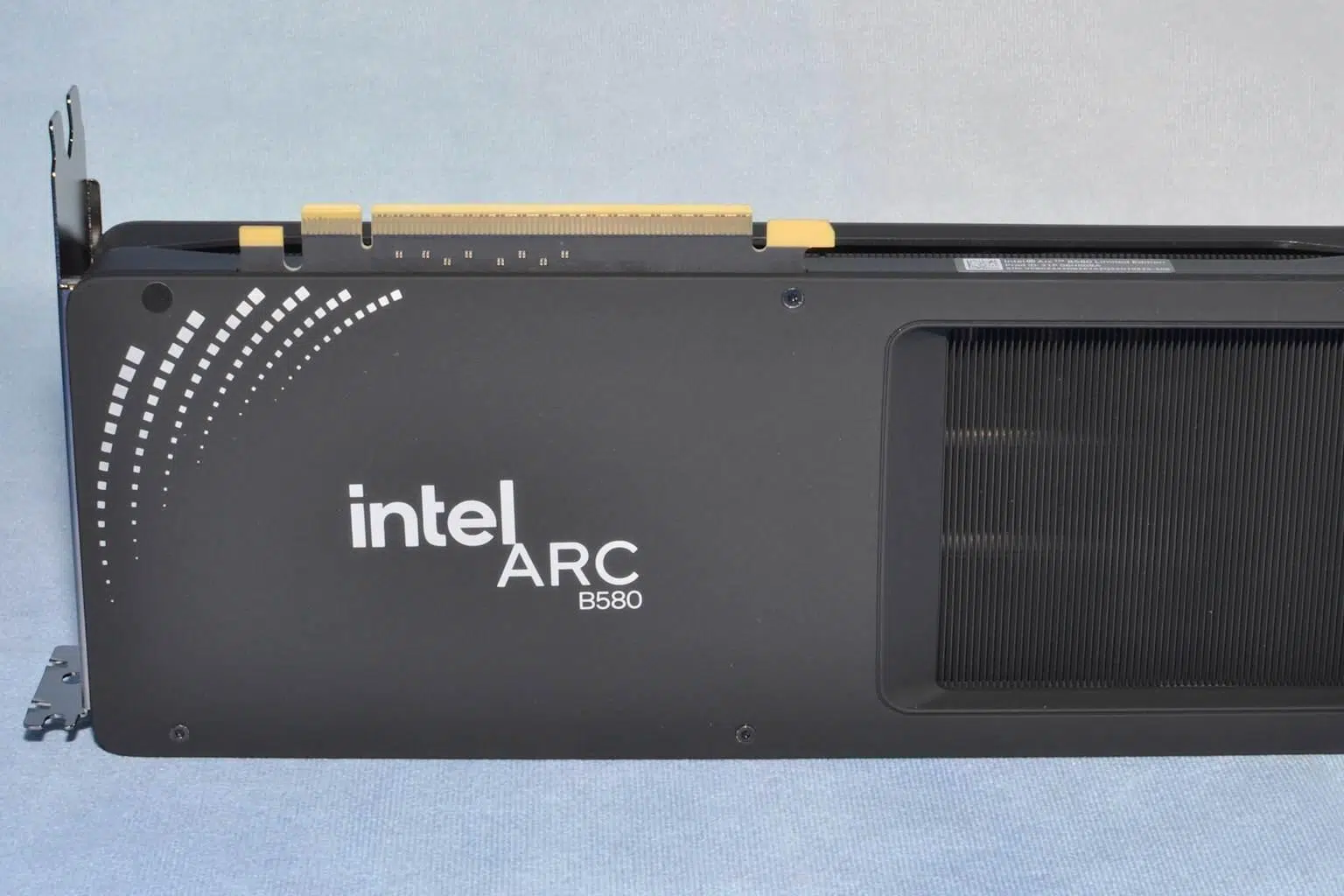
What might have seemed like a simple performance issue has turned out to be a direct veto of Intel's entire graphics ecosystemThe executable displayed a message indicating that the graphics device was incompatible and then closed immediately, excluding cards like the Arc B580 or laptops and handheld consoles with integrated graphics such as Meteor Lake, Lunar Lake, or Panther Lake. The controversy has escalated, leading to an unexpected plot twist from Pearl Abyss.
A rocky launch: compatibility error and total crash
From day one, those who tried to play Crimson Desert with an Intel Arc GPU They hit a wall: the game wouldn't start under any circumstances. There were no stutters, no frame rate drops, no visual glitches; it simply wouldn't start. an internal check that rejected any Intel graphics hardware and returned the message that the device was not supported.
This blockade affected both the Intel Arc discrete graphics cards (Alchemist and Battlemage) as well as integrated solutions in modern processors. This means that desktop computers with dedicated Arc graphics, laptops with next-generation integrated graphics, and handhelds like the MSI Claw They were excluded from the game by design, with no option to force startup through parameters, file modifications, or similar tricks.
The situation was especially surprising because in the minimum and recommended requirements Only NVIDIA and AMD GPUs (like the GTX 1060 or RX 580) were listed, but without any explicit warning that the title It wouldn't work at all on Intel cardsAlthough Arc doesn't usually appear on official lists, the game will normally try to run, even if it's struggling with performance.
In this case, the exclusion was total. Neither desktop Arc users, nor those who relied on the integrated graphics of their Core or Meteor Lake processors, could even reach the main menu. For those who had downloaded more than 150 GB of data on Steam or Epic GamesEncountering that message after hours of waiting was especially frustrating.
The irony is that, meanwhile, Crimson Desert was boasting about Official support for PlayStation 5, Xbox Series X/S, macOS, and upscaling technologies such as DLSS, FSR, and MetalFXThe big absentee was, precisely, Intel's upscaling technology (XeSS) and, incidentally, its own GPUs.
Pearl Abyss responds: apologies, refunds… and zero initial guarantees
Faced with the avalanche of complaints on forums, social media, and communities like Reddit, the initial reaction of Pearl Abyss It was as direct as it was unsettling. In the frequently asked questions section of its official website, the study confirmed that Crimson Desert did not support Intel Arc GPUs and that the only option for those affected was to request a refund from the store where they had purchased it.
The message, updated on the same day as the launch, acknowledged the incompatibility but It did not include any firm commitment to add support. later. The tone was apologetic, yes, but without a concrete roadmap or deadlines, which left the impression that the problem could drag on indefinitely.
Those who had purchased the game for €69,99 on platforms such as Steam or Epic Games Store They were forced to go through the refund process, in some cases wondering if exceeding two hours of gameplay (on other systems) might complicate things. The studio's own FAQs recommended framing the case as an unannounced compatibility issue to facilitate the refund.
This management generated additional unease because of the warning about Intel Arc It was not visible before the commercial releaseSeveral users documented that the specific mention of Intel GPUs appeared on the help page on the same day as the release, when thousands of purchases and downloads had already taken place.
The general perception in the PC community was that a title marketed as "next generation technical showcase" It had abandoned, without warning, an entire segment of players, small in market share but significant in absolute numbers in Europe and the rest of the world.
Intel enters the controversy and points the finger directly at Pearl Abyss
The conflict took a turn when Intel decided to intervene publiclyThe company issued several statements to specialized media outlets expressing its disappointment with the situation and making it clear that, from its point of view, The responsibility lay with the Korean studio and not due to an alleged lack of support from the hardware manufacturer.
In those statements, Intel explained that I had been trying to collaborate with Pearl Abyss for years. to ensure Crimson Desert would run correctly on their GPUs. According to the company, early hardware kits, pre-release drivers, and engineering resources for multiple generations of products, including the Alchemist, Battlemage, Meteor Lake, Lunar Lake and even the upcoming Panther Lake families.
Intel also insisted that it had made the study available open documentation, optimization tools, and direct technical support...in line with what they usually offer to other developers of major productions. Their official stance was that they remained willing to help in any way necessary so that Crimson Desert would work on the widest possible variety of systemsbut that the decision not to enable compatibility at launch had not been his.
At a particularly critical point in its message, Intel invited those who wanted more details about that decision to contact them. to go directly to Pearl AbyssIt was a way of implying that, despite the help offered, the studio had chosen to ignore or postpone the specific work for Arc.
This version matched what many players suspected: it wasn't just a last-minute bug, but a a deliberate choice to launch without support for the third major GPU brandIn a context where NVIDIA and AMD still dominate, but where Intel is trying to gain ground, especially in the entry-level range.
Impact on PC, laptop, and handheld gamers with Intel
Beyond the exchange of statements between the studio and the manufacturer, the problem has had a tangible impact on the PC player baseAlthough the market share of Intel Arc discrete GPUs is barely 1% according to some reports, the Intel integrated graphics They are present in millions of laptops and desktops across Europe.
On digital distribution platforms like Steam, recent statistics indicate that a significant portion of users It uses some form of Intel GPUwhether dedicated or integrated. Even if the absolute number doesn't compete with NVIDIA or AMD, it translates into hundreds of thousands of potential players who, in this case, couldn't launch the game.
The blockade also affected the new batch of portable consoles and handhelds with Intel processorsA growing segment that sees these types of AAA releases as a way to justify their hardware investment. For all of them, Crimson Desert was out of the question, with no official solutions in sight.
Meanwhile, the game also didn't run smoothly on traditional PCs. Although it worked on NVIDIA and AMD cards, the Reviews on Steam hovered around 56-57% positive ratingswith complaints focused on unpolished controls, inventory management problems, various glitches, and performance drops even on well-equipped computers.
This accumulation of criticism, coupled with the Intel Arc case, also took its toll on the study in the financial markets, where losses were recorded. Pearl Abyss shares fell by nearly 30%. after the launch, reflecting investor concerns about a more troubled debut than expected.
From "request a refund" to "we are already working on optimizing Arc"
With media pressure mounting and Intel's statement dominating headlines in the tech press and specialized forums, the position of Pearl Abyss began to changeWhat was initially a clear message of "it's not compatible, request a refund" transformed into an acknowledgment that They would work on compatibility and optimization with Intel Arc GPUs.
The study reported that Crimson Desert is now able to boot on systems with Arc cardsThis was impossible until recently due to the direct blocking. However, they warned that, for the time being, performance may be erratic and stability is not guaranteed, so players could encounter frame drops, unexpected crashes, and other issues typical of a still-developing compatibility.
In a message to the community, Pearl Abyss indicated that they are preparing a smoother and more stable experience He asked for patience until compatibility updates are available. He also acknowledged that the wording of the initial FAQs may have caused confusion and apologized for that.
This change of course suggests that the combination of Visibility of the problem, pressure from Intel, and reaction from the players This has been significant enough to prompt a rethink of the strategy. While at first the studio seemed resigned to excluding Intel, it is now committed to moving Arc from "banned" to, at least, "supported, albeit needing refinement."
For those in Spain and the rest of Europe who had purchased the game with an Arc system in their desktop or laptop computer, the situation has gone from a complete block to a scenario in which It's now possible to play, but with unpredictable performanceMany users are choosing to wait for new driver versions and patches before fully committing.
A case that illustrates the challenges of Intel Arc and the importance of compatibility
This whole episode brings the issue back to the table. The difficulties Intel faces in consolidating itself as the third force in the GPU gaming marketDespite the advancements in its drivers and constant efforts to improve performance in modern games, setbacks like Crimson Desert reinforce the perception that Arc remains a more uncertain bet than its rivals.
At the same time, the case reflects that the responsibility does not lie solely with the hardware manufacturer. Coordination between development studios and graphics companies It is key for major releases to arrive in good condition on PC, an ecosystem that is much more fragmented than that of consoles.
It is common that, even when a game is not particularly optimized, at least be able to run it in a wide variety of configurationseven if it means sacrificing graphic quality or resolution. What's strange here is the decision to activate a total execution block for a specific manufacturer, something practically unprecedented in the current landscape.
It also reveals just how crucial prior communication is. In a market where A significant percentage of European gamers rely on integrated Intel GPUs To enjoy their games, releasing a big-budget title without clearly warning of an absolute incompatibility poses a reputational risk that may be difficult to correct in the short term.
Following Pearl Abyss's change of stance and the game's opening to Arc, the story of Crimson Desert and Intel GPUs shifts from "you can't play" to "you can try, but be prepared for the performance consequences." The outcome will depend on... the speed at which the optimizations arrive both from the studio and Intel, and whether the experience can be reasonably stable on most computers.
For now, this controversy has become a pretty clear reminder that, on PC, compatibility between drivers, graphics engine and hardware It remains a critical piece of the puzzle, and neglecting a part of the community, however small it may seem in percentage terms, can end up taking its toll both in terms of image and business.