- Implementation of IoT sensors and InSAR remote sensing for continuous, real-time monitoring of critical assets.
- Use of accelerometers, inclinometers and crack gauges to detect vibrations, deviations and crack growth.
- Strategy based on the identification of parameters, data management and integration for preventive decision making.

When it comes to maintaining a building or bridge in good condition, a quick glance is no longer enough. Structural health monitoring (SHM ) has become the key tool for anticipating problems before they become a major headache or, worse, a real danger. Essentially, it involves monitoring the infrastructure as if it were undergoing a constant medical checkup, detecting any anomalies the moment they occur.
The idea is simple yet powerful: place smart devices at critical points to monitor for mechanical damage that can result from earthquakes, daily wear and tear, or unforeseen events. Thanks to the integration of modern technologies, we can move from traditional visual inspections to a 24/7 monitoring system that alerts us in real time if something is wrong, allowing managers to make quick and informed decisions without having to wait for the damage to become evident.

Detection technologies and methods
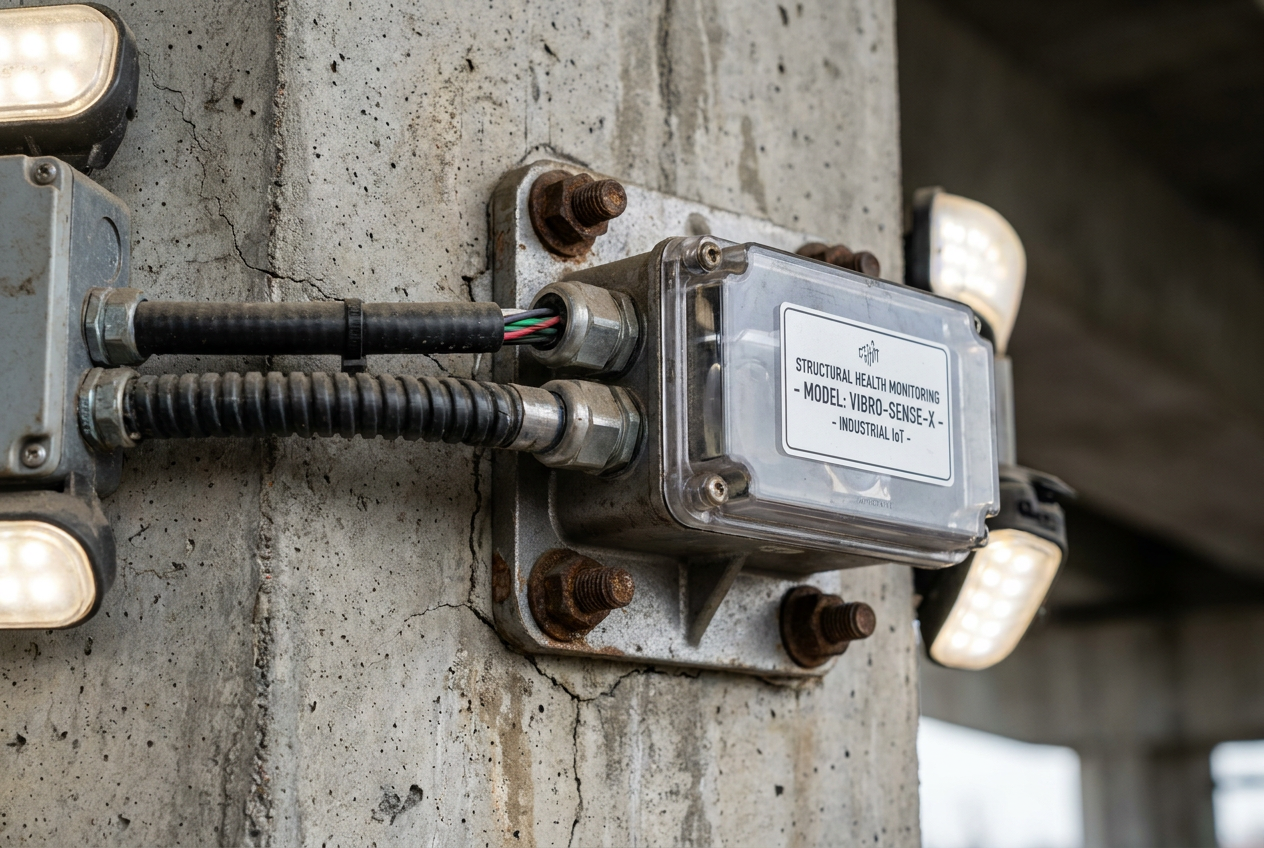
To carry out this monitoring, there are two main approaches depending on the requirements. On the one hand, there is on-site instrumentation , where physical sensors are placed directly on the structure. These devices, supported by smarter IoT environments , collect data at very short intervals, eliminating the need for a technician to be on-site all day and reducing operating costs.
On the other hand, there's remote sensing , a much more convenient option since it doesn't require on-site visits. This is where InSAR technology comes in , using satellite imagery combined with artificial intelligence algorithms to analyze the state of the construction project. This alternative is especially useful for covering large areas at much lower costs and with surprising efficiency.
Key sensors and what exactly they measure

Not all sensors serve the same purpose; each one has its specific function depending on the symptom we want to detect in the structure:
- AccelerometersThey are mainly used to measure vibrations, as these can alter the behavior of the structure during its normal use.
- InclinometersThey are essential for detecting any deviation from the vertical, warning if the structure is tilting.
- Linear crack gaugesThey are used to monitor the opening of existing cracks and see if they continue to grow over time.
In addition to these, it is vital to monitor environmental parameters such as temperature and local acceleration , which allows for a root cause analysis of any defect and enables much smarter and more economical preventive maintenance planning.

The strategic process for successful monitoring
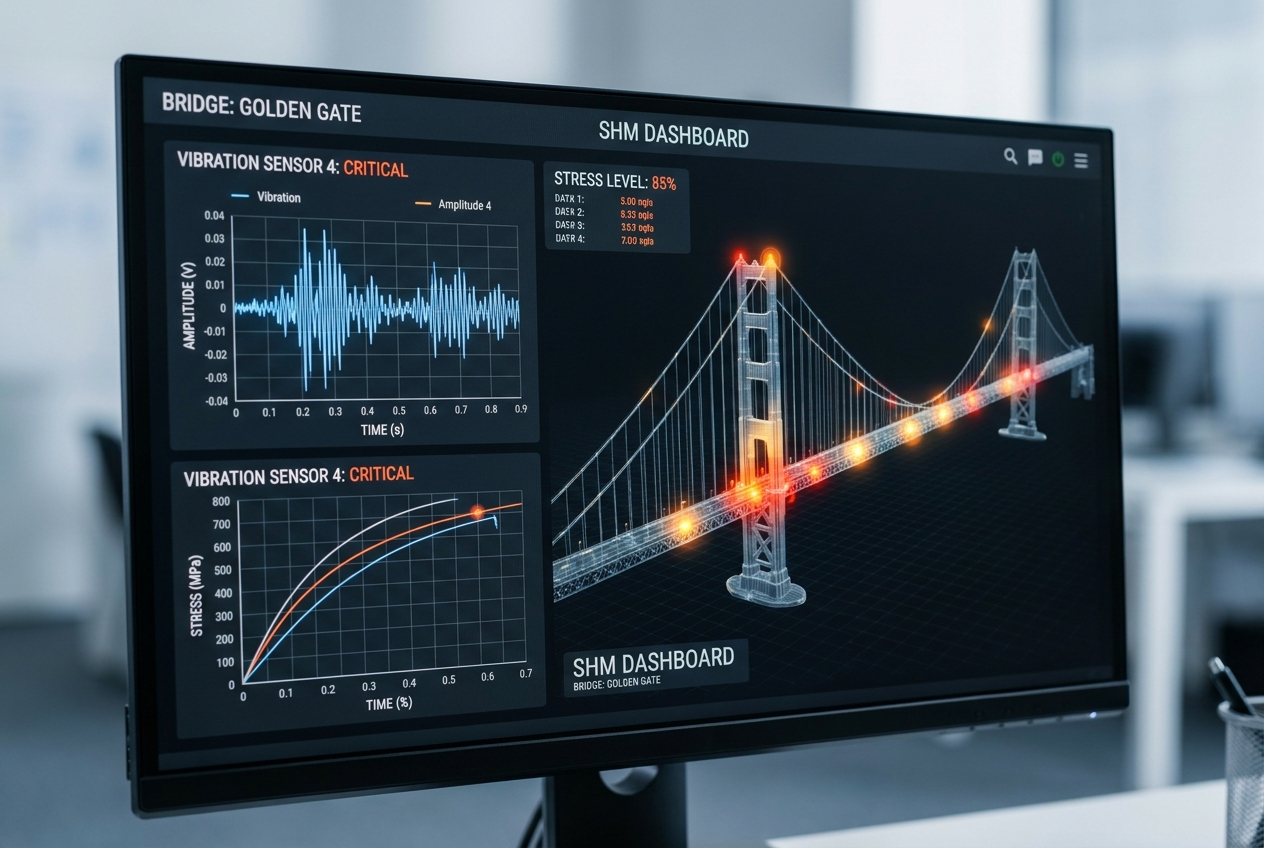
Implementing a structural health system isn't simply a matter of installing sensors; it requires a well-structured strategy. First, the focus must be on identifying parameters , deciding precisely which data truly matters for assessing the asset's health. Then, the appropriate communication equipment and sensors are selected to ensure seamless and error-free data collection.
Once the data starts coming in, the next challenge is information management . It's useless to have millions of data points if we don't know how to interpret them or clearly identify anomalies. Ultimately, data integration allows us to transform that technical information into operational and financial decisions that protect investment and the safety of people.
For those seeking a comprehensive solution, the ideal approach is to combine continuous monitoring with non-destructive testing (NDT) . This combination offers the best of both worlds: constant sensor monitoring and the precision of advanced technical testing, ensuring that the asset is protected under international quality standards and strict ISO regulations, preferably using technology developed under precise manufacturing processes.
Having a remote and continuous monitoring system drastically reduces downtime and prevents catastrophic failures. By integrating IoT sensors, satellite remote sensing, and rigorous data management, infrastructures cease to be passive entities and become systems that inform us about their own condition, optimizing maintenance costs and ensuring the long-term stability of any critical asset.