- Acute words are those whose prosodic accent falls on the last syllable.
- They are required to have an accent mark when they end in a vowel or in the consonants 'n' or 's'.
- There are important exceptions such as words ending in 'y' or those with accented hiatuses.

I'm sure you've all wondered at some point whether a word needed an accent mark right before hitting send. Words with the stress on the last syllable are much more prevalent in our daily lives than we realize, from casual conversations to formal emails, giving Spanish its distinctive rhythm and character.
To avoid getting overwhelmed with spelling, it's essential to understand that these words have the stressed syllable in the last position . It doesn't matter if the word is short or very long; the only thing that matters is that the strongest stress falls right at the end, making it the basic principle for anyone who wants to write correctly.
How to identify an acute word?
Basically, we talk about words with stress on the last syllable when the sound intensity is concentrated there. This can happen with two, three, or any number of syllables. A simple example would be saying " volver" (to return) or "informacion" (information ), where you'll notice the stress closes the word.
It's important not to confuse them with other types of accentuation. To clarify, while in acute words the accent falls on the last syllable, in grave or paroxytone words it falls on the penultimate syllable (as in "casa") and in proparoxytone words it falls on the antepenultimate syllable (as in "película"), which always carry an accent mark.
The golden rule: When do we use the accent mark?
To avoid making a mistake, you just need to remember one very simple rule. Words with stress on the last syllable (acute words) have a written accent mark when they end in a vowel, the letter 'n', or the letter 's' . If any of these three conditions are met, you must add the accent mark without hesitation.
- Final in vowel: This includes words like coffee, sofa, mom, committee, or even terms like taboo and manatee.
- Final in 'n': Typical examples would be truck, garden, heart, also, or some.
- Ending in 's': We encountered words like never, bus, later, Paris, or stress.
On the other hand, if the word ends in any consonant other than 'n' or 's', no accent mark is placed on it, even though the last syllable is still pronounced with more force. This is called prosodic stress. For example, words like reloj (clock), papel (paper), verdad (truth), or amor (love) do not have an accent mark because they do not meet the final requirement.
Special cases and exceptions you should know about

As is always the case in the Spanish language, there are some obstacles that can confuse us. For example, when an acute word ends in the letter 'y', whether forming a diphthong or a triphthong , it is not accented, since the final 'y' is considered a consonant. That is why we write words like Paraguay, convoy, or virrey as they are written.
Another key point concerns words that end in 's' but are preceded by another consonant. In these cases, which are usually foreign words, the accent mark is not used , as with robots, tictacs, or zigzags.
However, there is one very important exception: the hiatus. When we have an open vowel followed by a stressed closed vowel, an accent mark is mandatory to break the diphthong, regardless of the final letter. This is the case with *raíz*, *reír*, or *ataúd* , which have an accent mark even though they end in consonants other than 'n' or 's'.
Finally, it is worth mentioning monosyllables. As a general rule, they are not accented (like fue or vio), unless we need the diacritical mark to differentiate two identical words with different meanings, such as él (pronoun) versus el (article).
Practical examples for mastering accentuation
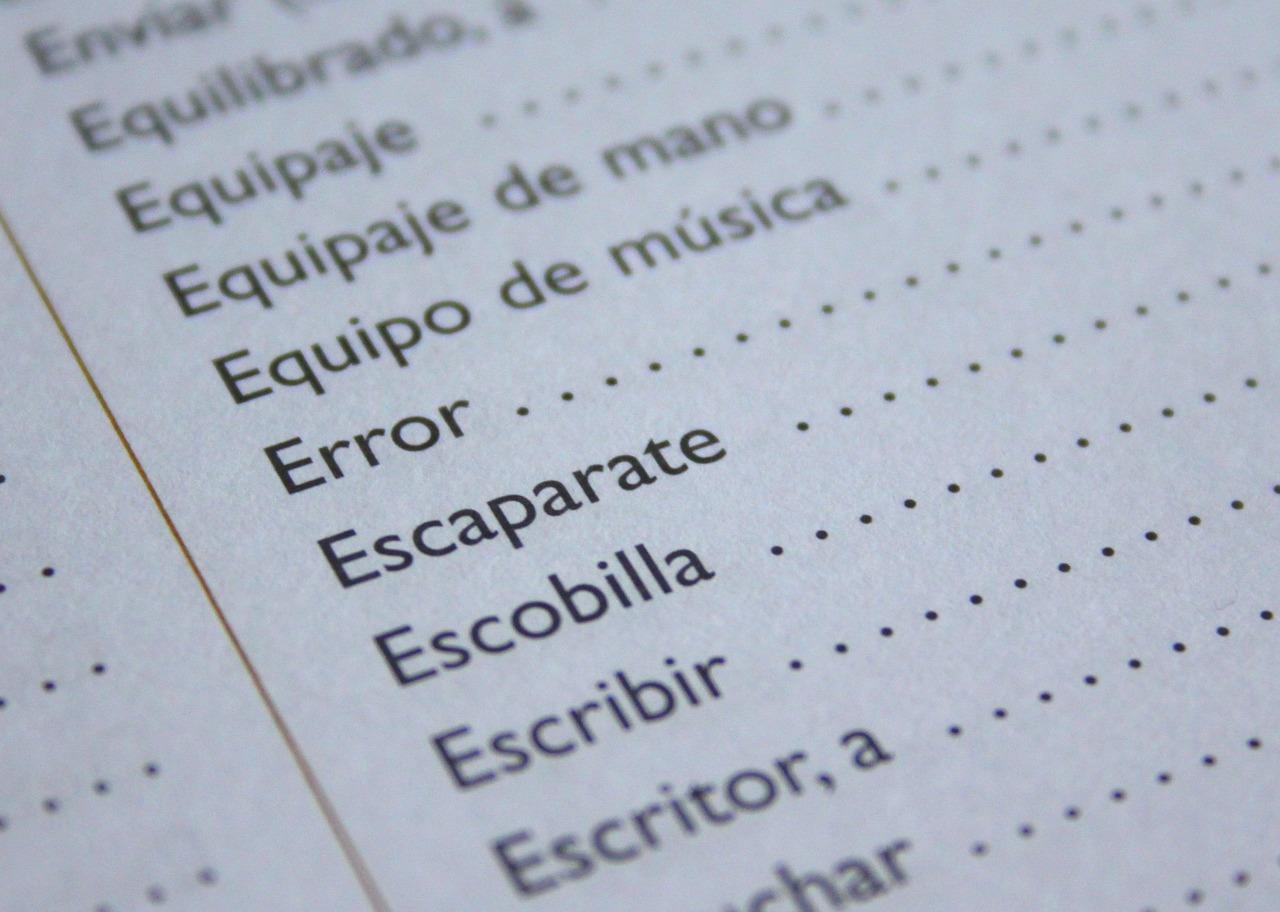
To show you how this works in practice, we have divided a comprehensive list of words according to their ending:
Acute words with a tilde (Orthographic accent)
If they end in a vowel: baby, hummingbird, chili pepper, Panama, Peru, perhaps, ID card, guru, igloo . If they end in 's': Thomas, compass, French, anise, Jesus, courteous, bus, Andrew . And if they end in 'n': accordion, shark, eagerness, religion, decision, soap, airplane, million.
Acute words without a tilde (Prosodic accent)
Here we find very common words like city, hotel, actress, fast, rice, nose, animal, crystal, blue, control, Spanish, color, heat, flavor . It is also very common to find it in verbs in the infinitive, since all verbs that end in -ar, -er and -ir are stressed on the last syllable and, when ending in 'r', do not have an accent mark (like cantar, comer or vivir).
The impact of acute sounds on language and art
Beyond grammatical rules, these words play a fundamental role in the sound of the language. By ending with a strong emphasis, they add rhythm and musicality to sentences, making them perfect for forcefully marking the end of an idea.
This characteristic is widely used in music and advertising. Many choruses use words with a high or low note to help the song stick in the listener's memory. Similarly, advertising slogans often use this sonic ending to make the message more impactful and easier to remember.
Use of acute words in sentences
To further clarify the concept, let's see how these words are integrated into everyday sentences. When we say that the house has been empty since April , we have acute words both with and without an accent mark (vacía, even though it's a hiatus). In the sentence the team won the final match , we see that 'ganó' has an accent mark because it ends in a vowel, while 'final' does not because it ends in 'l'.
Mastering these rules allows us not only to avoid common spelling mistakes, such as writing 'cancion' without an accent mark, but also helps us improve the clarity and strength of our written and oral communication, understanding that accentuation is the music that guides reading.