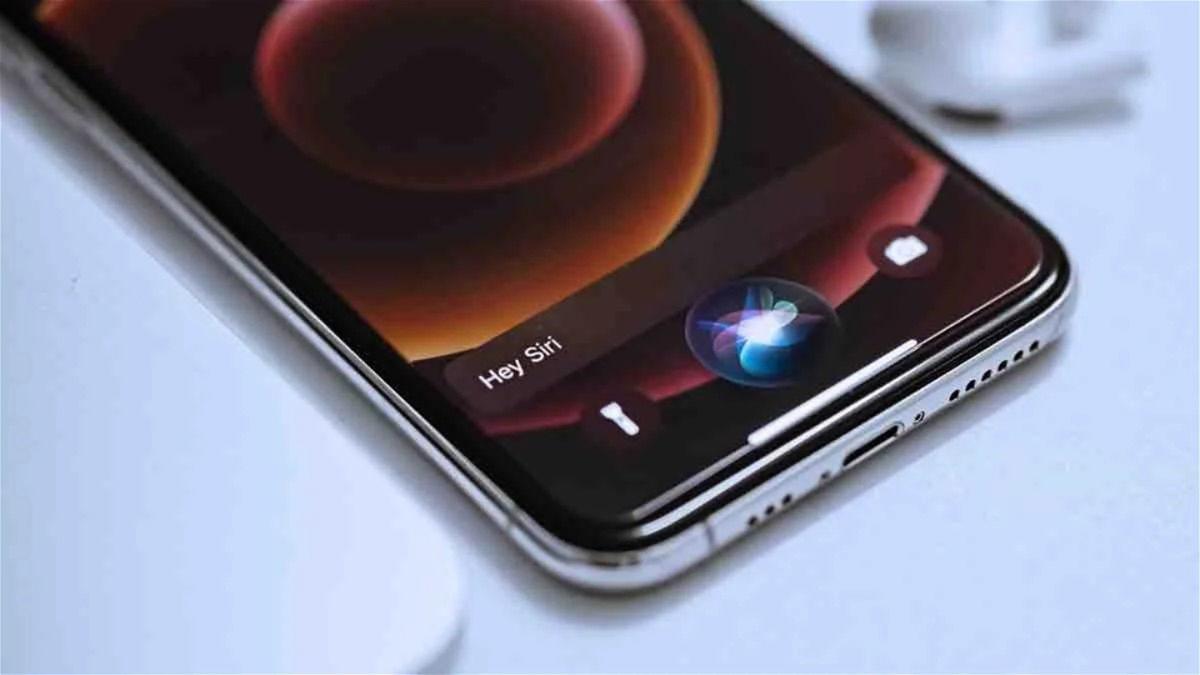
- Apple and Google sign a multi-year agreement to make Gemini models the basis of Apple Foundation Models and the new Siri.
- The alliance accelerates Apple Intelligence's roadmap after delays, leadership changes, and problems deploying a truly advanced Siri.
- Apple promises to maintain on-device and on its private cloud execution, emphasizing privacy, while regulatory doubts grow in Europe and the US.
- The deal strengthens Google's power in AI, provokes a reaction from Elon Musk, and reignites the debate about technological consolidation.
The move that many analysts considered a given is now official: Apple will rely on the Google Gemini models to power the next generation of Siri and its Apple Foundation Models. What until recently sounded like an unlikely rumor has become one of the most significant technological alliances of the decade, with a direct impact on the future of the iPhone and the Apple ecosystem.
The Cupertino company had been under pressure for months due to its delays in artificial intelligence, while competitors like Google, OpenAI, and Microsoft were boasting about much more capable assistants. With this agreement, Apple is effectively admitting that it needs a partner in generative AI to avoid falling behind.While insisting that it will continue to control the experience, the brand and, above all, the privacy of its users' data.
A historic agreement: Gemini as the basis for Apple Foundation Models
Apple and Google have made public a multi-year collaboration agreement The next generation of Apple Foundation Models will be built on top of the Gemini models and some of Google's cloud infrastructure. In their joint statements, both companies refer to a "multi-year" partnership that will support upcoming Apple Intelligence features. including a much more personalized version of Siri that will be released later this year.
According to the two companies, the agreement comes after a “comprehensive evaluation” of different AI technologies In which Apple reportedly concluded that the Gemini models provide "the most capable foundation" for its ambitions. In practice, this means that Google's large language and multimodal models will become the backbone upon which Apple will build its advanced capabilities for language understanding, personal context, screen vision, and chained actions between apps.
From a technical point of view, integration is not limited to a simple external “plugin”: Gemini becomes the foundational layer on which Apple will train and adapt its own modelsThe goal is to seamlessly integrate them into iOS, iPadOS, and macOS. For the end user, Siri will remain "Siri," and Apple Intelligence will continue to appear under the Apple brand; there will be no Gemini logos or visible references to Google in the interface.
The economic terms of the agreement have not been officially detailed, but Reports from media outlets such as Bloomberg suggest an annual payment of close to $1.000 billion Apple's offer to access large Gemini models (there has been talk of configurations with around 1,2 trillion parameters, although without public confirmation). In any case, the agreement adds to the long-standing business relationship between the two companies, which already includes the use of Google as the default search engine on Apple devices.
From WWDC to delays: why Apple has had to rely on Google
To understand the significance of this shift, it's helpful to recall the context. In the WWDC 2024, Apple unveiled Apple Intelligence as its major response to generative AIThis placed Siri at the center of a strategy that promised an assistant capable of understanding the user's personal context, "seeing" what was on the screen, and chaining complex actions between applications. On paper, the leap from the traditional Siri was enormous.
During the second half of 2024, Apple maintained an optimistic outlook. In December, the company reiterated in a press release that Siri's more advanced features will arrive "in the coming months"Meanwhile, Apple began rolling out other components of its Intelligence suite, such as Image Playground, Genmoji, and visual analysis and assistive writing tools. The message was clear: the bulk of Siri's revolution was just around the corner.
However, as 2025 progressed, the tone shifted. In March, in a statement to the Daring Fireball blog, Apple acknowledged that some of those capabilities would require longer development time than initially planned He went on to talk about a "more personalized" Siri that would be released "sometime next year." The company itself admitted that it had a "version 1" ready, which was halted because it was deemed insufficient for internal standards and user expectations.
La WWDC 2025 further highlighted the problem.Twelve months after promising a qualitative leap, the new Siri failed to deliver the level of sophistication Apple had hinted at. Craig Federighi, head of software, and Greg Joswiak, head of marketing, were forced to offer public explanations, emphasizing that they preferred to delay the launch rather than release an assistant that would fall short compared to what other market players already offered.
Internal changes, leadership crisis and a change of course in AI
The Siri issue wasn't just a purely technical matter: It ended up having a major impact on Apple's organizational chartIn March 2025, agencies such as Bloomberg and Reuters reported that the assistant was leaving the area headed by John giannandrea, the veteran recruit from Google who had led Apple's AI strategy since 2018.
From then on, direct responsibility for Siri passed to Mike Rockwell, known for his role in the development of Apple Vision Prowho began reporting more directly to Craig Federighi. The internal message was clear: the software division needed to regain control of a product considered key to the platform's future.
Months later, on December 1, 2025, the company officially confirmed that Giannandrea would leave her postAfter a transitional period as an advisor, he is scheduled to retire in the spring of 2026. Meanwhile, Apple appointed Amar Subramanya as its new vice president of AI, also under Federighi's leadership, tasked with redirecting the strategy in a context of increasing pressure.
In this scenario of broken promises, accumulated delays, and internal restructuringsLeaks about a possible alliance with Google began to gain traction. Throughout much of 2025, industry sources—including analyst Mark Gurman—indicated that Apple was exploring several AI providers, including OpenAI, Anthropic, and Perplexity, but that talks with Google were progressing more rapidly.
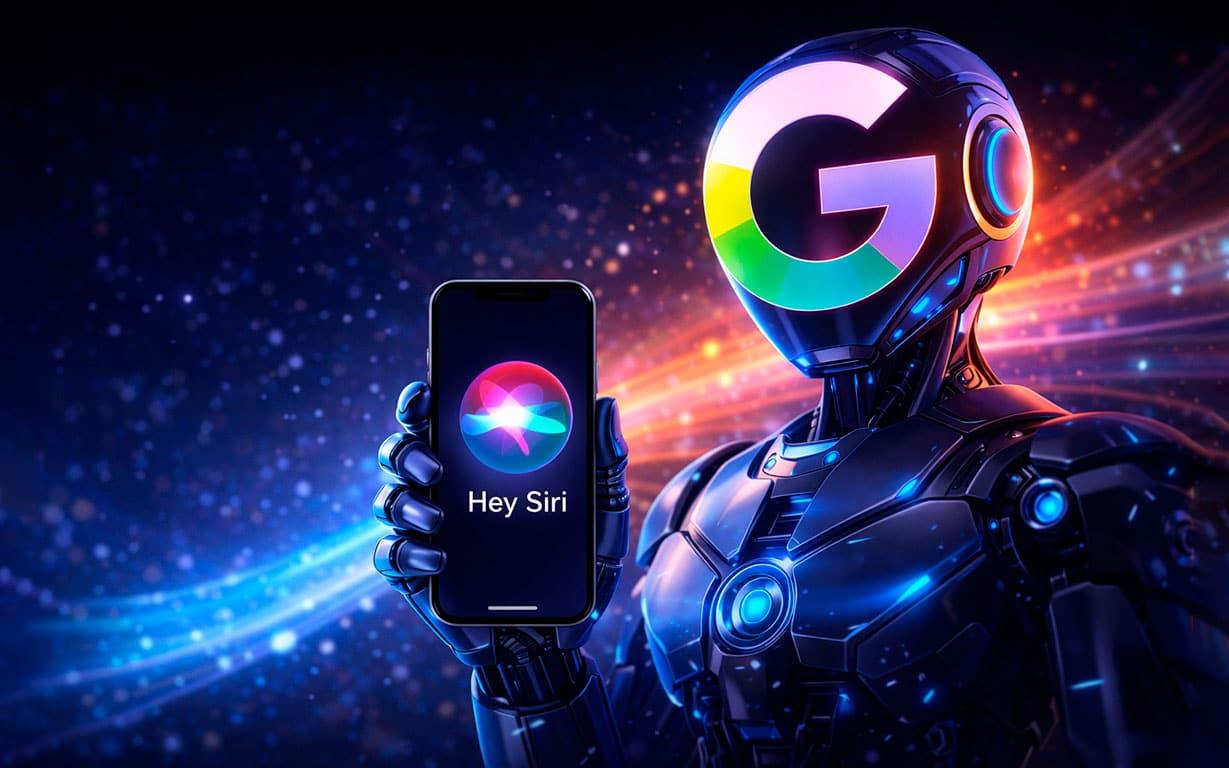
The formalization of the agreement in early 2026 confirms that Apple has opted for a pragmatic change of course: if it couldn't arrive on time with its own top-tier models, the solution was to rely on one of the market leaders. to accelerate the roadmap for Siri and the rest of Apple Intelligence.
What changes for Siri and Apple Intelligence with the arrival of Gemini
The most visible impact of the pact will predictably be the transforming Siri into a much more competent assistantApple has placed an expanded version of Siri on its immediate roadmap, which should begin rolling out this year, tied to updates of iOS 26.4The first developer beta could appear in a matter of weeks, with a gradual rollout throughout 2026.
Based on that, the company plans to launch New Apple Intelligence features that would arrive with later versions of the system, such as iOS 27The idea is that the assistant will be able to interpret emails, messages, appointments, and files, combine information from different apps, and execute chained actions without the user having to manually jump from one place to another.
In the demonstrations that Apple has been showing, they talk about queries like: “What time does my flight leave and how long does it take to get to the airport from here?" or "reschedule dinner with Marta if my meeting on Thursday moves“using data from Mail, Calendar, Messages, or Maps. The ambition is for the new Siri to cease being a simple command launcher and become a intelligent orchestrator of everything that happens on the device.
Gemini fits into that vision by providing large-scale models with advanced natural language understanding, reasoning, and text and image generation capabilities. While Apple doesn't specify which exact variants of Gemini it will use, It is assumed that it will combine lighter models for local tasks with larger models running in the cloud., always under the control of its own infrastructure.
All of this is in addition to the Apple Intelligence components already presented, such as the image and emoji generators (Image Playground and Genmoji), the visual analysis tools (Visual Intelligence), and the writing assistants. Furthermore, the possibility of Access ChatGPT from Siri as an optional add-onHowever, the spotlight in Apple's AI strategy now clearly shifts to Gemini.
Privacy and cloud: how Apple wants to maintain control
One of the most sensitive points of the agreement is the management of personal data and privacyThis is an area where Apple has built much of its public image in recent years. With the entry of a powerful third party like Google, doubts have quickly arisen, especially in markets with strict regulations such as the European Union.
Apple and Google insist that, despite relying on Gemini models and Google's cloud, Apple Intelligence will continue to run on Apple devices and on Apple's Private Cloud Compute infrastructureIn other words, processing will be done on the iPhone, iPad, or Mac whenever possible, and the cloud will only be used when the complexity of the request requires it.
In those cases, Apple says that The data travels encrypted to servers under their control, specifically designed as a “secure zone” in which not even the company itself could access the content of the requests. Google provides the modeling technology and some of the computing power, but Apple emphasizes that it maintains control of the architecture, including security guarantees and key management.
This approach also explains why Only certain devices will be compatible with the most advanced featuresApple has stated on several occasions that running AI models locally requires a minimum level of processing power and memory, which in practice excludes a large portion of older iPhones. Currently, the cutoff is set at devices like the iPhone 15 Pro and later, which will have clear implications for European users when these features are activated.
However, Apple's commitment to vertical control is nuanced: For the first time, it structurally uses external models for a component as central as its assistantThe company is trying to compensate with its own privacy layer and product design, but the balance between technological dependence and data protection will be under scrutiny, especially from European authorities.
Market reactions, Musk, and the regulatory spotlight in Europe
In financial markets, the announcement has been received as a positive sign for both Apple and GoogleShares of both companies rose slightly after the agreement was made public, and in the case of Alphabet, the boost helped its market capitalization reach $4 trillion in intraday trading, joining the club already formed by Nvidia, Microsoft, and Apple itself.
Analysts such as Dan Ives of Wedbush Securities have described the alliance as “a moment of great validation for Google” and “a springboard for Apple” in its attempt to catch up in artificial intelligence. The interpretation on Wall Street is that the deal reduces the risk of Apple falling behind its competitors and, at the same time, solidifies Gemini as one of the industry's benchmark models.
On the other hand, one of the most critical voices has been that of Elon MuskThe founder of xAI and head of Grok reacted to the announcement via X (formerly Twitter), responding to Google's official post with a message stating that “This seems like an unreasonable concentration of power for Google, given that they also own Android and Chrome.”His comments link to the fear that a single actor will effectively control AI on the two major mobile platforms.
Musk's stance is not neutral: xAI competes directly with Gemini and OpenAI modelsGrok is also engaged in a legal dispute with Apple and OpenAI in the United States, accusing them of colluding to secure their dominance in the AI market. In this context, Google's entry as Apple's preferred partner reinforces the sense of isolation for alternative projects like Grok.
Beyond the disputes between giants, the agreement intersects with an increasingly demanding regulatory landscape, especially in the EU. The long-standing collaboration between Apple and Google over the default search engine has already been challenged in court.The US Department of Justice argued that the agreement reinforced Google's dominance in online search. Although the judge allowed the deal to proceed, the precedent now weighs heavily as both companies join forces again in such a sensitive area as AI.
For European authorities responsible for ensuring competition and compliance with regulations such as the Digital Markets Act, the combination of dominant operating systems, benchmark AI models, and cloud infrastructure control This could become a new area of focus for scrutiny. It's possible that Brussels will request further explanations or specific conditions to ensure that other AI providers and mobile platforms can continue to compete on a level playing field.
Impact on users in Spain and Europe
On a practical level, iPhone and other Apple device users in Spain and the rest of Europe are wondering when will they really notice the effects of the agreement?For now, everything points to a gradual rollout: first, an improved Siri focused on understanding language and personal context, and then, more ambitious features linked to major versions of the operating system.
The company will also have to coordinate These launches within the European regulatory frameworkThis includes obligations arising from the Digital Services Act and future specific regulations on AI. Issues such as the processing of personal data, the possibility of choosing alternative models, and transparency in the use of external models will be key when introducing the new Siri in markets like Spain.
It is expected that, at least in a first phase, Not all European countries will receive exactly the same functions or at the same timeWhether for technical reasons, regulatory requirements, or strategic decisions by Apple, the company has already adapted its rollout pace to the legal conditions of each region—for example, with health or financial services features.
In parallel, the agreement may influence the adoption of new devices in EuropeIf the most powerful capabilities of Apple Intelligence and the new Siri are restricted to recent models like the iPhone 15 Pro and later, many users might consider upgrading their devices sooner than expected to access all the new features. In a mature market, this upgrade opportunity is not a minor detail.
It also remains to be seen how Gemini will coexist with other models that Apple may integrate in the future. The company itself has hinted that The agreement with Google is not necessarily exclusiveThis opens the door for different AI providers to coexist over time, depending on the type of task, the level of privacy required, or the user's preferences.
The alliance between Apple and Google marks a turning point in how we understand the relationship between major technology companies: Two historic rivals in mobile gaming join forces in artificial intelligence to avoid falling behind other equally powerful players.For users in Spain and Europe, the result will be measured on a daily basis, when Siri has to prove whether, with Gemini under the hood, it is finally living up to the expectations created over the years.